
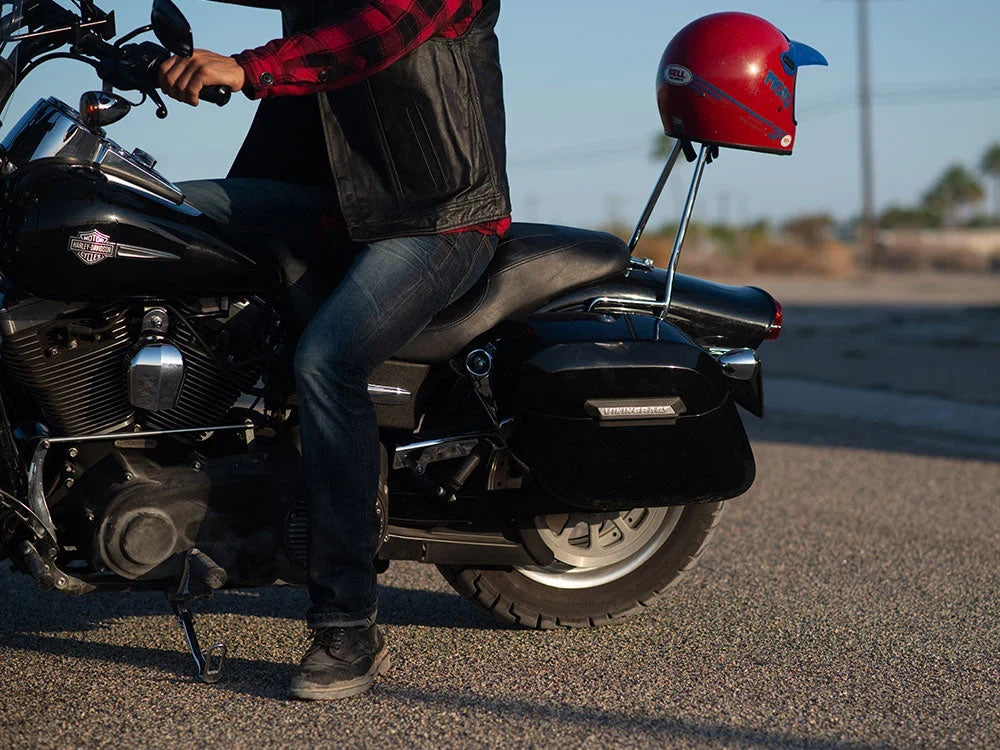
A practical care guide for motorcycle saddlebags covering cleaning and conditioning leather, UV protection for painted hard bags, textile reproofing, latch and hardware lubrication, mold prevention, off-season storage, and troubleshooting common problems like cracking, sticking latches, and fading paint.
Quick answer: Leather saddlebags need conditioning every 60–90 days (more often in dry or high-UV climates) to prevent cracking; hard and painted saddlebags need a UV-protectant wax every 3–4 months to stop fading and chalking; and every saddlebag, regardless of material, needs its latches, hinges, and locks cleaned and lubricated seasonally to prevent seizing. Skipping maintenance is the most common reason saddlebags that looked great at installation look worn out within a year.
Buying the right saddlebags is only half the job. Leather dries out and cracks in the sun, hardware seizes from road grime and salt, painted hard bags fade and chalk under UV exposure, and zippers and latches fail quietly until the day you need them. None of that is inevitable - it's a maintenance schedule most riders just never got. This guide covers exactly what to do, how often, and what to avoid for leather, hard (ABS/fiberglass), and textile saddlebags. Here's a brief guide to maintain motorcycle saddlebag:
Table of contents
1. How to Maintain Motorcycle Saddlebags and Why It Matters
Knowing how to maintain motorcycle saddlebags helps protect them from the conditions they face every time you ride. Saddlebags are mounted low on the bike, where they are exposed to road spray, brake dust, exhaust heat, dirt, moisture, and constant UV exposure. Regular maintenance can help extend their usable life and keep their hardware and finishes working properly.
- Leather dries out and cracks. Untreated leather loses its natural oils within months of regular sun exposure, and once it cracks, the damage doesn't reverse — only replacement fixes it.
- Hardware seizes. Latches, cam locks, and hinges are exposed to the same grit and moisture as the rest of the bike, but they rarely get cleaned with it. A latch that won't close at highway speed is a safety issue, not just an inconvenience.
- Paint and finish degrade. Painted hard saddlebags fade and develop a chalky surface (called "oxidation") from UV exposure the same way a car's clear coat does, and once oxidation sets in, it takes a compounding polish to fix rather than a simple wash.
A saddlebag that's maintained on a schedule will outlast one that's only ever wiped down when it looks dirty — often by years.

1.1. Maintenance Schedule at a Glance
| Task | Leather | Hard (ABS/Fiberglass) | Textile |
|---|---|---|---|
| Wipe down after wet or salted roads | Every ride | Every ride | Every ride |
| Full clean | Monthly | Monthly | Monthly |
| Condition / waterproof | Every 60–90 days | N/A | Every 90 days (spray-on repellent) |
| UV protectant wax | N/A | Every 3–4 months | N/A |
| Hardware lubrication (latches, hinges, locks) | Every 90 days | Every 90 days | Every 90 days |
| Check mounting hardware torque | Every 1,000 miles or after any drop | Every 1,000 miles or after any drop | Every 1,000 miles or after any drop |
| Deep inspection before storage | Seasonal | Seasonal | Seasonal |
Ride in rain, salt, or coastal air regularly? Cut every interval above roughly in half.

2. Cleaning Leather Saddlebags
- Remove loose dirt and dust first with a soft-bristle brush or dry microfiber cloth. Wiping wet or oily leather before this step just grinds grit into the surface.
- Use a pH-balanced leather cleaner, not dish soap, laundry detergent, or all-purpose cleaner. Standard household cleaners strip the leather's natural oils and accelerate cracking.
- Apply with a damp (not wet) cloth, working in small circular motions, then wipe away residue with a clean, dry cloth.
- Let it air-dry away from direct sun or heat. Never use a hair dryer, heat gun, or direct sunlight to speed-dry leather — rapid drying is one of the fastest ways to cause cracking.
- Avoid saddle soap on finished or pigmented leather unless the manufacturer specifically recommends it; saddle soap is formulated for raw, unfinished leather and can strip color coats.
For scuffs, a leather-specific scuff eraser or a small amount of cleaner on a soft cloth usually lifts them without full reconditioning.
3. Conditioning and Waterproofing Leather
Conditioning replaces the oils that cleaning (and UV exposure) removes. Skipping this step is the single biggest reason leather saddlebags crack prematurely.
- How often: Every 60–90 days for average riding, or every 30–45 days if you ride daily in a hot, dry, or high-UV climate (the Southwest, for example) — heat and sun pull moisture out of leather faster than mileage does.
- What to use: A leather conditioner made for outdoor/automotive leather rather than furniture leather conditioner, which isn't formulated for constant weather exposure. Avoid petroleum- or mineral-oil-heavy conditioners on pigmented leather, since they can darken the finish unevenly.
- How to apply: A thin, even coat with a soft cloth, worked in, then buffed after 15–20 minutes. Two thin coats absorb better than one heavy coat.
- Waterproofing: After conditioning, a leather-safe water repellent spray adds a second layer of protection, particularly on the top seams and any exposed stitching, which are the first places water gets in.
Internal hard-shell leather bags (leather wrapped over a rigid structure) still need this same conditioning schedule on the exterior leather — the internal shell doesn't change how the leather ages.
4. Caring for Hard (ABS/Fiberglass) Saddlebags
Hard saddlebags don't crack the way leather does, but painted and gel-coat finishes degrade under UV exposure if left unprotected.
- Washing: A standard automotive soap and a microfiber wash mitt, same as washing the bike itself. Avoid dish soap, which strips wax and protective coatings over time.
- UV protection: Apply a UV-protectant wax or ceramic spray sealant every 3–4 months on painted or gel-coat hard bags. This is what actually prevents fading and the chalky oxidation that shows up on unprotected plastic and gel-coat after a season or two in the sun.
- Scratches: Light surface scratches on painted hard bags buff out with a fine automotive scratch remover; deeper scratches into the gel coat or base material need touch-up paint matched to the finish so they don't become a rust or moisture entry point on metal-reinforced bags.
- Leather-wrapped hard bags: Treat the leather exterior with the conditioning schedule in Section 4, and treat any exposed hard-shell edges or trim with the wax schedule above.
4.1. Textile and Nylon Saddlebag Care
- Cleaning: A soft brush and mild soap-and-water solution for the fabric; avoid high-pressure washers, which can force water through seams and zippers rather than just rinsing the surface.
- Reproofing: Most textile saddlebags rely on a factory water-repellent (DWR) coating that wears off over time with washing and UV exposure. A spray-on fabric water repellent reapplied roughly every 90 days restores that protection.
- Reinforced panels: Check stress points (strap attachments, zipper pulls, corner reinforcements) for fraying every month; catching a loose stitch early is a five-minute fix, while a fully separated seam usually means a repair shop or replacement.

5. Hardware Maintenance: Latches, Locks, Hinges, Zippers
Hardware failure is the maintenance item riders skip most often, and it's the one most likely to leave you with a saddlebag flapping open at speed.
- Locks and cam latches: A small amount of dry PTFE (Teflon) lubricant or graphite powder in the keyway and latch mechanism every 90 days prevents the sticking and seizing that road grime causes. Avoid heavy oil-based lubricants in locks, since they attract more dust and grit than they repel.
- Hinges: A light coat of silicone spray lubricant on metal hinges every 90 days, wiped of excess so it doesn't attract dirt.
- Zippers: A paraffin-based zipper lubricant (a plain candle works in a pinch) run along the teeth keeps zippers moving freely and reduces the chance of a zipper pull separating from repeated forcing.
- Corrosion check: Inspect exposed metal hardware for surface rust monthly, especially after riding in rain or on salted winter roads. Light surface rust can be removed with fine steel wool and a corrosion-inhibiting spray before it pits the metal.
6. Preventing Mold and Mildew
Saddlebags that get packed away wet, or stored somewhere humid, develop mold and mildew faster than most riders expect — often within a couple of weeks in warm, damp conditions.
- Never store a saddlebag while it's still damp inside or out, even if it looks dry on the surface.
- Leave bags open or loosely packed for a full day after a wet ride before closing them up for storage.
- A moisture-absorbing packet (silica gel or a commercial dehumidifier packet) inside each bag during storage prevents trapped humidity from becoming a mold problem.
- If mildew does appear on leather, a diluted white vinegar solution on a cloth, followed by a full reconditioning pass, is the standard fix; on textile, a mild bleach-alternative fabric cleaner works, but check the manufacturer's fabric care instructions first since bleach itself can damage waterproof coatings.
7. Winter and Off-Season Storage
- Clean and condition or wax before storing, not after pulling the bags back out in spring — storing them dirty just gives grime more time to set into the material.
- Remove all contents. Items left inside during storage can trap moisture or transfer stains onto the interior lining.
- Store somewhere temperature-stable, away from direct sunlight and extreme heat or cold swings, which stress both leather and hard-shell materials over months of storage.
- Support the shape. Stuff leather bags loosely with acid-free tissue paper or a soft cloth to help them hold their shape rather than collapsing or creasing over a long storage period.
- Loosen, don't remove, mounting hardware tension if the bags stay on the bike over winter, since constant full tension over months of temperature swings can stress brackets unnecessarily.
8. Troubleshooting Common Problems
Leather feels stiff or is starting to crack at the folds. Conditioning has been skipped for too long. Start with a deep-conditioning treatment (more product, more time to absorb) rather than the standard maintenance amount, and expect to repeat it monthly for a few cycles before the leather recovers its flexibility. Existing cracks won't disappear, but conditioning stops them from spreading.
Latch won't close, or closes loosely. Almost always a lubrication or alignment issue rather than a broken latch. Clean out any built-up grime first, apply dry lubricant, and check that the bag is fully seated on its mounting bracket before assuming the hardware has failed.
Painted hard bag looks chalky or faded. This is UV oxidation. A rubbing compound or dedicated oxidation-removal polish followed immediately by a UV-protectant wax restores most of the shine; badly oxidized paint may need a professional buff-out.
Zipper keeps splitting open under light pressure. Usually a worn zipper track rather than a one-time defect. Paraffin lubrication buys time, but a track this worn typically needs a zipper replacement rather than ongoing lubrication.
Musty smell that won't go away after cleaning. This is early mildew growth inside seams or lining, not just surface dirt. A full vinegar-solution wipe-down (leather) or fabric-safe antimicrobial cleaner (textile), followed by full air-drying in a ventilated space, usually resolves it; if the smell persists after two treatment cycles, the lining itself may need replacing.
9. Maintenance Checklist
- Wiped down after wet, muddy, or salted rides
- Full clean completed monthly
- Leather conditioned within the last 60–90 days
- Hard/painted bags waxed within the last 3–4 months
- Textile bags reproofed within the last 90 days
- Latches, hinges, and locks lubricated within the last 90 days
- Mounting hardware checked for tightness in the last 1,000 miles
- No visible rust, mold, or cracking on inspection
- Bags fully dry before any extended storage
- Moisture-absorbing packets added if storing for more than a few weeks
10. Frequently Asked Questions
How often should I condition leather saddlebags?
Every 60–90 days under normal riding conditions, and closer to every 30–45 days if you ride daily in a hot, dry, or high-UV climate.
Can I use regular car wax on hard motorcycle saddlebags?
Yes, provided it's a UV-protectant wax or sealant rather than a cleaner wax with no UV inhibitors - the UV protection is what actually prevents fading and oxidation over time.
What household products should I avoid on leather saddlebags?
Dish soap, laundry detergent, all-purpose cleaners, and baby wipes all strip the leather's natural oils and accelerate drying and cracking. Use a leather-specific cleaner and conditioner instead.
Why do my saddlebag latches keep sticking?
Road grime builds up inside the latch mechanism faster than most riders expect. A dry PTFE or graphite lubricant applied every 90 days, after cleaning out existing debris, is usually enough to keep latches moving freely.
Is it safe to store saddlebags on the bike over winter?
Yes, as long as they're clean, dry, and conditioned or waxed before storage, and kept somewhere with stable temperature rather than an uninsulated space with wide swings.
How do I remove mold from leather saddlebags?
A diluted white vinegar solution wiped over the affected area, followed by a full reconditioning treatment once the leather is dry. Persistent mold after two treatments may indicate moisture trapped inside the lining rather than just the surface.
Do leather-wrapped hard saddlebags need both leather and hard-shell care?
Yes. Condition the exterior leather on the leather schedule, and wax any exposed hard-shell trim or edges on the hard-bag schedule.



Leave a comment
All comments are moderated before being published.
This site is protected by hCaptcha and the hCaptcha Privacy Policy and Terms of Service apply.