
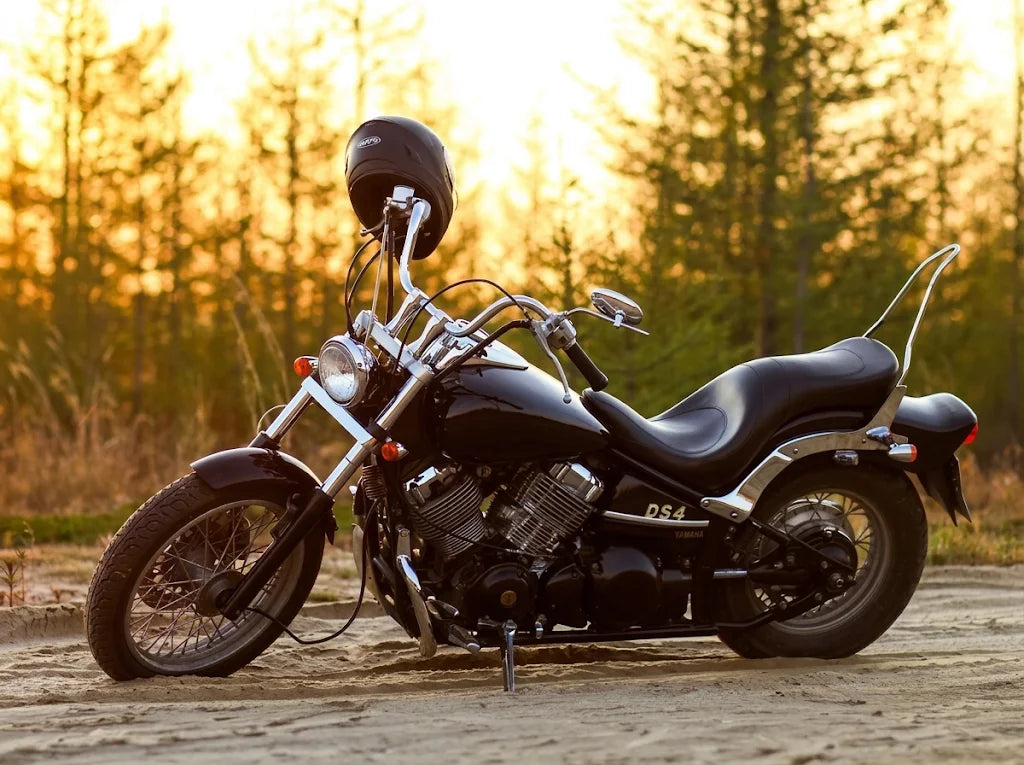
Which motorcycle specs actually matter? Our ranked guide covers 11, in order: ergonomic fit, frame and swingarm, geometry, torque curve, weight, engine layout, braking components, seat height, range, horsepower and suspension components. Fit and chassis shape how a bike feels, while peak power and brand names matter least for everyday riding. We also explain how to read a spec sheet and how load ratings affect your bike once you add luggage. Read the full guide on vikingbags.com.
Table of contents
Quick answer: Ergonomic fit, frame design and geometry matter most. The torque curve and weight come next. Peak horsepower, suspension brand names and range matter least for everyday riding.
A spec sheet is easy to compare and hard to interpret. Two bikes with nearly identical numbers can feel completely different on the road, and a bike that loses on paper can be the one you never want to sell.
This guide ranks 11 common motorcycle specs from most to least important. For each one, it explains what the number tells you, what it hides, and when it matters. It ends with a part most spec guides skip: what changes once you add luggage.

1. Motorcycle Specs ranking at a glance
| Rank | Spec | Why it matters |
|---|---|---|
| 1 | Ergonomics and fit | If you don’t fit, nothing else counts |
| 2 | Frame and swingarm | Sets handling feel and feedback at lean |
| 3 | Geometry (rake, trail, wheelbase) | Decides stability versus agility |
| 4 | Torque curve | What you feel when you open the throttle |
| 5 | Weight | Affects braking, turning and low-speed control |
| 6 | Engine layout | Shapes sound, balance and power delivery |
| 7 | Braking components | Feel and technique matter more than hardware |
| 8 | Seat height | Only one part of fit |
| 9 | Range | Tells you how often you refuel |
| 10 | Horsepower | One number derived from torque and rpm |
| 11 | Suspension components | Setup matters more than brand |
1.1 Ergonomics and fit
Ergonomics is how your body relates to the bike: the reach to the bars, where your knees meet the tank, how much your legs bend, and where your weight sits. It tops the list because it never appears as a single number.
If a bike doesn’t fit, torque curves and engine layouts stop mattering. You tire sooner, feel less confident and enjoy the ride less. Some of it can be changed. Bars, risers, footpegs, rearsets and seats all move your position, and a motorcycle seat, handlebars or handlebar risers can make a real difference. Cruiser and touring riders sometimes add a backrest for support on longer rides. The basic size and shape of the bike won’t change, though.
The most reliable test is to sit on the bike before you buy it. Check how the tank meets your knees, how far your arms reach, and whether your wrists, shoulders and hips feel natural. A bike you’ve admired for years can feel wrong within 30 seconds, and one you hadn’t considered can feel perfect.
How a bike looks, sounds and fits you covers most of what makes it right for you. Everything else is detail, and the detail only counts once those three are in place.


1.2 Frame and swingarm
The frame and swingarm hold everything together. The engine, steering geometry and suspension all mount to them. When a bike leans hard in a corner, the chassis does much of the work of communicating what the tires are doing.
Material (steel or aluminum) is only part of the story. Shape, wall thickness and flex characteristics matter too. Designers often build in a small amount of lateral flex on purpose, because a chassis that is too rigid can give the rider less feedback.
That’s why a frame engineered as a sport chassis feels different from one adapted from a simpler platform, even with similar engines. Swingarm length, shape and pivot position also influence behavior under power and over bumps.
Spec sheets rarely give you this. Look for reviews that describe how a bike feels leaned over, then test ride it.
1.3 Geometry: rake, trail and wheelbase
Three numbers do most of the work:
- Rake is the angle of the steering head from vertical.
- Trail is the distance between where the steering axis meets the ground and where the front tire touches. More trail generally means more self-centering and stability, the same effect that makes a shopping cart wheel straighten itself.
- Wheelbase is the distance between the axles. Longer usually adds stability, and shorter makes the bike quicker to turn.
Sport bikes tend toward steeper rake and shorter wheelbases. Cruisers and tourers tend the other way. The numbers work together, so no single one tells you much alone.
Geometry ranks this high because it’s the hardest thing to change. You can adjust fork height, rear preload or sprockets, but those are small tweaks. If you want a very different feel, you need a different bike.

1.4 Torque curve
Horsepower gets the attention, but torque is what you feel. Much street riding happens in the low and middle rev range, so the shape of the torque curve there decides how responsive the bike feels.
A flat, usable curve with good low-end pull makes a motorcycle feel quick and relaxed in traffic and on back roads. A peaky curve can look impressive on paper and feel flat until the revs climb.
That’s part of why twins and triples have become so popular: their power often arrives where people ride. It’s also why a manufacturer’s headline change can be as simple as “peak torque arrives earlier.” You notice that every ride.
Look at how torque is delivered across the rev range rather than the peak figure alone. A dyno chart or detailed review tells you more than one number. Throttle response and fueling character matter too, but they don’t fit in a table. You have to ride the bike.
1.5 Weight
Weight affects almost everything: braking distance, how quickly the bike turns, acceleration and how manageable it is at low speed. Lighter is generally better, and the difference is biggest off-road.
The figure alone doesn’t tell the whole story. A low center of gravity can make a heavy bike feel lighter at a stop and in parking lots, and two bikes with similar weights can feel quite different. On long highway rides, some riders prefer a heavier bike because it feels planted in crosswinds.
Rider weight counts as well. Brakes, tires and suspension manage the total mass of bike, rider, passenger and gear. That leads to a spec that becomes important when you pack for a trip, covered below.
1.6 Engine layout
Engine layout covers cylinder count and arrangement, crank design and firing order. It influences sound, vibration, power character and weight distribution.
The engine is the heaviest component, so where it sits shifts the center of gravity. Sport bikes tend to carry weight higher for quick turn-in, while many cruisers and tourers carry it lower for stability at low speed. The crankshaft also behaves like a gyroscope, which is why engineers pay close attention to its size and weight.
Layout matters more than displacement alone because it shapes how the bike feels. It also determines the sound, and plenty of riders choose a bike partly for that.
1.7 Braking components
Brake brands and caliper designs generate lots of discussion, but for most riders the limiting factor is technique, not hardware. Stock systems on modern bikes are usually capable on the street, and many riders, even experienced ones, brake more gently in a panic stop than their bikes allow.
What matters more is condition and feel: fresh fluid, good pads and a lever that gives you confidence. A rider-skills course will often improve your stopping more than new calipers.
Higher-end brakes make sense on track, where heat, repeated hard stops and fine control matter. For commuting and touring, they’re a nice-to-have.
1.8 Seat height
Seat height is the most-quoted number for riders worried about fit, but it’s only one part of the picture. A tall, narrow, light bike can be easier to handle than a low, wide, heavy one. Tank width, seat shape and weight all affect how easily your feet reach the ground.
Standover height, which combines seat height with the narrowness of the bike’s midsection, is a better guide, though it isn’t always listed. Technique helps too: leaning the bike slightly and planting one foot at stops makes many seat-height worries manageable. New riders often prefer to flat-foot, and that’s a sensible place to start.
For more, see why motorcycle seat height is important and how tall is too tall to ride a motorcycle.

1.9 Range
Range is how far a bike travels on a tank. It combines tank size and fuel economy, and it mostly tells you how often you’ll refuel.
Many mid-size bikes fall roughly between 150 and 200 miles, with outliers at both ends. Think about your actual use. A 25-mile round-trip commute five days a week plus a 150-mile weekend ride adds up to about 275 miles. On a typical middleweight, that’s one or two fill-ups.
Range matters on remote routes where fuel stops are far apart. Otherwise, a reliable fuel gauge or range readout on the dash is more useful than a bigger number on the spec sheet.
1.10 Horsepower
Horsepower is a calculation: torque multiplied by engine speed, divided by 5,252. That’s why the torque and horsepower lines cross at 5,252 rpm on a dyno chart. Because it’s derived from torque and rpm, peak horsepower says little about how the bike feels.
It’s the most-quoted spec online, yet street riders rarely use the top of the rev range. Horsepower matters when you chase the last bit of performance: track days, club racing and competitive off-road riding. For everything else, the character of the power matters more than the peak.
1.11 Suspension components
Names like Öhlins, Showa or KYB make good marketing, but for most riders the quality of the setup matters more than the badge. Suspension keeps the tire in contact with the road, and most stock systems do that well enough for the street.
What helps most is setting the suspension up for your weight and riding. Many bikes leave the factory set for an average-weight rider, so heavier or lighter riders often benefit from different springs or settings. Premium components add adjustability, which is valuable on track or off-road, but they can’t fix a chassis that flexes in the wrong places. Suspension works as a system with the tires and the frame.
2. How to read a spec sheet in five minutes
- Start with fit. Check seat height, then weight, tank width and bar position if you can find them.
- Check the chassis. Compare rake, trail and wheelbase with bikes you already like.
- Look at the torque curve, not just the peak.
- Note curb weight and load rating. You’ll need both if you plan to carry gear.
- Sit on the bike, then ride it. Everything else is secondary.
3. The spec that matters once you add luggage
Most spec guides stop at the showroom. If you plan to carry anything, one more figure matters: your bike’s load rating.
Manufacturers list a gross vehicle weight rating (GVWR) on the bike’s information label. It covers the bike, rider, passenger, luggage and accessories combined. Subtract the curb weight from the GVWR and you get a rough payload figure. Owner’s manuals from Harley-Davidson and Polaris (Victory) both warn against exceeding GVWR and axle ratings, loading saddlebags unevenly, or placing heavy cargo far behind the rider or on the bars and forks.
Luggage is also where the specs above show up in daily riding. Weight carried low and close to the bike’s center behaves better than weight stacked high or far back. Our guides on how much saddlebags can hold and how to pack saddlebags for better weight distribution cover the details.
Choosing the right type depends on how you ride. Saddlebags, tour packs and sissy bar bags suit different bikes, and adventure luggage has its own trade-offs. If you’d rather keep weight off the bike, a backpack is an option, and backpack vs tail bag helps you compare. Viking Bags’ motorcycle backpacks range from the 12L Explorer with a chest harness to the 45L Tactical XL, with a Renegade dry backpack for wet weather.
Fit applies to luggage too. Subframes, exhausts and turn-signal positions differ between bikes, so bags made for your model usually install more cleanly. The shop-by-bike page lists collections by model, including the Honda Rebel 500, BMW R 1250 GS and Harley Softail Low Rider S. Viking Bags offers four saddlebag mounting styles: throw-over, shock cut-out, hard mount and quick disconnect. You can compare them across the saddlebags range.
On Trustpilot, Viking Bags is rated 4.8 out of 5 from more than 6,000 reviews at the time of writing. Reviewers most often mention build quality, easy installation and responsive support.
4. Frequently asked questions
What is the most important motorcycle spec?
Ergonomic fit. If the bike doesn’t suit your body, no other number matters, so sit on it before buying.
Does horsepower matter on a motorcycle?
Less than most people think. Horsepower is calculated from torque and rpm, and street riding rarely reaches peak power. It matters mainly on track and in competition.
What’s the difference between torque and horsepower?
Torque is twisting force. Horsepower is torque multiplied by engine speed, divided by 5,252. Torque is what you feel when you open the throttle.
Is a tall seat harder to ride?
Not necessarily. A narrow, light bike with a tall seat can be easier than a wide, heavy one with a low seat. Weight and standover width matter too.
Are expensive suspension brands worth it?
For most street riders, setting up the suspension you have matters more than the brand. Upgrades pay off most on track and off-road.
How do I find my motorcycle’s weight limit?
Check the owner’s manual or the information label on the frame for the gross vehicle weight rating, then subtract the curb weight for an estimate of payload.
Do I need model-specific luggage?
Usually it’s the better choice because it matches your bike’s mounting points, turn signals and exhaust. Our saddlebag buying guide walks through fitment.
5. The bottom line
Fit, frame and geometry decide how a motorcycle feels. Torque and weight shape how it behaves day to day. Peak horsepower, brand-name suspension and range matter least for most riders. Use the spec sheet to narrow your choices, then sit on the bike and ride it. If you’re new, our first motorcycle buying guide is a good next read.




Leave a comment
All comments are moderated before being published.
This site is protected by hCaptcha and the hCaptcha Privacy Policy and Terms of Service apply.