Table of contents
Motorcycle luggage falls into six main categories: saddlebags, tour packs, sissy bar bags, tail bags, backpacks, and adventure touring side cases. Each one is built for a different amount of gear, a different riding style, and a different way of mounting to the bike. Picking the wrong one is the most common reason riders end up with gear that won't stay put, won't fit their bike, or gets left at home entirely.
This guide breaks down what each type actually is, how much it holds, how it mounts, and which one fits your bike and riding style, so you can stop guessing and start packing.

1. Quick Answer: Which Type of Motorcycle Luggage Do You Need?
|
Luggage Type |
Best For |
Typical Capacity |
Mounting Style |
| Saddlebags |
Daily riding, weekend trips, most cruisers and touring bikes |
15 to 35 liters (per pair) |
Throw over, hard mount, or quick disconnect |
| Tour Pack (top case) |
Long-distance touring, two-up riding, extra rainproof capacity |
30 to 50 liters |
Bolted to a rear rack or fender mount |
| Sissy Bar Bag |
Cruisers and bobbers with a sissy bar, short to medium trips |
10 to 25 liters |
Straps to the sissy bar frame |
| Tail Bag |
Quick weekend trips, sport bikes, minimalist setups |
8 to 20 liters |
Straps to the seat or subframe |
| Motorcycle Backpack |
Commuting, day trips, riders who don't want mount hardware |
15 to 30 liters |
Worn on the rider's back |
| Adventure Touring Side Cases |
Off-road and long-distance ADV touring |
30 to 45 liters per side |
Bolted to an ADV luggage rack, hard or soft sided |
2. What Is a Motorcycle Saddlebag, and What's It Best For?
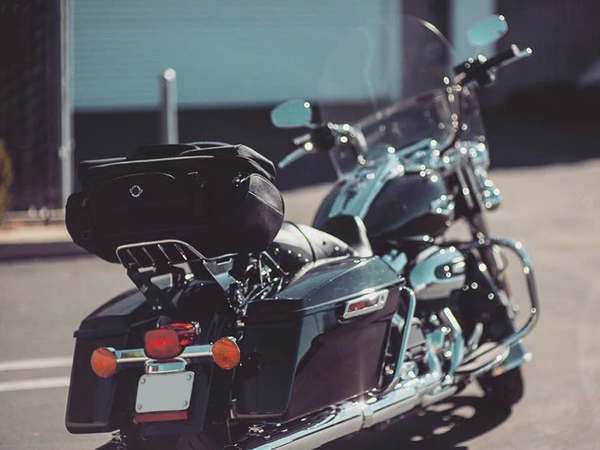
A pair of storage bags that mount on either side of the rear wheel, straddling the bike like a saddle, is what most riders picture when they hear "motorcycle luggage." That straddling shape is where the name comes from, and it's also why saddlebags work on almost any bike style, from cruisers to touring bikes to standards. Because the weight sits low and split evenly on both sides, hard and leather saddlebags for motorcycles barely affect handling when loaded correctly, unlike luggage mounted higher on the bike.
Saddlebags are the right choice if you want luggage that stays on the bike full time, holds a realistic amount of daily gear (rain gear, a lock, tools, a change of clothes), and doesn't require you to carry anything on your back.
3. What Is a Saddlebag Guard, and Do You Need One?
A saddlebag guard, sometimes called a saddlebag support bar, is a metal frame that mounts between the bag and the bike's exhaust or rear fender. It does two jobs: it keeps a soft or leather bag from sagging into the rear wheel or hot exhaust pipes once it's loaded, and it acts as a heat shield so the bag material doesn't scorch or melt against the pipes on a long ride. Guards are mostly a leather and PVC bag consideration, hard saddlebags with an internal structural shell rarely need one, since the shell itself holds the bag's shape and keeps it clear of the exhaust.
3.1 Leather vs. PVC vs. ABS Hard Saddlebags: Which Material Should You Choose?
The material determines how the saddlebags handle weather, weight, and long-term wear.
- Leather saddlebags are the classic cruiser look, flex to fit odd shaped loads, and age well with basic conditioning, but they need occasional waterproofing and aren't the best choice for daily rain exposure. Many leather bags, including cowhide models, are built around an internal hard shell so the bag holds its shape even when it isn't fully packed.
- PVC/vinyl saddlebags are the budget option: naturally water resistant, light, and inexpensive, but less durable over years of use and less structured, so they can sag when loaded without a support bar.
- ABS hard saddlebags are rigid, highly weather resistant, and often lockable, making them a strong choice for daily riders and anyone who wants to leave gear in the bags unattended. The tradeoff is a higher price and a more "touring bike" look that doesn't suit every cruiser. Viking Bags' hard saddlebags collection covers both fully rigid ABS bags and hybrid designs with a structural shell under a leather or synthetic exterior, so it's worth checking which construction a specific listing uses before buying.

4. Throw-Over vs Hard-Mount vs Quick-Disconnect: What Do These Mounting Terms Mean?
These three terms describe how saddlebags attach to the bike, not what they're made of, and they matter as much as material when you're deciding what to buy.
- Throw-over saddlebags drape over the seat or a rack with no permanent hardware, so they work on almost any bike and can be removed in seconds, though they can shift slightly at speed if not cinched down properly.
- Hard-mount saddlebags bolt to a dedicated bracket permanently fixed to the bike's frame, giving the most stable, vibration-free ride, but they're not meant to come off often.
- Quick-disconnect saddlebags use a hard-mount bracket with a cam-lock or lever latch built in, giving you the stability of a hard mount with the ability to remove the bags in seconds, without tools. This is the middle ground most touring riders end up preferring, and it's the same mechanical idea behind a quick-disconnect bracket system sold separately from the bags themselves, so one bracket kit can serve more than one set of bags over time.
5. How Much Can Motorcycle Saddlebags Actually Hold?
Saddlebag capacity is usually listed per pair, not per side, and ranges roughly as follows:
- Compact saddlebags (15 to 20 liters total): a rain jacket, a lock, basic tools, a phone charger. Enough for a day ride. Riders who only need storage on one side of the bike, often to clear an exhaust or a passenger peg, can also look at a solo bag instead of a full pair.
- Mid-size saddlebags (20 to 28 liters total): the above plus a change of clothes and toiletries. Enough for an overnight trip.
- Large touring saddlebags (28 to 35+ liters total): enough for multi-day gear when paired with a tank bag or tour pack.
As a rule of thumb, one pair of mid size saddlebags holds roughly what a large weekend duffel bag holds, just split into two narrower compartments. If you lane split or filter regularly, it's worth checking your state or country's specific vehicle width regulations before choosing the widest bag available, since rules on how far luggage can extend past the mirrors or handlebars vary by jurisdiction and this article isn't a substitute for checking your local law directly.
6. Do Saddlebags Affect Motorcycle Handling or Fuel Economy?
Properly mounted saddlebags have a minimal effect on handling because the weight sits low and near the bike's center of gravity, unlike a top heavy tour pack or an overloaded backpack. Two things do matter: wind resistance, since wider hard saddlebags add modest aerodynamic drag that can shave a few miles per gallon off highway fuel economy, and even loading, since packing one side significantly heavier than the other will make the bike pull slightly to that side at low speed. Saddlebags also carry a manufacturer-listed maximum weight rating that varies by bag, and going over it stresses the mounting hardware even if the bike still feels stable, so it's worth checking the specific rating rather than assuming one bag's limit matches another's.
7. What Is a Motorcycle Tour Pack (Top Case), and Do You Need One?
A rigid, box style storage container mounted behind the rider (or behind a passenger) on a dedicated rack or fender mount is what most people mean by a tour pack, also called a top case. Unlike saddlebags, it sits higher and further back, which gives it more usable volume for bulky items such as helmets, rain suits, and camping gear, at the cost of adding more weight higher and further from the bike's center of gravity. Viking Bags' tour pack collection is organized by bike make and model for this reason, since fender and rack mounting points differ by bike.
You need a tour pack if you regularly ride two up, take multi day trips where saddlebags alone aren't enough, or want a single lockable, weather resistant space for bulky gear. If you mostly ride solo and pack light, saddlebags alone are usually enough, and skipping the tour pack keeps the bike lighter and easier to handle at low speed. Most tour packs are built from fiberglass with a gasketed lid, which holds up to road vibration and sheds water better than a soft bag, though a gasket in worn or poor condition won't perform the same way, so it's worth checking that seal periodically rather than assuming it. Riders who carry a passenger often add a passenger backrest pad to the front of the tour pack, which does double duty as passenger comfort and a mounting point for the trunk itself.

8. What Is a Sissy Bar Bag, and How Is It Different From a Saddlebag?
A soft sided bag that straps directly to a motorcycle's sissy bar, the raised backrest frame mounted behind the seat, is a different setup from a saddlebag rather than a smaller version of one. It sits on the centerline of the bike instead of straddling the rear wheel, so it doesn't require the wheel clearance or frame brackets that saddlebags need, which makes a sissy bar bag a common choice for bobbers and stripped down cruisers that don't have room for saddlebags. Many install in minutes on a folding sissy bar, without any drilling.
The tradeoff is capacity and stability. A sissy bar bag typically holds less than a full saddlebag setup, and because it's mounted higher and further back, an overloaded sissy bar bag will affect handling more noticeably than saddlebags of the same weight. Riders who want a smaller, lower profile alternative sometimes choose a swingarm bag instead, which mounts directly to the swingarm and holds a couple of liters for a wallet, tool kit, or spare key rather than a full change of clothes.

9. What Is a Motorcycle Tail Bag, and When Should You Use One Instead of Saddlebags?
A soft sided bag that straps directly to the rear seat or subframe, rather than mounting on the sides of the bike or on a sissy bar, is the most minimalist and widely compatible option on this list. It works on nearly any bike, including sport bikes and standards that don't have saddlebag mounts or a sissy bar at all. Check the specific tail bag listing for whether a rain cover is included, since this varies by model rather than being standard across every bag.A tail bag makes sense for quick weekend trips, riders who want to add and remove luggage in seconds without any hardware, or as a second bag added on top of saddlebags for extra capacity on longer rides. It's not the right choice as your only luggage for a multi day trip, since capacity tops out lower than saddlebags or a tour pack.
10. What's the Difference Between a Motorcycle Backpack and Saddlebags?
Worn on the rider's body rather than mounted to the bike, a riding backpack is the only luggage type on this list that travels with the rider off the bike as well as on it. That's the main advantage: no mounting hardware, no bike-specific fitment questions, and it comes into the gas station or hotel with you automatically. Many riding backpacks are also built to strap onto a sissy bar or luggage rack when you don't want to wear them, turning the same bag into rack-mounted storage for the stretch of highway where you'd rather not carry the weight on your shoulders.
The tradeoff is rider comfort and safety. A loaded backpack shifts the rider's center of gravity, can cause back strain on long rides, and adds fatigue that saddlebags. Which carry the load on the bike rather than the body - don't. Most experienced long-distance riders use a backpack for a laptop, wallet, and phone, and rely on saddlebags or a tail bag for everything else. On backpacks built for ADV riding specifically, a chest or waist harness is common, since it keeps the bag from swinging around while standing on the pegs over rough terrain.

11. What Are Adventure Touring Side Cases, and How Are They Different From Cruiser Saddlebags?
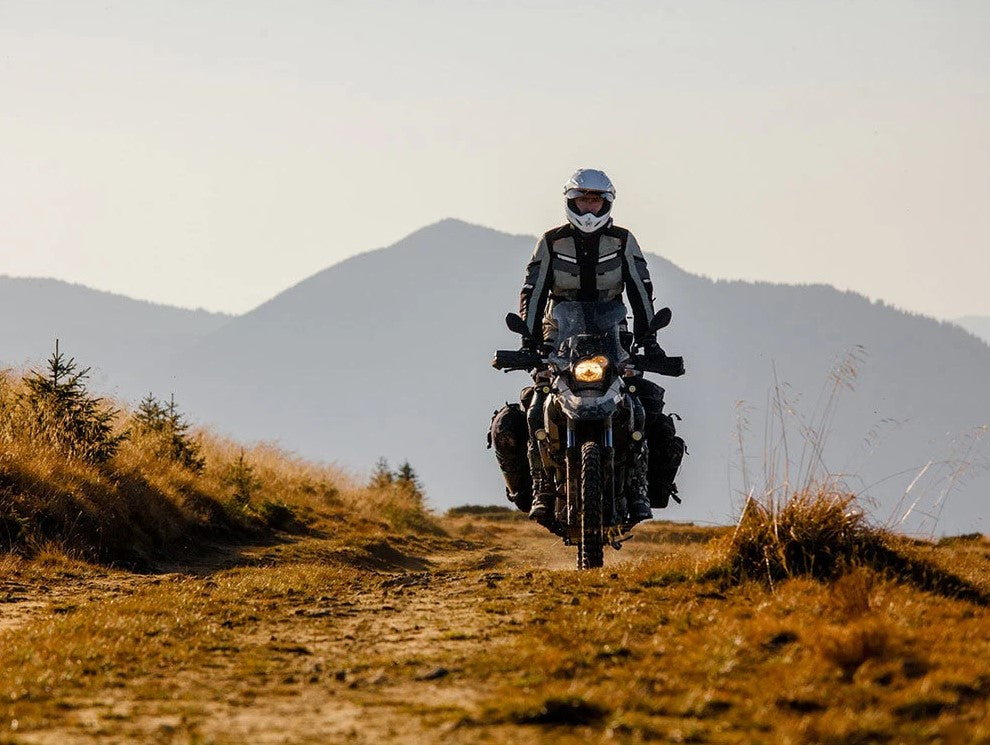
Hard or soft sided cases mounted on a dedicated luggage rack, built for adventure and dual sport motorcycles, are what most riders mean by adventure touring side cases or ADV panniers. They're built for a different job than cruiser saddlebags. Cruiser saddlebags are optimized for road use and a specific factory look, while ADV panniers are built to survive drops, water crossings, and off road vibration, and they usually mount higher and further out to clear long travel suspension. A key-lockable latch and a rubber gasket around the lid are what actually keep water out on a case, more than the shell material itself.
The two main types are aluminum cases, which are the most crash and abrasion resistant but add the most weight, and polymer/composite cases, which are lighter and often cheaper but can crack under a hard impact rather than dent. Riders doing mostly pavement touring on an ADV bike often lean toward polymer cases for the weight savings; riders doing serious off road or overland travel tend to prefer aluminum for its durability. Owners of bikes like the Harley-Davidson Pan America or the BMW GS series can generally start with side racks built for their specific model, since a rack that isn't matched to the bike's subframe and exhaust routing won't line up correctly. For riders who want top case capacity in addition to side cases, the broader ADV touring luggage lineup covers tank bags, tail bags, and top cases built for the same bikes.

12. How Do I Know Which Type of Motorcycle Luggage Fits My Bike?
Fitment comes down to three things: what your bike already has mounting points for, how much bodywork is between the seat and the rear wheel, and how the bike is built (cruiser, touring, sport, or ADV).
- Cruisers and bobbers with minimal rear bodywork often fit sissy bar bags or throw over saddlebags without any drilling or brackets, while hard mount saddlebags usually require a model specific bracket kit.
- Touring bikes, including Harley-Davidson's Touring and Softail lineups and the Indian Chieftain, are typically pre drilled or factory equipped for hard mount or quick disconnect saddlebags and a tour pack. Because bracket kits are model specific, it's worth starting from Harley-Davidson-specific saddlebag fitments rather than a universal bag if your bike falls in this category.
- Sport bikes and naked bikes rarely have saddlebag mounts at all, which is why tail bags and backpacks are the most common luggage choice for these bikes.
- Adventure and dual-sport bikes need a model specific luggage rack before hard side cases can be mounted. Soft panniers that strap on without a rack are the fastest way to add capacity without that step.
The safest way to confirm fitment before buying is to check the luggage against your exact model and year, since even bikes that look similar (a Street Bob vs. a Softail Standard, for example) often use different saddlebag bracket kits. A universal-fit bag will mount on more bikes but generally won't sit as flush or tight as one built for your exact model and year, so a bike-specific bag is worth the tradeoff for anyone keeping the same motorcycle long term.
13. Motorcycle Luggage Capacity Chart: How Many Liters Do You Actually Need?
|
Trip Length |
Recommended Setup |
Approx. Total Capacity Needed |
| Day ride / commute |
Tail bag or backpack |
8 to 15 liters |
| Overnight trip |
Saddlebags (mid-size) |
20 to 28 liters |
| Weekend trip (2 to 3 days) |
Saddlebags + sissy bar bag or tail bag |
30 to 45 liters |
| Week-long tour |
Saddlebags + tour pack |
50 to 70 liters |
| Multi-week / cross-country tour |
Saddlebags + tour pack + tank bag |
70 to 100+ liters |

14. Frequently Asked Questions
Can I use a backpack instead of saddlebags?
Yes for short rides, but a loaded backpack on a long ride causes more rider fatigue and back strain than saddlebags, since the weight rides on your body instead of the bike.
Are hard saddlebags better than soft ones?
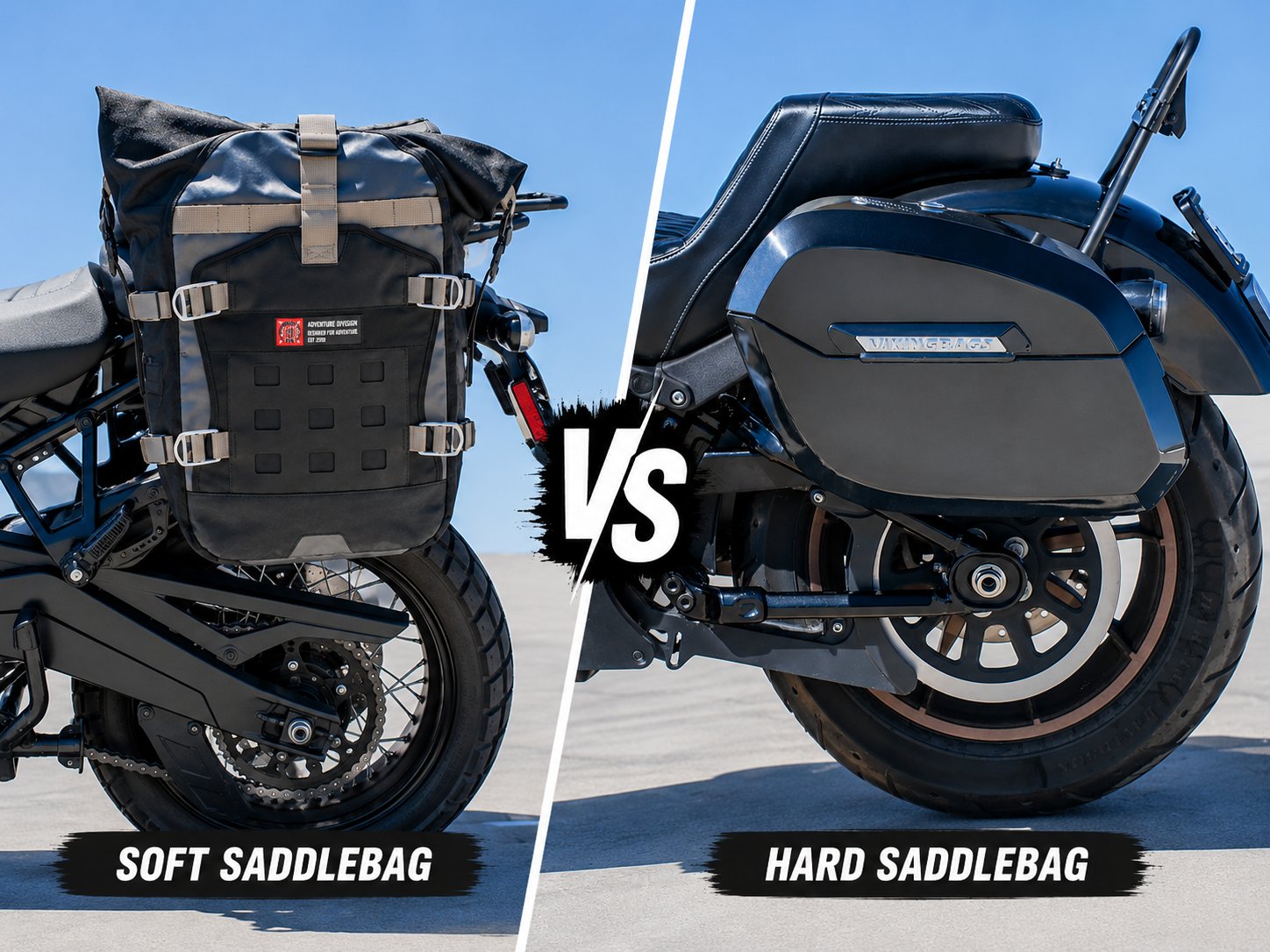
Neither is universally better. Hard saddlebags win on security and weatherproofing, soft/leather saddlebags win on price, flexibility, and classic styling.
Do sissy bar bags fit any sissy bar?
Most sissy bar bags are adjustable and fit a range of sissy bar heights and widths, but very tall or very short sissy bars may need a specific bag size for a secure fit.
Is a saddlebag the same thing as a pannier?
Functionally, yes. "Pannier" is the more common term for hard sided ADV and touring luggage, while "saddlebag" is used more often for cruiser style luggage, but both describe bags that mount on either side of the rear wheel.
Can I run saddlebags and a tour pack at the same time?
Yes, and it's the standard setup for long distance touring. Saddlebags handle daily items, and the tour pack adds capacity for bulkier gear like a helmet or rain suit.
How do I stop my motorcycle luggage from getting stolen?
saddlebags or a lockable tour pack for anything left unattended, and if you're using soft luggage, avoid leaving valuables in it at a stop where you can't see the bike.
Do saddlebags work on a bike that didn't come with mounting brackets?
Often yes, through throw over saddlebags (no hardware needed) or a universal/model specific bracket kit for hard mount saddlebags. Check your exact model and year before buying a hard mount kit.
Do ADV side cases need a specific luggage rack?
Almost always. The case itself is only half the system. The rack has to match your bike's subframe, exhaust position, and passenger peg location, which is why ADV side cases are typically sold with a model-specific rack included rather than as a universal fit.
Every bike is different. The fastest way to confirm exactly which saddlebags, tour pack, sissy bar bag, or side case will fit your specific model and year is to check it against your bike's make, model, and year before buying.



Leave a comment
All comments are moderated before being published.
This site is protected by hCaptcha and the hCaptcha Privacy Policy and Terms of Service apply.