
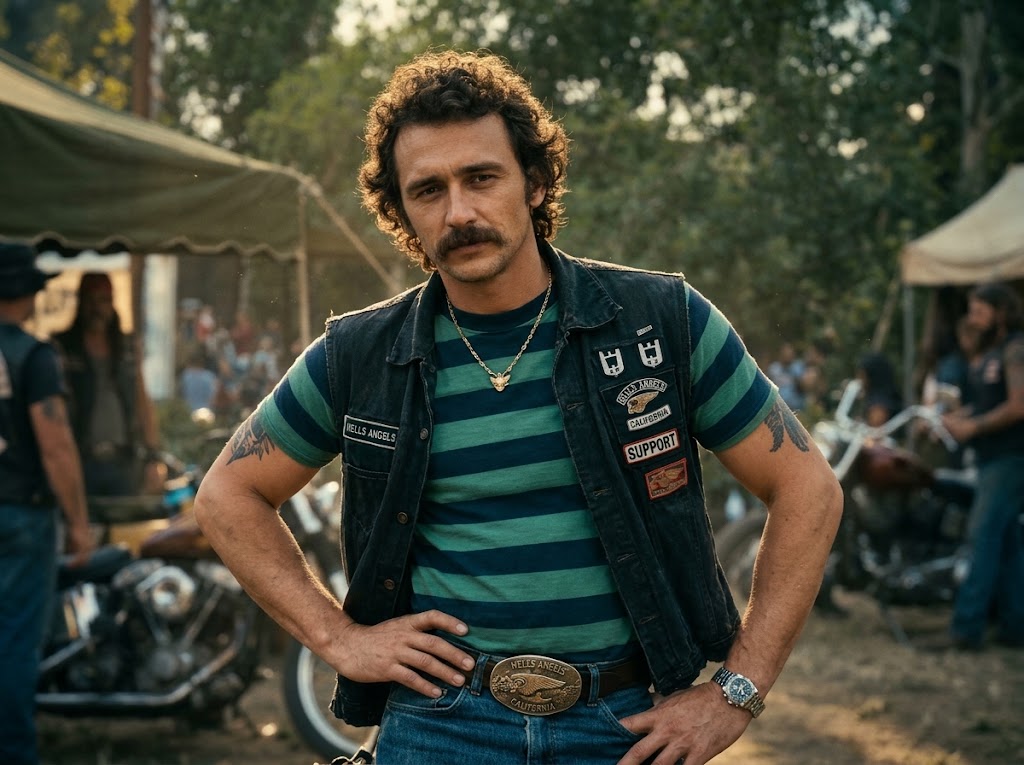
Quick Answer: Nobody runs all of it. The Hells Angels, founded in California in 1948, and the Mongols, founded in Montebello in 1969, have each shaped the state’s outlaw scene, especially in Southern California. Published histories describe an uneasy north-south split that settled in after their bloody feud of the late 1970s, with the Mongols strongest in the south. But influence is not ownership. Independent clubs, support clubs, long-gone legends and thousands of everyday riders are part of the same story.
Christie’s view, built on what he saw firsthand, is that influence and coexistence are two different things. A club can have a huge presence without every encounter turning into a fight.
Table of contents
Ask ten bikers who runs California and you’ll get ten answers and at least one argument. So we asked someone who spent four decades in the middle of it: George Christie, who ran the Hells Angels’ Ventura chapter from 1978 until he walked away in 2011, the longest run of any chapter president in the club’s history.
His answer isn’t the one the headline might make you expect.
1. Key takeaways
- No one club “runs” California. The Hells Angels and the Mongols are the two biggest names, but the state’s biker history is far bigger than either.
- Christie won’t dismiss the Mongols. He says he watched them grow from a struggling young club into a worldwide organization, and that their weight in Southern California is too big to ignore.
- Sonny Barger didn’t found the Hells Angels. The club started in 1948. Barger opened the Oakland charter in 1957 and became its most famous face.
- Christie’s rule for rival clubs: if you can’t get along, stay on your side of the gas pump.
- Old California clubs are back in the conversation: the Question Marks, Satan’s Slaves and Straight Satans, including one story Christie himself corrects.
2. Who Is George Christie?
If you’re new to the name, here is the short, factual version:
- Born: April 26, 1947, in Ventura, California.
- Early clubs: He rode with the Question Marks in Ventura and Satan’s Slaves in Los Angeles in the late 1960s, according to published profiles of his life.
- Hells Angels: Prospect in 1975, full patch in the Los Angeles chapter in 1976, elected that chapter’s president about six months later, then founded the Ventura chapter on May 6, 1978.
- Public face: He carried the Olympic torch through Oxnard on July 20, 1984, after his chapter raised the entry fee, and spent years as a Hells Angels spokesman.
- The legal record: He was acquitted in a 1987 murder-for-hire trial, took a plea deal in 2002 on drug and tax charges, and in 2013 pleaded guilty to one count of conspiracy to interfere with commerce tied to the bombing of two Ventura tattoo shops, receiving a 10-month sentence.
- Leaving the club: He resigned as president and left the Hells Angels in 2011, and was quickly cut off by the club.
- Since then: A memoir, Exile on Front Street (2016), more books, the History Channel series Outlaw Chronicles, a one-man stage show and a podcast.
That mix of insider access and a complicated record is exactly why his perspective is worth hearing, and why we mark clearly which parts below are his recollections and which are documented history.

3. George Christie on the Mongols: From Struggling Club to Worldwide Organization
When the conversation turns to Southern California, Christie doesn’t wave the Mongols away. He says he personally watched them grow from what he describes as a struggling, fledgling club into a worldwide organization, and that their presence in the region is too significant to ignore.
That’s an observation, not an official ranking and not a claim that one club controls the state.
Here is the documented backdrop:
- December 5, 1969: The Mongols are formed in Montebello, east of Los Angeles, by a group of mostly Hispanic bikers from East LA, many of them Vietnam veterans.
- 1974: The club votes to become an outlaw club.
- March 11, 1977: A mass brawl at a motorcycle swap meet in Anaheim between Hells Angels and Mongols becomes the first skirmish of a long feud. Published accounts place Christie among the Hells Angels involved.
- 1977: The fight over the Mongols’ “California” rocker escalates, and accounts say the Hells Angels voted for war on July 7.
- 1980s: The Hells Angels reportedly give up much of Southern California to the Mongols while keeping Northern California.
So when Christie talks about the Mongols, he is talking about a club he knew as a rival, from inside the Hells Angels, during the years that defined that rivalry.
He also describes a more recent encounter with Mongols members as a positive one. Given his past, he knows relationships between people from different clubs carry history. His point is that they don’t have to be defined by it.
Want the bigger picture? Our guide to the top 35 motorcycle clubs in America and their biker patches shows where each club is based, and our explainer on what “one percenter” means in motorcycle clubs covers the term you’ll hear throughout this story.


4. Sonny Barger and the Making of the Hells Angels
Sonny Barger is the name most people attach to the Hells Angels. But here’s a fact that surprises many people: he didn’t found the club.
The Hells Angels were started on March 17, 1948, in Fontana, California, when several small clubs merged, with Otto Friedli credited as the founder. Barger founded the Oakland charter in 1957, became its president the following year, and was instrumental in unifying the club’s scattered California groups under common bylaws. The Oakland chapter became the club’s unofficial headquarters. Barger died on June 29, 2022, at age 83.
Christie’s take on Barger is more layered than a simple tribute. He acknowledges Barger’s personality and says he became the voice and face of the club. He also questions whether Barger’s refusal to bend sometimes caused problems, and uses the image of a tree that won’t bend: eventually, it can break. That’s Christie’s interpretation of Barger’s leadership style, not a verdict on every decision Barger made. The two had a very public falling-out after Christie left in 2011.

4.1 Did Sonny Barger Make the Hells Angels Famous?
Christie says he doesn’t think Barger did it alone. In his view, law enforcement and the media helped make the Hells Angels a household name.
He remembers reading newspaper coverage of the club in high school, back when the headlines made even strangers familiar with members’ names. He also remembers opening Hunter S. Thompson’s book on the club to read about people he knew, including a childhood friend who had become an Oakland Hells Angel.
It’s a fair point about how reputations work. News coverage, books, films and TV all shape how the public sees a club, sometimes more than the members themselves. Barger even appeared on Sons of Anarchy, a show we cover later in this article.
5. The Question Marks: The Old-School Club Christie Still Talks About
One of the most personal parts of Christie’s interview is about the Question Marks, the Ventura club he rode with in the late 1960s and remembers from the 1960s and 1970s.
He describes members as outspoken and unafraid to challenge each other. Meetings could get heated, but he stresses that the arguments were mostly verbal, not physical. After the formal business, members would openly air personal grievances, clubhouse problems and everyday frustrations.
To outsiders that might sound uncomfortable. Christie sees value in it. In his recollection, brotherhood wasn’t about avoiding disagreements. It was about dealing with problems directly instead of letting resentment build. He says that culture shaped how he thinks about loyalty, relationships and communication.
5.1 Why Does George Christie Want to Revive the Question Marks?
Christie talks about rebuilding or resurrecting the Question Marks in some form. He presents it as a personal project and a way to reconnect with his past, not a finished revival and not an announcement that the historic club has officially returned.
It seems tied to something bigger: preserving relationships, building a positive presence and continuing a journey that still means a lot to him.
6. Satan’s Slaves: A Name That Keeps Coming Up in California Biker History
The Satan’s Slaves were an early Los Angeles-area outlaw club, active from the early 1960s, and one Christie knew personally in his younger years.
In the interview, he repeats a story he was told: that the Slaves once asked the Hells Angels for a charter and were turned down because they were too close geographically, so they carried on as their own club. Christie is upfront that he has since heard this account may not be accurate.
Published histories tell a different ending. They say Satan’s Slaves members “patched over” to the Hells Angels on January 1, 1978, forming the Angels’ San Fernando Valley charter in the Chatsworth area, after a vote of approval from Hells Angels leaders in Oakland. That’s the same year Christie opened the Ventura chapter.
The lesson: club history is told from memory, and memories differ. Treat Christie’s version as what he was told, and the 1978 patch-over as the documented record.

7. The Straight Satans: Christie Corrects Himself
The Straight Satans were a small Southern California one-percenter club founded in July 1959 in Santa Monica. They never grew beyond the Los Angeles area, but they’re remembered for their ties to the Manson Family, partly through treasurer Danny DeCarlo, who spent time at Spahn Ranch and later testified about the Family.
In the interview, Christie says he once understood that the club tried to restart around 1978 or 1979. After speaking with a person he identifies as the last member voted in, he says he learned the club considered petitioning to start again but never completed an active revival. He corrects himself on the spot.
The takeaway: the Straight Satans considered restarting, but the revival never happened. Please don’t repeat the 1978 or 1979 restart as fact.
That willingness to fix an earlier statement is one of the more telling moments in the interview. Biker history is passed along through personal accounts, and accounts change when someone speaks to a person who was actually there.
8. The Hells Angels Death Head: Christie’s Story of the Bigger Patch
The winged death head is one of the most recognizable symbols in motorcycle culture.
Christie shares a personal story about how the larger version came about. As he remembers it, Barger told him about meeting Vic Bettencourt, who was wearing a bigger death head. Barger liked it and backed the switch. Christie says he didn’t hear the nickname “Barger Larger” until after he’d left the club.
Here’s the documented context. The Oakland charter used a larger version of the death head, nicknamed the “Barger Larger,” starting around 1959, and it later became the club standard. The club’s own website credits the original death head design to Frank Sadilek, a San Francisco charter president from the 1950s. The Hells Angels also trademarked the name and death head symbols after incorporating in 1966.
Patches carry real meaning: identity, history, rank and affiliation. They’re not just fashion. If you ride, learn the rules before you wear anything unfamiliar. Our complete guide to motorcycle patches to avoid and our breakdown of biker patch rules and etiquette are good places to start. And if the titles in a club confuse you, see motorcycle club ranks and their duties.
9. When Were the Hells Angels Founded?
The date most commonly cited is March 17, 1948, in Fontana, near San Bernardino, California. Some sources differ by a day or a few years, because early club history is murky and the first official charter was reportedly drawn up in Fontana around 1950.
In the interview, Christie recalls hearing 1951 from Dick White and talks about two early groups that carried the Hells Angels name with different death head designs. That’s a fascinating glimpse into how early members remembered it, but it doesn’t replace the commonly cited 1948 date.
To see how all of these clubs fit together, read our primer on outlaw motorcycle clubs and one-percenters.
10. The Unknowns in Spain: A Club That Reminded Christie of the Question Marks
Christie’s story also travels beyond California. He talks about time in Spain, where he got to know a club called the Unknowns, which he describes as a one-percenter club in Málaga. He says he came close to joining while he lived there.
What stood out to him was how members treated each other: speaking openly, airing disagreements and not carrying grudges. It reminded him of the Question Marks. (This part rests on Christie’s own account.)
It shows what he values in club life. The strongest bonds, to him, aren’t built by avoiding hard conversations. They’re built by having them and moving on.
11. Stay on Your Side of the Gas Pump”: Christie’s Rule for Rival Clubs
The most memorable line of the interview is his advice for dealing with people from other clubs: if you can’t get along, stay on your side of the gas pump.
A gas pump has two sides, and people can use both without trouble. He compares it to a freeway, where everyone has a lane. There’s plenty of room for everybody.
That advice comes from someone who lived through the club wars. He isn’t saying every conflict can be avoided. He’s saying unnecessary confrontation doesn’t have to define every encounter. Riders can use that too:
- Respect other riders’ space.
- Don’t assume every unfamiliar group wants trouble.
- Don’t turn every disagreement into a personal fight.
- Remember that different riding communities share the same roads.
Where is club culture heading? We dig into that in the future of motorcycle club culture in the US.
12. Women, Motorcycle Clubs, and the Difference Between History and Fiction
Biker culture is usually told through its most famous men, but women have always been part of the wider community. Rules vary by club and by era, so don’t assume every club works the same way. For more, read our article on women in the Hells Angels motorcycle club.
TV has shaped the picture too. Sons of Anarchy introduced millions of viewers to club rivalries and power struggles. But it’s a drama, not a record of the Hells Angels or any real club. If you love the show, our guide to the Sons of Anarchy cast, characters and their stories separates the actors from the myths.
13. So, Who Really Runs California?
Not one name, one patch or one club. California’s motorcycle history was shaped by many clubs, strong personalities and regional pride over seven decades.
13.1 California Biker History Timeline
Year |
What happened |
|---|---|
1948 |
Hells Angels formed in Fontana (March 17), with Otto Friedli credited as founder |
1957 |
Sonny Barger founds the Oakland charter (April 1) |
1959 |
Straight Satans founded in Santa Monica; Oakland begins using the larger “Barger Larger” death head |
Early 1960s |
Satan’s Slaves active in the Los Angeles area |
1969 |
Mongols formed in Montebello (December 5) |
1975–76 |
Christie prospects, then becomes a full-patch Hells Angel in Los Angeles |
1977 |
Hells Angels–Mongols feud begins in Southern California |
1978 |
Satan’s Slaves patch over to the Hells Angels (January 1); Christie founds the Ventura chapter (May 6) |
1984 |
Christie carries the Olympic torch in Oxnard |
2011 |
Christie resigns and leaves the Hells Angels |
2022 |
Sonny Barger dies at 83 (June 29) |
13.2 Who’s Who in This Story
Club or figure |
Connection to California biker history |
|---|---|
Hells Angels |
Founded in California in 1948; the best-known outlaw club in the world |
Mongols MC |
Founded in the LA area in 1969; Christie describes their growth in Southern California |
Sonny Barger |
Oakland charter founder who became the club’s public face |
Question Marks |
Ventura club Christie remembers for direct communication |
Satan’s Slaves |
LA-area club that patched over to the Hells Angels in 1978 |
Straight Satans |
Small LA-area club; a proposed revival never became active, per Christie |
Unknowns |
Málaga club that reminded Christie of the Question Marks (his account) |
Influence is not the same as ownership. The Hells Angels and Mongols are major parts of California’s story, but the state’s riding community is far bigger than either.
14. Motorcycle Culture Is About More Than Club History
By the end, Christie moves away from rivalries and toward something more personal: aging, legacy and finding meaning. He turned 79 in April and says he feels different from one day to the next, sometimes much younger, sometimes much older. He wants to keep going and leave a positive presence, and reconnecting with the Question Marks is part of that.
There’s a lesson for every rider here. Riding culture never stays frozen. Clubs change, new riders show up and the meaning of brotherhood keeps evolving. For a lot of us, the bike is a ticket to freedom, friendship and travel, and the people we ride with matter as much as the machine.
Whether you ride with a club, tour solo or just enjoy weekend runs, make sure your gear can keep up. Viking Bags builds Harley-Davidson motorcycle saddlebags, Harley-Davidson luggage and sissy bar bags for long days on the road.
15. Frequently Asked Questions
Who runs California’s motorcycle club scene?
No single club or person runs it. The Hells Angels and Mongols have both had major influence, especially in Southern California, but many other clubs and independent riders are part of California’s motorcycle culture.
Who is George Christie?
George Christie is a former Hells Angels member and was president of the club’s Ventura, California, chapter from 1978 to 2011, the longest tenure of any chapter president in the club’s history. He became a full-patch member in Los Angeles in 1976 and left the club in 2011. He has since written books and hosted a podcast.
What does George Christie say about the Mongols?
Christie says he watched the Mongols grow from a struggling club into a worldwide organization and calls their presence in Southern California too big to ignore. That’s his own observation, not an official ranking.
Did Sonny Barger found the Hells Angels?
No. The Hells Angels were founded in 1948 in Fontana, California. Barger founded the Oakland charter in 1957 and became the club’s best-known figure. He died on June 29, 2022, at age 83.
What were the Question Marks known for?
In Christie’s recollection, the Question Marks were a Ventura club whose members spoke openly and confronted disagreements directly. He remembers meetings where people aired frustrations instead of letting resentment build.
Did the Straight Satans restart in 1978 or 1979?
According to Christie, after talking to a former member, the club considered petitioning to restart but never became active again. He says that corrected his earlier understanding.
What happened to Satan’s Slaves?
Published histories say Satan’s Slaves members patched over to the Hells Angels on January 1, 1978, forming the San Fernando Valley charter. Christie repeats a different story he was told, that the club was refused a charter, and says it may not be accurate.
When were the Hells Angels founded?
The commonly cited date is March 17, 1948, in Fontana, California. Christie recalls hearing 1951 from Dick White, but that doesn’t replace the accepted date.
What does “stay on your side of the gas pump” mean?
It’s Christie’s advice to avoid pointless confrontation with other clubs. Different groups can share the same space, like two sides of a gas pump or lanes on a freeway, without a fight.
16. Final Thoughts
George Christie’s interview is more than a debate about which club has the most pull in California. It’s a personal look at the people, grudges, friendships and changing attitudes behind the state’s biker history.
His comments on the Mongols, Sonny Barger, the Question Marks and the older California clubs matter because he lived part of that story. And his habit of qualifying shaky stories and correcting himself is a reminder that personal recollections aren’t automatically fact.
So, who really runs California? There’s no simple answer. The Hells Angels and Mongols are big chapters in the story, but California’s motorcycle culture has never belonged to one club. It belongs to every generation of riders who put their own miles into it.




Leave a comment
All comments are moderated before being published.
This site is protected by hCaptcha and the hCaptcha Privacy Policy and Terms of Service apply.