
Table of Content
The transport business is moving at a great pace, and the motorcycles are making their own niche in the modern world. The global sales of the bikes have been at an all-time high of 62.1 million units in 2025. This shows a great increase compared to the past years’ figures.
Bikes on two wheels are doing more than just serving as a means of transport. The global bike market size is estimated to be about 186.4 billion by the year 2032. This shows the high demand for bikes in different markets in Asia, Europe, and the U.S.
What is even more great about the growth is that bikes make up a little more than 3% of all registered vehicles in first-world nations. They have features that cannot be matched by their rivals, known as cars.
Honda holds the bike market with a great 19.4 million units sold in 2023. This depicts almost 40% of the world bike market. The new brands from countries such as China are taking a huge market share. This shows just how attractive two-wheel machines are.
The trend of bikes can be ascribed to the dynamic city progress, climate issues, and fiscal factors that support better and easier means of transport. Since the inception of the bikes, to avoid the traffic jam and parking issues, there are more than just transport needs that bike provides. Continue reading this article to learn about the things motorcycles can do but cars can’t.
1. Filter Through Traffic and Split Lanes
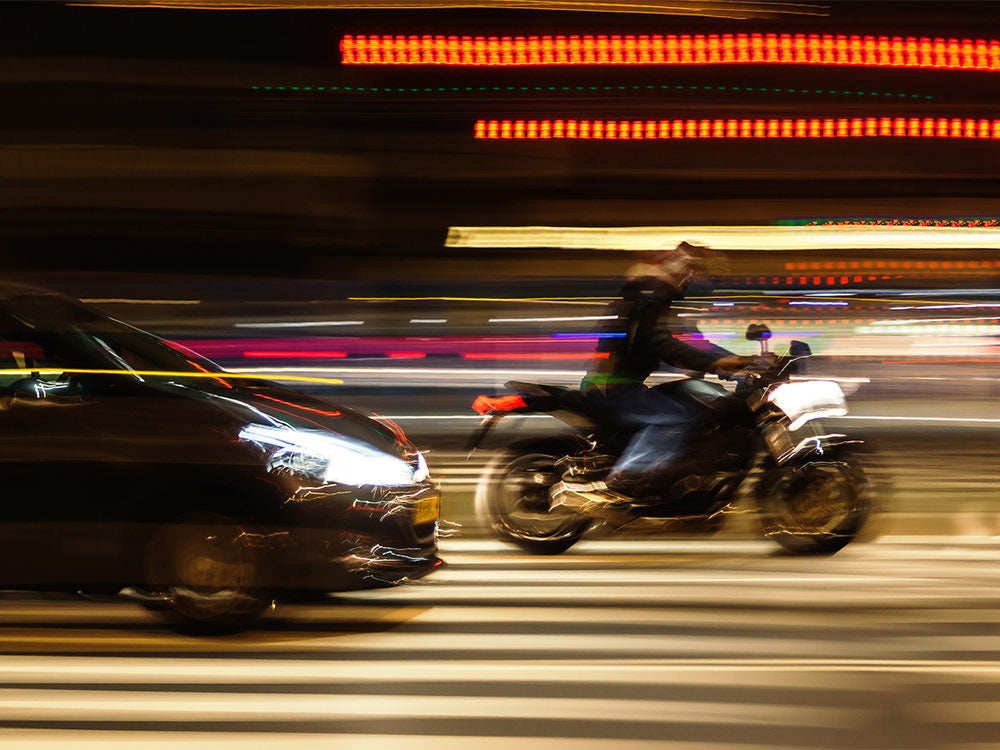
Lane splitting and filtering is the most clear benefit that bikes have over cars. With lane splitting and filtering, riders can cross slow or stopped lanes that greatly reduces commuting time, especially during rush hours. Studies show that this practice is not only easier and time-saving, but is also safer for the rider.
On the other hand, we have car drivers who are supposed to sit idle in the busy traffic. They can’t move if the lane is stopped, even due to a minor issue. It has also been observed that lane filtering is a lifesaver for bikers in many cases. The rear-end collisions are the biggest threat to bikers.
Research also shows that bikers who engage in lane filtering have much fewer rear-end crashes. Avoiding crashes is not the only aspect of safety. Bikes are the only way we can fight traffic jams. They end up ensuring more space on the road.
Must Read: Are Motorcycles Good for Everyday Commuting?
2. Park the Bike Almost Anywhere
Bikes are small in size, which provides a better parking advantage. Many bikes can be easily parked in less space. Almost 2-3 bikes can be parked in a single car space.
There is no match when it comes to bike parking. Bikes have therefore been preferred even by the authorities because of their parking convenience. Also, you can park your bike at a much lower price than a car. You can easily find a spot for bike parking even in the busy urban areas.
Cities across the world are also changing their plan to suit the parking needs of bikes. There are special areas around entrances, smaller parking meters, and modified sidewalks that cars cannot access. Bikes’ smaller size allows riders to use areas between pillars, corners, and even limited spaces to be used for parking.
This not only makes things easier for riders, but is also a fiscal advantage. Lower parking fees, less time walking to the parking places, and parking spaces near the location lead to saving time and money. This will add up over time when it is used daily. Urban planners are aware of these pros. Most cities also encourage the use of bikes by offering preferential parking rights.
3. Enhanced Fuel Mileage
In most cases, bikes offer fuel mileage that is better than even the most high-tech hybrid cars. The average fuel mileage in bikes is about 58 miles per gallon, as opposed to 36 mpg in cars. Even smaller bikes with smaller engines can get even better numbers, like hitting above 130 mpg in real-world riding.
The fuel mileage is based on a basic rule. Bikes are much lighter than cars and do not need as many engines or bigger engines to produce equal or more power. The lower mass of bikes implies that engines will not have to exert so much force to take care of inertia and keep the speed constant. This means better fuel mileage.
Even massive touring bikes tend to burn less fuel than most cars and ensure better range. These fuel savings not only have good effects on the climate. The use of less fuel implies that there is less carbon emission per mile covered.
Hence, the use of bikes is an eco-friendly option when it comes to transport. With the increasing fuel prices around the world, this fuel efficiency will continue to be a crucial factor for budget-minded riders.
Must Read: Pros and Cons of Riding a Motorbike
4. Provide Better Acceleration
Bikes can be made to run at a better pace than cars. This is not true in every case, as there are muscle cars too. However, there is a clear edge in terms of acceleration. This is what most cars are unable to achieve due to a much greater power-to-weight ratio. A good bike in the U.S. takes only 3-4 secs to reach the 60 mph mark from rest.
Even small 250 cc bikes can accelerate faster than an average car. The ride is quite responsive, which is also safer and fun. This benefit is not only used for making the rides thrilling, but also ensures a better safety aspect. Riders can escape from riskier spots more quickly than cars when riding a bike. The throttle response is also spot on in bikes.
The low weight, light build, and decent power output result in feeling more connected and responsive while riding the bike. Any signal given to the bike by the rider is directly read by the machine and is executed.
5. Being Closer to Nature
Bike riders are exposed to the fresh air and nature. This is the opposite of what a car driver feels while driving a car. This is mainly due to the cabin-like closed structure of the car, which disconnects the driver and other car occupants from the outside. The changes in the weather, speed of air, and season are directly felt by riders. They get to breathe in fresh air, experience wind patterns, and observe the details of nature.
This also continues when it comes to being aware of the terrain and spatial understanding. Bike riders get better knowledge of the road conditions, road traffic, and road features through direct sensory inputs.
Studies have also revealed that riding a bike can lower stress hormones by 28%. At the same time, it released happy hormones, including dopamine, to make riders happy. So, bike riding can help you have great mental health benefits.
The bike travel is also more sensory as most of your senses remain active. This makes journeys more memorable. Most riders say that they love the scenic routes and beautiful spots more on a bike. Also, it is not only about reaching a perfect spot, but it is also about enjoying the whole journey and travel that a car can’t provide.
6. Find Ways Out and Turn Corners
Bikes are more agile than cars. This makes riding more fun and lively. Also, this is what cars cannot offer. In case of hazardous traffic conditions, riders have the chance to use emergency lanes, shoulders, and even safely pass to sidewalks. This is a great benefit in case of an emergency. A car will have no exit or a safe passage in such a case.
Twisted country roads and crowded urban areas that pose great challenges to car drivers have little to offer to bikers. The high turning radius, small sizes, and low weight of bikes allow riders to easily maneuver and find their way through the traffic.
Those emergency responders who use bikes instead of a car know how useful bikes can be to get to the scenes of crashes and disaster sites. The ability of bikes to make sharp turns and use other paths is what makes them useful in cases when there is a need to respond fast and maneuver.
7. Create Special Community Relations
Bike culture also builds community relations that are only rarely seen on the other side. There is no such thing as a car culture as solid as bike culture. Riders are more friendly and wave to one another, pull over to help in case the bike breaks down. Riders can make new friends at a gas station. You can grow socially if you are a biker who loves to interact.
The biker clubs and riding groups also offer social networks that are specially formed to promote riders and bike riding. They also promote ride safety and support for society. These groups also tend to hold events, rallies, and charity rides that unite riders to make a good social impact. The common interest in riding results in long-term bonds that do not end.
If you are a part of the biker community, you will have several benefits in terms of sharing knowledge, upkeep tips, and other riding tips among riders. The bike enthusiasts usually guide new entrants, forming a friendly space that makes riding safe and fun for everyone involved.
8. Maintenance and Repairs Become Easy
The mechanical simplicity of the bike allows the owners to have easy access to every part of the bike, as opposed to modern complex cars. The reduced number of parts, improved accessibility, and simple systems enable riders to perform many upkeep functions themselves. Whether it's an oil change, chain upkeep, or flat tire fix, it becomes feasible for riders to work on their bikes rather than visiting bike shops.
The costs of bike parts are usually lower than those of cars. The basic nature of their bikes allows riders to know better about their machines. This helps them detect problems before they escalate into bigger issues. Most riders like the practical nature of owning a bike. They also acquire mechanical skills that make them attached to their machines.
Learning how to keep the bike in top shape is easier. It is also much cheaper to keep the bike in good shape compared to cars. The accessibility also promotes self-reliance and better know-how that helps riders in the process of ownership.
9. Bikes Are Capable of Dynamic Performance
Bikes are able to do maneuvers that cars cannot do because of the basic differences in design and physics. The cornering and leaning ability, the up-lifting of the front wheel, and the ability of dynamic movements are features that make bike riding exciting. Bikes are able to do things that four-wheelers cannot. Such features of bikes make bike ownership attractive. However, safety should always be the priority.
Rider training programs are at an advanced level and are designed to train on techniques that make the most out of the bikes, but at the same time keep safety margins. Such skills make more confident riders who have the potential to use the performance of their machines in the right situations.
10. Beat Traffic Congestion With Bikes
Traffic jams that bring traffic to a complete halt usually have less impact on riders. The lane filtering, access to alternative routes, and better acceleration enable bikes to keep moving when cars are at rest. Research indicates that the same travel made at peak time can be three times slower in a car than on a bike.
The time saved is quite a lot when compared to the normal commuting time. Time saved due to traffic jams can be used in other productive activities, for a better work-life balance, and for less transport stress.
Bike riders are more familiar with the traffic patterns. They develop these skills and learn to better determine the traffic jams and other routes than car drivers.
11. Conclusion
Bikes offer numerous benefits that cars cannot match, providing value propositions that extend far beyond basic transportation. Other than the practical features of fuel efficiency, ease of parking, low emissions, and community building, bikes offer advantages that are unique to the two-wheel travel only.
The increasing demand for bikes is statistically proven. The sales of bikes in the world are at an all-time high. The market forecasts this trend to keep growing. The 19.4 million units that Honda has sold in 2024 alone show how riders around the globe are moving towards using two-wheel machines for transport.



Leave a comment
All comments are moderated before being published.
This site is protected by hCaptcha and the hCaptcha Privacy Policy and Terms of Service apply.