
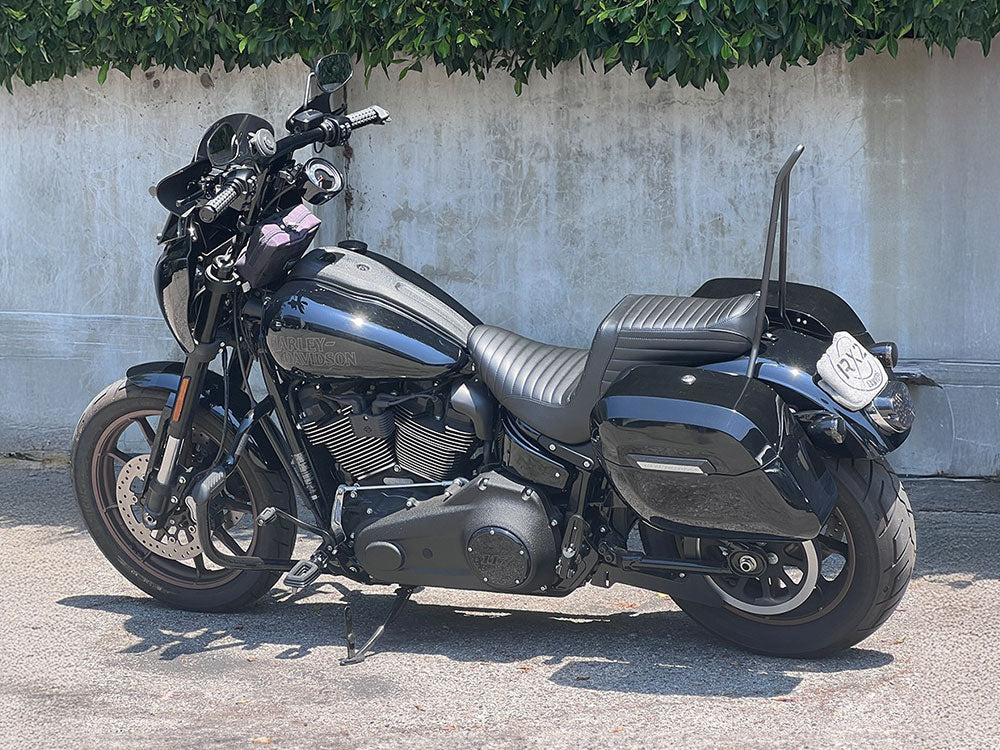
Motorcycle seat hurting after an hour? Find out where the pressure comes from, which fix to try first, how solo, 2-up and step-up seats differ, and how to confirm fitment before you buy.
A motorcycle seat can feel perfectly fine on a 15-minute test ride and become miserable an hour into a trip. Your tailbone starts aching, your legs feel numb, or you keep shifting around because you cannot find a comfortable position. Sometimes the seat is the problem. Other times, its shape, your riding position or the way your weight sits on it is causing the discomfort.
Replacing the seat can make a real difference, but buying the most expensive option, or choosing one because it has thick padding, is not a reliable way to solve the problem. The better approach is to work out what is uncomfortable first. Do you need more room to move? A wider seating area? A lower seat to reach the ground? Better support for long rides? Or simply a cushion that takes the edge off your existing seat?
This guide explains how motorcycle seats affect comfort, what features a good seat should have, which fixes are worth trying before you spend money, and how to read a seat listing so you can tell what you are actually buying. If you would like a shorter primer on seat parts first, see our Motorcycle Seats 101 guide.
Table of contents
1. Quick Answers
- What makes a motorcycle seat comfortable? A shape and width that suit your body, foam that supports rather than just feels soft, a height that works with your inseam, and a position that does not fight your handlebars and foot controls.
- Why does a seat hurt after an hour? Usually because pressure builds in one spot, such as the tailbone, sit bones or inner thighs. Where it hurts and how quickly it starts are your best clues.
- What should I try first? Start with the cheapest change that matches the problem: a removable cushion for general hardness, or a different seat shape for pain in the same place every ride.
- How do I make sure a seat fits? Confirm your exact make, model, year, trim and solo or two-up setup, and check the mounting type on the product page.
- When is it not a seat problem? If you have severe, persistent numbness or weakness, stop riding and get medical advice instead of adding more padding.

2. What Makes a Motorcycle Seat Comfortable?
A comfortable motorcycle seat supports your body without forcing you into an awkward position. Its shape, foam, width, height and relationship to the foot controls and handlebars all affect how it feels on the road.
2.1. Seat Shape and Width
A wider seat can distribute your weight over a larger area, but wider does not automatically mean more comfortable. If the front of the seat is too broad, it can push your legs outward and make it harder to reach the ground.
A narrow seat may make it easier to put your feet down, yet concentrate pressure on a smaller area during longer rides. The ideal shape depends on your build, your riding position and how the seat supports you.
Pay attention to where the seat carries your weight. If its front edge presses into your thighs, its rear section pushes against your tailbone, or you feel like you are sliding toward the tank, the shape may not suit you.
2.2. Foam Density and Support
Soft padding can feel great when you first sit down. That does not guarantee it will stay comfortable after two hours.
Foam needs to cushion your body while giving enough support to stop you sinking into one pressure point. Very soft foam may compress too much under your weight, and extremely firm foam can feel harsh if the seat does not spread pressure well. The answer is not simply to choose the softest or firmest seat. Look for a design that supports your body in a natural position and suits the length of your typical rides.

2.3. Seat Height and Riding Position
Seat height affects more than whether your feet reach the ground. It can change your knee bend, hip angle, reach to the handlebars and the amount of pressure you place on different parts of the seat.
A tall rider on a low, cramped seat may struggle with bent knees. A shorter rider on a tall, wide seat may find it difficult to put both feet down comfortably.
Also consider the whole riding position. If your handlebars pull you forward or your foot controls force your legs into an uncomfortable angle, changing the seat alone may not fix the problem.
2.4. Cover Material and Surface Texture
The seat cover affects grip, weather protection and how easily you move around. A grippy surface can help keep you in position, while a smoother cover may make it easier to shift your weight.
Heat and moisture matter too, especially in summer. A cover that stays wet after rain or traps too much heat can make a long ride less pleasant, and dark covers in particular can get hot in direct sun. Choose a surface that works for your riding conditions rather than judging it on appearance alone.
3. Why Does Your Motorcycle Seat Hurt After an Hour?
Before ordering a replacement, identify where the discomfort starts and how quickly it develops. The location and timing can help narrow down what needs to change.
- Tailbone pain: The rear of the seat may be pressing against your tailbone, or the seat's shape may not support your body properly.
- Soreness across your sit bones: The seat may not distribute your weight comfortably, or its width and shape may not suit you.
- Numbness in your buttocks or legs: Pressure, posture or a restricted riding position may be contributing. Do not assume thicker padding will solve it.
- Inner-thigh pressure: A seat that is too wide or has bulky edges may interfere with your natural leg position.
- Lower-back fatigue: The seat may be changing your hip angle, but handlebar reach, foot-control position and overall posture also deserve attention.
- Discomfort that gets worse as the ride continues: The seat may be compressing too much, creating a pressure point, or simply not matching your body.
A useful test is to notice whether the discomfort appears in the same place every ride and how long it takes to begin. If the problem is severe, persistent, or includes ongoing numbness or weakness, stop riding and seek appropriate medical advice rather than trying to solve it with seat padding alone.
For a quick checklist of warning signs, our guide to 5 signs you need to replace your motorcycle seat is a useful companion.
4. Motorcycle Seat Cushions vs. Replacement Seats
You do not always need a new seat assembly. A cushion or a change to the existing seat may be enough, depending on the problem.

4.1. Gel Seat Cushions
Gel cushions add a layer between you and the existing seat. They can help some riders reduce pressure, but the result depends on the cushion's shape, thickness and how it interacts with the original seat.
A gel pad is not a guaranteed fix for tailbone pain or numbness. If the seat underneath has a shape that creates a pressure point, adding another layer may leave the underlying problem unchanged.
4.2. Air Seat Cushions
Air cushions use adjustable air cells to change how pressure is distributed. Some riders find them helpful on longer trips because they can adjust the amount of air to suit their needs.
They also take some trial and error. Too much inflation can make the cushion feel unstable or uncomfortable. Follow the manufacturer's instructions and test the setup on shorter rides before relying on it for a long trip.

4.3. Padded Riding Shorts
Padded shorts can add cushioning without permanently changing the motorcycle. They are worth considering if you want to test whether a little extra padding helps before buying another seat.
They may not be practical for every rider, especially in hot weather or when you need to wear regular clothes at your destination. They also cannot correct a seat that forces your body into an uncomfortable position.
4.4. Sheepskin and Mesh Seat Covers
Sheepskin and mesh covers can change the surface feel and airflow around the seat. Depending on the design, they may help with heat, moisture or minor discomfort.
They generally do not change the underlying seat shape very much. If the problem is a pronounced ridge, an awkward seating pocket, or pressure directly against your tailbone, a cover alone may not be enough.
4.5. Replacement or Reshaped Seats
A replacement seat gives you the chance to change the seat's shape, height, support or riding position. A specialist may also be able to reshape your existing seat or modify its foam.
This is often the better route when cushions only provide temporary relief or when the original seat consistently puts pressure in the wrong place. Before buying, check whether the replacement actually changes the feature causing your discomfort. A seat marketed for touring may still be a poor match for your body.
5. Which Motorcycle Seat Solution Should You Try First?
Start with the problem you want to fix. The right solution depends on whether you need to change the cushioning, the seat's shape or your riding position.
Your main problem |
What to consider first |
|---|---|
Your seat feels hard on shorter rides |
Try a suitable removable cushion before replacing the seat. |
Your tailbone hurts in the same spot every ride |
Check the seat's shape and pressure points. A different contour or professional reshaping may help more than extra padding. |
Your legs feel cramped or your knees bend too much |
Check seat height and the relationship between your seat, foot controls and handlebars. |
You struggle to reach the ground |
Compare seat height and width at the front. A lower, narrower seat may help, but check that it does not compromise your riding position. |
You become uncomfortable on long-distance rides |
Look for consistent support over time, room to move and a shape suited to your body. Test a cushion or replacement seat before relying on it for a long trip. |
Your passenger complains about discomfort |
Evaluate the passenger section separately. Check its support, available space and suitability for two-up riding. |
These are starting points, not guaranteed fixes. If the discomfort comes from your overall riding position or a medical issue, changing the seat alone may not solve it.
6. Three Common Motorcycle Seat Problems and What to Check
Scenario 1: Your seat becomes uncomfortable after 45 to 60 minutes. Before buying a touring seat, notice where the discomfort starts. If it develops in one specific spot, look at the seat's contour and pressure distribution. If the whole seating area feels harsh, a suitable cushion may be worth testing first.
Scenario 2: You are shorter than average and feel unstable at stops. Do not choose a seat based on its advertised height alone. Check how wide it is where your legs pass over the sides. A slightly taller but narrower seat can sometimes make ground reach easier than a lower, wider one. Confirm that you can still control the motorcycle comfortably before committing to a change.
Scenario 3: You ride for several hours and keep shifting around. Constantly changing position may be a sign that the seat is not supporting you comfortably. Check whether you have enough usable seating space and whether the shape encourages you to slide forward or backward. If a removable cushion does not help, consider a replacement or professional reshaping that addresses the actual pressure point.
7. Solo, 2-Up and Step-Up Seats Explained
Seat listings use a few terms that are easy to mix up, and choosing the wrong type is one of the most common reasons a seat does not work out.
- Solo seat: A single-rider seat. Viking's seats pages note that solo seats fit one person only.
- 2-up seat: A longer seat with room for a rider and a passenger in one piece.
- Passenger seat with a backrest: A passenger section that adds a padded backrest, which is designed to give the passenger back support.
- Step-up seat: A 2-up design in which the passenger section sits higher than the rider section. In Viking's listings, the raised section also gives the rider lower-back support.
- Stock seat: The standard seat that comes with a new motorcycle.
If you ride alone most of the time, a solo seat may be all you need. If you carry a passenger even occasionally, a 2-up or step-up design means you do not have to swap parts each time.
8. What a Motorcycle Seat Is Made Of
Understanding the parts helps you read a product description. Viking's seats pages describe three main components:
- The baseplate is the foundation that supports the rest of the seat and the rider's weight. According to Viking, most motorcycle seats use a steel or fiberglass baseplate.
- The foam cushions the rider. It needs to be soft enough to be comfortable and firm enough to keep its shape under load.
- The cover protects the foam from debris and moisture. Covers are commonly vinyl or leather, and Viking notes that vinyl is easier to maintain.
Viking's Iron Born seats combine a durable baseplate with PU foam that uses gel technology and a weather-resistant PVC leather cover. Gel-infused foam is part of the seat's construction, which is different from adding a separate gel pad on top of an existing seat. Seat stitching is mostly about appearance, and options include plain black stitching, horizontal, vertical or diamond patterns.
9. Features a Good Motorcycle Seat Should Have
Seat makers and riding publications tend to point to the same handful of features. Here is what they are, why each one matters, and where you will find it on Viking Bags seats.
9.1. What experienced riders and seat makers point to
- A rigid seat pan. Aftermarket seat pans are commonly made from plastic or steel. The pan holds the shape of the seat and carries your weight.
- Foam that holds its shape. Foam that compresses early can leave you sore after hours on a seat that felt great on a test ride. Many aftermarket seats are also firmer than stock seats, because firmer foam tends to keep its comfort over longer rides.
- Layered foam. A common approach is a denser foam base with a thinner, softer layer closest to the rider.
- The right width and height for your body. A wider seat can feel better, but it can also lengthen your reach to the ground, and denser foam can make a seat taller.
- A durable cover. A motorcycle seat faces weather, sunlight, friction and chemicals, so the cover matters as much as the foam.
- Back support or a backrest option. Some seats include it, and some are designed to accept a backrest later.
- A possible break-in period. Some seats need time before the foam contours to your body, which is one reason to be cautious about buying a used seat shaped by another rider.
9.2. Which Viking Bags seats have these features
Feature |
Why it matters |
Where you will find it at Viking Bags |
|---|---|---|
Gel-infused foam that holds its shape |
Foam that compresses early creates pressure points |
The Iron Born diamond-stitch seats for the Softail Street Bob FXBB/S and the Indian Chief Bobber list PU foam with gel technology. Viking's Sportster collection pages also describe shape-retaining foam |
A rigid, durable baseplate |
Supports your weight and keeps the seat's shape |
Viking's Sportster collection pages describe a powder-coated steel foundation with fiberglass reinforcement, and the Iron Born listings highlight a durable baseplate |
Lower-back support |
Helps keep you from sliding backward and reduces lower-back fatigue |
The step-up 2-up Iron Born seats list rider lower-back support. The Indian Chief Dark Horse seat listing credits its lumbar support for helping on extended journeys |
A weather-resistant cover |
Rain, sun and friction wear down a seat's surface |
The Iron Born listings describe a weather-resistant PVC leather cover |
Room for a passenger |
A rider-only seat cannot carry two |
Viking's Sportster pages list solo, 2-up and passenger variants, and the passenger motorcycle seats page collects bike-specific options |
Bike-specific fitment |
Mounting points and shape differ by model and year |
Seats are listed by exact model and year, such as the Scout Bobber 2018 to 2024 seat that will not fit 2025 bikes |
Easy installation |
A seat only helps once it is mounted correctly |
The Street Bob and Chief Bobber listings state direct bolt-on mounting, included hardware and an easy installation level |
Style options |
Stitching changes the look and can match decals or paint |
Viking's Sportster pages list plain, horizontal, vertical and diamond stitching |
Published dimensions |
Lets you compare size before you buy |
Some listings publish measurements, such as the Indian Sport Chief RT seat, which lists 28 inches long, 11.5 inches wide at the front and 6.5 inches wide at the rear |
The listings we reviewed do not publish foam density figures, so rely on the fitment note, the listed dimensions and owner reviews rather than assuming a number. No seat has every feature, and there are trade-offs. For example, a step-up design adds rider back support but can raise your riding position, as some Street Bob owners report. Browse Viking's motorcycle seats and compare each listing against the features above.
10. How to Choose a Motorcycle Seat for Your Riding Style
Your riding style matters because the seat that works well on a short commute may not suit a full day in the saddle.
10.1. Cruiser and Harley-Davidson Seats
Cruiser seats often place the rider in a relatively relaxed position, but individual seat shapes vary considerably. A low seat can help with ground reach, while a wider or more supportive design may work better for longer rides.
For a Harley-Davidson, confirm the exact model, year and configuration before ordering. Softail, Sportster, Dyna, Street and Touring models do not all share the same seat fitment. Even within one model family, changes across model years or aftermarket modifications can affect compatibility. Browse Viking's Harley-Davidson seats or Indian motorcycle seats to see what is listed for your bike, and read our guide to aftermarket gel-technology 2-up seats for Harley-Davidson for a closer look at that style.
If you ride with a passenger, check whether you need a solo seat or a two-up seat. Do not assume a passenger pad will fit every seat or provide enough support for longer trips.
10.2. Touring Seats
Touring riders spend more time in the same position, so small pressure points can become a major problem over several hours. Look for a shape that supports your body without forcing you against the front or rear of the seat. A wider seating area may help, but it should still allow a natural leg position and reasonable control of the motorcycle.
Consider passenger comfort separately. A seat that works for the rider may leave the passenger with too little room or inadequate support. Our article on the benefits of a gel seat for touring looks at gel construction for long days in the saddle.
10.3. Sportbike Seats
Sportbike seats are shaped around a more forward-leaning riding position. Their narrow profiles can help riders move around the motorcycle, but the position may place more demand on the wrists, hips and legs.
If you experience discomfort, look at the seat and the rest of your riding position together. A thicker seat may alter your reach to the handlebars or foot controls, so check the effect on your overall fit before committing to a change.
10.4. Adventure and Dual-Sport Seats
Adventure riders may alternate between sitting and standing, ride on different surfaces and cover long distances between stops. Seat comfort therefore involves both support while seated and the freedom to move when the terrain changes.
A wider, more supportive seat can help on pavement, but an excessively broad shape may make standing transitions or ground reach less convenient. Think about how you actually ride rather than choosing by padding thickness alone. If you are building a bike for big distances, our guide to preparing and upgrading adventure motorcycles for long-distance travel puts seat comfort in the context of the rest of the setup.
10.5. Dirt Bike Seats
Dirt bike seats are generally designed around movement, control and transitions between seated and standing positions. A touring-style seat is not automatically the right choice for off-road use. If you ride a dirt bike, check fitment and seat options with the motorcycle manufacturer or a specialist who supports your specific make and model.
11. Passenger Seats: Comfort for Two
A passenger who is uncomfortable will not stay on the bike for long, and a restless passenger can affect how the motorcycle feels to ride. Evaluate the passenger area as its own part of the seat.
- Support: Look for a padded backrest or enough shaping to keep the passenger steady.
- Space: Check how much room the passenger has and whether the rider is pushed forward.
- Height: A raised passenger section can improve the view but may feel high to some people.
- Fitment: Make sure the passenger section is designed for your exact motorcycle.
Viking lists bike-specific options on its passenger motorcycle seats page, and if you are still deciding which bike suits two people, our guide to choosing a two-seater motorcycle is a good place to start.
12. Viking Bags Seats: What the Listing Tells You
Viking's seats pages cover bike-specific seats for Harley-Davidson, Honda, Suzuki, Kawasaki, Yamaha, Victory, Indian and Triumph. Each product page uses a consistent set of details, and knowing how to read them prevents most fitment mistakes.
- Fitment note: The exact models and years the seat fits. This is the most important line on the page.
- Mounting type: For the seats below, this is direct bolt-on, with mounting hardware included.
- Finish and material: What the cover and foam are made of.
- Installation level: A rating of how easy the install is. The Street Bob and Chief Bobber seats below are listed as easy.
- Installation manual: Some product pages link a PDF manual you can review before you order.
Here is how that looks on three popular Iron Born diamond-stitch 2-up seats:
Seat |
Fitment note |
Details from the listing |
|---|---|---|
Iron Born Diamond Stitch 2-Up Seat for Harley Softail Street Bob FXBB/S |
Softail Street Bob FXBB/S, 2018 to current |
PVC leather, gel-infused PU foam, step-up 2-up design, rider lower-back support, diamond stitching, hardware included, direct bolt-on, easy install |
Indian Scout Bobber 2018 to 2024. The listing states it will not fit 2025 models |
Viking Leather finish, step-up 2-up design, direct bolt-on |
|
Indian Chief Bobber, 2022 to current |
PVC leather, PU foam with gel technology, weather resistant, durable baseplate, direct bolt-on, easy install |
The Scout Bobber line is a good example of why the fitment note matters. The same seat style is offered for several Scout models, and the 2018 to 2024 versions are not interchangeable with the 2025 bikes.
12.1. What owners say about the Street Bob seat
The Street Bob seat has a 4.9 out of 5 rating from 45 reviews on its product page, which makes it a useful example of what to expect. Many reviewers describe it as a clear step up from the stock seat, with lower-back support and fit among the points riders mention, and several describe the install as quick and easy. A few comments are worth knowing before you buy. Some owners say the seat sits roughly an inch higher than stock, one rider with shorter legs found the added thickness put them further from the ground, and another found the seat a little wide at the sides when their feet were down. That is exactly the kind of detail to weigh against your own height and inseam. Our guide to the best aftermarket seat for a Harley Street Bob is a useful follow-up.
13. How to Check Motorcycle Seat Fitment Before Buying
A seat can look right in product photos and still be incompatible with your motorcycle. Confirm fitment before placing an order.
- Make and model: Confirm the exact motorcycle, not just the brand.
- Model year: Do not assume seats fit every year within a model family.
- Trim and variant: Different versions of the same motorcycle may use different seat arrangements.
- Solo or two-up setup: Make sure the seat suits the number of riders you plan to carry.
- Mounting points: Check that the mounting system matches your motorcycle.
- Existing modifications: Custom rear fenders, altered frames, aftermarket racks or other changes may affect fitment.
- Seat height and shape: Look at the stated dimensions and design, not only the product name.
- Return policy: Review the seller's return conditions before modifying or installing the seat.
If you are considering a replacement, start with Viking's motorcycle seats page and open the individual product listing for your bike. Confirm that it fits your motorcycle's exact make, model, year and configuration, then review the seat design, mounting requirements and return conditions. Viking's product pages state that orders ship within 48 hours, with delivery in 3 to 5 business days, that you can return or exchange within 45 days, and that products carry a one-year warranty.
A seat that looks right in a product photo is not necessarily compatible with your bike, and compatibility alone does not guarantee that its shape will suit your body. If your motorcycle has been modified or the listing does not clearly confirm fitment, contact the seller before ordering.
14. Can You Make Your Existing Motorcycle Seat More Comfortable?
Before spending money on a replacement, try to identify the source of the problem with a few controlled changes.
- Take shorter rides and note when discomfort begins. A new rider may need time to build tolerance for longer periods in the saddle, but persistent or severe discomfort should not be dismissed as something you simply have to endure.
- Check your riding position. Avoid staying rigidly fixed in one position. Where your motorcycle allows it safely, small position changes and regular breaks may help. Do not move your feet to unfamiliar positions if doing so compromises your control of the motorcycle.
- Try a removable cushion or cover. This is a relatively simple way to test whether a change in pressure distribution or surface feel helps. Secure it properly and make sure it does not interfere with your ability to control the bike.
- Consider professional seat reshaping. A specialist may be able to alter the seat's contour or foam rather than replacing the entire assembly. Discuss your specific discomfort and riding position before authorizing the work.
- Replace the seat if the shape or support is fundamentally wrong for you. A cushion can help with some problems, but it cannot reliably correct every fit issue.
Seat comfort is only one part of a comfortable long ride. Our guide to the top comfort upgrades for long-distance riding covers the other changes worth considering.
15. What Should You Look for in an Aftermarket Motorcycle Seat?
Use this checklist to compare seats before buying:
- Fitment: Is the seat confirmed for your exact motorcycle and model year?
- Rider height: Does its height and width suit your inseam and ground reach?
- Riding duration: Is the design appropriate for commuting, weekend rides or long-distance touring?
- Pressure distribution: Does the shape address the discomfort you actually experience?
- Riding position: Will it change your reach to the bars or your knee angle?
- Passenger needs: Is there enough room and support if you ride two-up?
- Materials: Are the foam and cover appropriate for your weather and use?
- Installation: Does it use the correct mounts, and are any additional parts required?
- Returns and warranty: Can you return it if it does not fit, and what conditions apply?
- Realistic expectations: Does the product description explain its design and fitment, or rely mostly on broad claims about comfort?
If possible, try a seat before buying or ask the seller about fitment and return options. Other riders' reviews can help identify patterns, but their results are not a guarantee that the same seat will suit your body.
16. Frequently Asked Questions About Motorcycle Seats
Why does my motorcycle seat hurt after 30 minutes or an hour?
The seat may not distribute your weight comfortably, or its shape may create pressure around your tailbone, thighs or sit bones. Riding posture can contribute too. Identify where the discomfort begins before choosing a fix.
Are gel or air motorcycle seat cushions better?
Neither is automatically better. Gel cushions add a cushioning layer, while air cushions allow you to adjust the air inside the pad. The result depends on the design and your existing seat. Test one on a shorter ride before relying on it for a long trip.
How do I stop my butt from going numb on a motorcycle?
Check the seat's shape, your riding position and how long you stay in one position. A cushion may help, but a poorly shaped seat may need reshaping or replacement. Persistent numbness, particularly after the ride, warrants medical advice.
Is a harder motorcycle seat better for long-distance riding?
Not necessarily. Very soft foam can compress too much, while very firm foam can create pressure points. Long-distance comfort depends on support, shape and pressure distribution rather than firmness alone.
Do motorcycle seats break in over time?
Some seats may feel different after use, and some owners describe a break-in period, but you should not count on a painful seat becoming comfortable eventually. Repeated pressure points, tailbone pain or numbness may indicate that the seat does not fit you properly.
What is the best motorcycle seat for a short rider?
Look for a seat that lets you reach the ground securely without forcing your legs too far apart. Compare its height and width at the front, and check that it preserves a comfortable riding position.
What is the best motorcycle seat for long rides?
There is no single seat that works best for everyone. Look for a design that supports your body over time, suits your riding position and addresses your particular pressure points.
Can I make my stock motorcycle seat more comfortable without replacing it?
Yes, depending on the problem. Try a removable cushion or suitable cover, or consult a specialist about reshaping the foam. If the seat's shape is causing the discomfort, these changes may not be enough.
How do I choose a comfortable seat for a passenger?
Check the passenger section's width, shape and support, as well as how much room it provides. Confirm that the seat is designed for passenger use and fits your motorcycle.
Will an aftermarket motorcycle seat fit any bike?
No. Seat mounts, dimensions, frame shapes and model-year changes affect compatibility. Confirm the exact motorcycle fitment, especially if your bike has been modified.
What is a step-up motorcycle seat?
A step-up seat is a 2-up design where the passenger section sits higher than the rider section. In Viking's listings, the raised section also provides lower-back support for the rider.
Will a new seat change my seat height?
It can. Some owners of Viking's Street Bob 2-up seat report sitting about an inch higher than on the stock seat. Check the product description and compare it with your inseam before you order.
Which motorcycle brands does Viking Bags make seats for?
Viking's seats pages list bike-specific seats for Harley-Davidson, Honda, Suzuki, Kawasaki, Yamaha, Victory, Indian and Triumph. Check the individual product page to confirm your model and year.
Are Viking Bags seats hard to install?
The Street Bob and Chief Bobber seats described above are listed as direct bolt-on with mounting hardware included and an installation level of easy. The Scout Bobber seat is listed as direct bolt-on with hardware included free. Some product pages also link an installation manual, so you can review the steps before you order.
What features should a good motorcycle seat have?
Look for a rigid pan, foam that holds its shape, a width and height that suit your body, a durable cover, back support if you need it, and fitment confirmed for your exact motorcycle. The section above shows where each of these appears on Viking Bags seats.
Which Viking Bags seats have lower-back support?
Viking's step-up 2-up Iron Born seats list rider lower-back support, including the Street Bob seat and the Chief Dark Horse seat. Check the listing for your model to confirm.
Which Viking Bags seats are weather resistant?
The Iron Born seat listings describe a weather-resistant PVC leather cover. Check the product page for your bike.
Does Viking Bags sell solo seats?
Viking's Sportster pages list solo, 2-up and passenger variants. Availability varies by model, so check the listing for your bike.
Is a gel seat worth it?
Gel can help spread pressure, but it is not a guaranteed fix, and the seat's shape and fitment still matter. Gel-infused foam, as in Viking's Iron Born seats, is part of the seat's construction, while a gel pad is an add-on for an existing seat.
How long do motorcycle seats last?
It depends on the foam, the cover, how much you ride and the weather. Foam can lose its support over time, and Viking's own Sportster pages note that after a few years a stock seat may need replacing to get the original feel back.
17. Choose a Seat That Solves the Right Problem
The right motorcycle seat is not necessarily the softest, widest, lowest or most expensive one. It is the one that fits your motorcycle, supports your body and works with the way you ride.
If discomfort begins quickly, identify where the pressure builds before buying anything. A cushion may be enough for a minor issue, and a persistent fit problem may call for reshaping or a replacement seat. Check compatibility carefully, especially if your motorcycle has been modified, and test any change on a shorter ride before setting off on a long trip. When you are ready, browse Viking's motorcycle seats and confirm the fitment note for your exact model.



Leave a comment
All comments are moderated before being published.
This site is protected by hCaptcha and the hCaptcha Privacy Policy and Terms of Service apply.