Which cruiser motorcycle is right for you? The best choice depends on how you plan to ride, your experience level, physical fit, and budget. This 2026 guide breaks down cruiser motorcycle types, compares real beginner-friendly models, and explains why seat height alone does not determine whether a bike fits. It also covers weight, ergonomics, engine performance, comfort, highway riding, passenger use, luggage, ownership costs, and safety to help riders choose a cruiser based on their actual needs.
A 379 lb Honda Rebel 300 and a 900 lb Harley-Davidson touring bagger are both technically cruisers. Choosing between them has almost nothing to do with styling.
It comes down to how you'll actually ride the bike, how it fits your body, how much riding experience you have, and what you're willing to spend once the purchase is behind you. This guide walks through all four, with real current models and specific numbers.
Table of contents
1. What Makes a Motorcycle a Cruiser?
Riding position and character define the category more than any single spec does, and the definition is looser than most guides suggest. The traits that show up across most cruisers:
A relatively low seat, and on many models a lower, more centralized mass that can make a bike feel steadier at a stop
A relaxed, often reclined riding posture with wide, pulled-back handlebars
A long wheelbase, which trades tight cornering agility for straight-line stability
Foot controls that range from mid-mounted to fully forward, depending on the bike
An engine most often tuned for low-to-mid-range torque rather than high-RPM horsepower
None of that makes V-twin engines or forward foot controls mandatory. The Kawasaki Eliminator and Honda Rebel line both use parallel-twin or single-cylinder engines with mid-mounted controls closer to a standard motorcycle's ergonomics, and both are marketed and generally accepted as cruisers.
Treat cruiser as one fixed formula and you'll misjudge half the bikes that carry the name.
2. Different Types of Cruiser Motorcycles
Cruiser categories aren't standardized across the industry, and a lot of bikes blur more than one at once.
Part of the confusion is that "cruiser type" isn't really one classification system. It's three layered together:
Style: traditional or modern
Performance: lightweight, sport-oriented, or power
Touring capability: standard versus touring-oriented or bagger
A single bike can sit in one slot from each axis at the same time. That's why a sport cruiser and a power cruiser aren't opposites of the same thing, and why "classic" tells you nothing about how heavy or fast a bike actually is.
Classic Cruisers. Chrome-heavy, big V-twin, retro-styled. Think Harley-Davidson Heritage Classic or Indian Chief. They're heavy but planted, with a strong visual presence that comes at the cost of curb weight and insurance premiums. If you want the archetypal cruiser experience and don't mind the bulk, this is the category.
Modern Cruisers. Same relaxed riding position, current electronics such as ABS, ride modes, and TFT displays. You get the cruiser feel without gambling on decades-old technology.
Sport Cruisers. Lighter weight, controls positioned more toward mid-mounted than forward, midrange displacement. The Honda Rebel line and Kawasaki Eliminator both fit here. They're the easiest cruisers to manage at low speed, which is exactly why they show up on so many beginner shortlists.
Power Cruisers. Cruiser posture bolted onto a genuinely fast platform, like the Triumph Rocket 3 or Ducati Diavel. Real acceleration and passing power come standard. So does a throttle and a curb weight that will punish inexperience quickly.
Small and lightweight cruisers. Sub-500cc, typically under 420 lb wet. The Honda Rebel 300 is a good stand-in for the class. What they give up in highway power reserve, they make up for in confidence at a stop and in a parking lot.
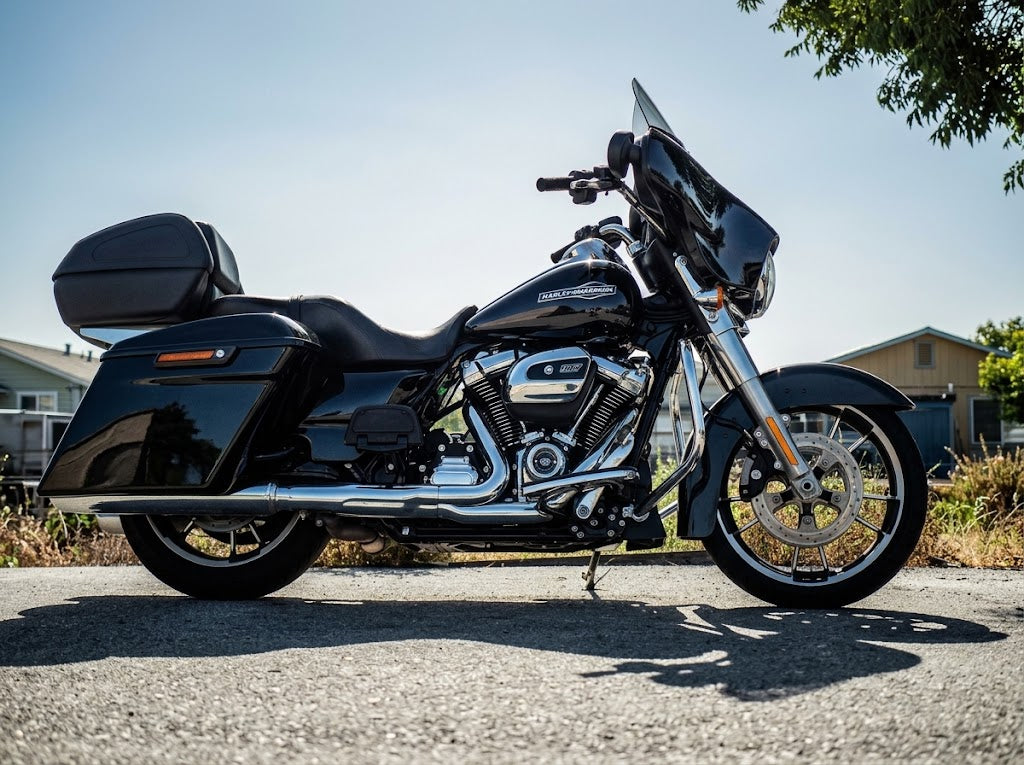
Touring-oriented cruisers, including baggers. A cruiser built or equipped for long-distance riding, most often with factory saddlebags and some form of wind protection.
"Bagger" specifically means a cruiser centered on hard saddlebags with a relatively small fairing; Harley-Davidson's Road King fits that description. A "full dresser" goes further, adding a larger frame-mounted fairing, more complete wind protection, and often a passenger backrest and infotainment, closer to what Indian's Chieftain offers.
The two aren't interchangeable versions of the same bike: a full dresser trades some of a bagger's leaner handling for weather protection and passenger comfort. Neither is the same as a standard cruiser with saddlebags bolted on after the sale.
The sport-cruiser versus small-cruiser distinction matters more for a first bike than whether you like classic or modern styling. Start there.

3. Are Cruiser Motorcycles Good for Beginners?
Often, yes, but there's no clean rule, and any guide that hands you a hard displacement or weight cutoff is oversimplifying.
What actually determines whether a specific cruiser suits a specific new rider shows up in a handful of everyday moments, not on a spec sheet:
Starting from a stop. A cruiser's low seat and centralized weight make it easier to feel balanced the instant you set off, before the bike has enough speed to stabilize itself.
Slow turns and U-turns. This is where geometry, not horsepower, decides whether the bike feels light in your hands or like it's fighting you.
Parking and backing out of a space. This tests balance from a standstill: can you walk the bike backward under its own weight without it wanting to tip?
Throttle and clutch control. Some engines deliver power abruptly right off idle no matter how small the displacement number looks, and an unforgiving clutch engagement point will rattle a new rider faster than raw output ever will.
Traffic. Filtering through stop-and-go riding at low speed for extended periods is tiring in a way a quiet parking lot never reveals.
Highway merging. A bike that feels completely manageable in a parking lot can still feel like a lot the first time you're merging at speed.
A rider who's completed a safety course typically outgrows early nerves faster than any spec sheet would predict. There's no substitute for sitting on the actual bike and, ideally, running it through a supervised parking-lot test before you decide.
4. Real 2026 beginner cruiser examples
Honda Rebel 300
286cc liquid-cooled single, 31 hp at 9,000 rpm, 20.3 lb-ft torque
27.2-inch seat height, 379 lb wet, starting at $5,349
Optional E-Clutch trim removes the clutch lever and handles engagement and shifting electronically, genuinely useful for a rider who hasn't built clutch feel yet
Best suited to a shorter or lighter rider who wants the lowest possible learning curve. Not the bike for regular highway commutes, since its power reserve runs thin above city speeds.
Honda Rebel 500
471cc liquid-cooled parallel-twin, 45.6 hp at 8,500 rpm, 31.9 lb-ft torque
27.2-inch seat height, 414 lb wet, ABS standard, starting at $6,799
Keeps the Rebel 300's confidence-building seat while adding real reserve for highway on-ramps and passing. A beginner who expects to keep the bike for several years, rather than trade up within one, tends to be happier here than on the 300.
Kawasaki Eliminator 500
451cc liquid-cooled parallel-twin, roughly 45 hp depending on market, 31.7 lb-ft torque
28.9-inch seat height, about 388 lb curb, starting at $6,499
The seat sits almost two inches taller than either Honda, and the mid-mounted controls put it closer to standard-bike ergonomics than to a classic cruiser stance. In exchange, it's genuinely light for its class and rewards a rider who wants more engaging handling without giving up low-speed manageability.
Model (2026) |
Engine |
Seat height |
Weight |
From |
Best fit |
Where it falls short |
Honda Rebel 300 |
286cc single, 31 hp |
27.2 in |
379 lb |
$5,349 |
Lowest learning curve, shorter riders |
Thin on highway reserve |
Honda Rebel 500 |
471cc twin, 45.6 hp |
27.2 in |
414 lb |
$6,799 |
Riders who want room to grow into the bike |
Costs and weighs more than the 300 |
Kawasaki Eliminator 500 |
451cc twin, ~45 hp |
28.9 in |
~388 lb |
$6,499 |
Riders who want more engaging handling |
Taller seat, less touring-oriented |
None of these is the universal best beginner cruiser. That answer depends on your height, your budget, and whether you value the lowest seat, the most power in reserve, or the lightest chassis.
(Older sub-300cc models like the Yamaha V Star 250 still turn up on some "beginner cruiser" lists. Confirm current production status and dealer availability before treating a discontinued model as a real option.)

5. How to Choose a Cruiser by Fit, Not Just Seat Height
Seat height is the number every spec sheet leads with, and it's also the least complete measure of fit on the page.
Two cruisers with an identical seat height can feel entirely different once you're actually sitting on them:
Seat width. A wide seat spreads your legs further apart even at a low height, which can undo the confidence a low number was supposed to buy you.
The rider triangle (seat, handlebars, and foot pegs). Forward controls extend your leg and open your knee angle; mid-mounted controls keep the knee bent closer to a standard bike's posture. Handlebar reach and width shape shoulder tension and wrist angle, especially once a ride runs past an hour.
Suspension sag. A soft rear shock can drop the effective seat height an inch or more once your weight settles onto it, a detail no spec sheet mentions.
Inseam relative to seat width, not seat height in isolation. A shorter rider with a wider stance can struggle to flat-foot a bike that a taller, narrower-hipped rider handles at the same listed seat height without thinking about it.
Run this test in the showroom instead of trusting the number alone:
Can you reach the handlebars without rounding your shoulders forward or fully extending your arms?
Can you operate the clutch, brake, and turn signals without shifting your grip?
With both feet down, do your knees and hips feel relaxed, or already fatigued?
Push the bike backward a few feet under its own weight. Does it feel controllable, or does it want to tip?
If the dealer allows a slow-speed lot ride, can you complete a full U-turn without paddling with your feet?
Does the seat create a pressure point in the first few minutes, before you've ridden a single mile?
A bike that passes the sit-and-admire test can still fail the back-it-out-of-a-tight-space test. The second one is the one that matters once you own it.

6. Weight, Geometry, and Low-Speed Handling
A heavier motorcycle isn't automatically difficult to ride. Its weight becomes noticeable in specific moments: maneuvering slowly, backing into a parking space, catching it if it starts to lean off balance.
Above roughly 10 mph, momentum and gyroscopic effect actually make a heavier bike feel more planted, not less. It's the near-standstill moments that expose extra pounds, not the open road.
Geometry does as much work as raw mass:
Wheelbase. A longer wheelbase adds stability in a straight line but demands a wider arc in a U-turn.
Rake. A more relaxed rake number slows the steering down and makes it feel more settled at speed; a tighter rake sharpens low-speed turn-in but can feel twitchy once you're doing 70.
Weight placement. A bike that carries its fuel and battery low in the frame can feel more manageable at a stop than a lighter bike that carries its weight higher up.
None of this makes lighter automatically better. A cruiser under roughly 420 lb wet is easier to muscle around a parking lot and easier to pick back up if it goes over. A heavier one holds its line better at highway speed and shrugs off a passenger and a full set of saddlebags with less strain on the chassis.
Where the "too heavy for me" line sits depends on your own strength and experience, not on a spec sheet cutoff that applies to everyone equally.
One number worth checking that rarely gets mentioned: steering lock, or how far the handlebars turn before they hit their mechanical stop. A bike can be light and low-seated and still have an awkwardly wide turning radius if that lock is limited. You won't see it on a spec sheet. You'll feel it immediately the first time you try a U-turn in a gas station lot.
7. Engine Size and Performance: What Actually Matters
Displacement, torque, and horsepower get treated as interchangeable in a lot of cruiser buying guides. They aren't:
Displacement (cc) is engine size, a rough proxy for potential output rather than a direct read on how the bike will feel.
Torque is what you feel off the line and at low RPM, and it's usually the number that matters more for city and beginner riding than horsepower ever will.
Horsepower shows up at higher RPM and higher road speed: passing on the highway, carrying a passenger, riding fully loaded.
Two engines with nearly identical displacement can feel like different motorcycles because of tuning, cylinder count, and firing order. A parallel-twin with a 180-degree crank, like the Eliminator's, revs and pulls differently through the midrange than a V-twin of similar size, even with comparable peak torque numbers.
Gearing matters too: a taller final-drive ratio can make the same engine feel more relaxed at highway speed at the cost of snap off the line. Skip the temptation to use displacement as a stand-in for difficulty. Look instead at how someone who's actually ridden the bike describes its throttle response.
7.1. Suspension and Ground Clearance
Suspension travel affects ride quality more than most spec sheets let on. A cruiser built around a low, hardtail-look profile, common on classic-styled models, transmits more of every pothole and expansion joint to the rider than one with more generous travel, even at an identical seat height.
Preload adjustability starts to matter the moment you add a passenger or a loaded set of saddlebags, since factory suspension is almost always tuned around a solo rider at one specific weight.
Ground clearance sets the point where floorboards, exhaust, or a centerstand touch down mid-corner. Classic and touring cruisers, with their lower-slung frames, hit that point sooner than a sport cruiser does. Most riders never think about it until the day they lean a little further than usual on a familiar road and hear something scrape.
7.2. Fuel Range
Range rarely makes it into a buying guide, but it shapes trip planning more than people expect.
Tank size, real-world fuel economy rather than the optimistic combined-cycle figure, riding style, speed, and passenger or luggage load all move the number. A small single sipping fuel gently can out-range a larger V-twin with a smaller tank, or the opposite can just as easily be true.
There's no shortcut here beyond checking the specific model's tank capacity and looking for real-world MPG reports rather than manufacturer estimates.
7.3. Chain, Belt, or Shaft Final Drive
Chain. Used on most midsize and smaller cruisers. Cheapest to service, but needs regular cleaning, lubrication, and periodic adjustment or replacement.
Belt. Common on larger Harley-Davidson and Indian models. Needs attention less often and stays cleaner, though eventual replacement tends to cost more than a chain does.
Shaft. Found on some touring cruisers. Needs the least routine maintenance of the three and stays cleanest of all, at the cost of added weight and, on some platforms, a bit of driveline lash you can feel during hard throttle changes.
None wins outright. Pick based on how much routine maintenance you want to do yourself versus pay a shop to handle.
8. Are Cruiser Motorcycles Comfortable?
For most riders, over moderate distances, yes. Comfort is the main thing the category is built around. But comfort here is personal, and it depends on your own proportions as much as anything printed on a spec sheet.
A seat that spreads weight over a wider area than a sport bike's perch helps. So does a back angle that, on many models, takes pressure off the wrists and shoulders that a forward-leaning sport riding position puts there instead.
But the same layout that helps one rider can work against another:
Forward controls and a reclined back angle can load the lower back and hips more than expected on a longer ride
Extended-reach forward pegs can strain the knees over distance
An unfaired front end at speed puts real wind pressure across the chest and arms
Pulled-back handlebars, for some riders, create an awkward wrist angle even in what looks like a relaxed posture
Vibration on air-cooled or single-cylinder engines adds up over a longer ride
Seat foam that feels fine for forty-five minutes can turn painful past two hours, and foam quality isn't reflected on any spec sheet
"Comfortable" is a claim that depends entirely on the rider making it.
If long-distance comfort is the priority, weigh wind protection and seat design ahead of horsepower or styling. They shape how a five-hour ride actually feels far more directly than any other spec on the sheet.
9. Cruisers vs. Other Motorcycle Types
Type |
Riding position |
Handling character |
Wind protection |
Best suited to |
Cruiser |
Relaxed, low seat, feet forward-to-mid |
Stable in a straight line, wider turning arc |
Minimal unless a bagger |
Comfortable street riding, moderate touring |
Standard |
Upright, neutral |
Balanced at both low and high speed |
Minimal |
All-around riding, learning fundamentals |
Sport bike |
Forward-leaning, feet rearset |
Sharp, built for cornering speed |
Fairing-dependent |
Spirited road and track riding |
Touring |
Upright, feet forward, usually faired |
Stable but heavy, built for miles rather than corners |
Extensive |
Long-distance and two-up travel |
Adventure (ADV) |
Upright, standing-capable |
Versatile on and off pavement |
Moderate |
Mixed terrain, long-distance |
A standard motorcycle asks the least of a new rider physically and mechanically. A sport bike rewards a rider chasing corners and asks for more commitment in exchange. Touring bikes and ADVs both trade low-speed agility for capability once you're loaded up and hours into a trip. A cruiser sits closest to standard in ease of use, with a very different feel once you're actually moving.
10. Matching a Cruiser to How You Actually Ride
"Best" always needs a stated criterion, and the answer changes completely depending on what you're actually optimizing for.
Riding goal |
Priorities |
Watch for |
Fits best |
City |
Low weight, tight turning radius |
Fatigue from a rough seat on longer commutes |
Sport or small cruiser |
Mixed and suburban riding |
Balanced weight, moderate torque |
Fewer top-speed and passing reserves |
Modern cruiser, mid-size sport cruiser |
Highway riding |
Power reserve for passing, wind protection |
Fatigue on unfaired models |
Power cruiser, touring cruiser |
Weekend and backroad rides |
Character, moderate comfort |
Less relaxed for daily stop-and-go use |
Classic cruiser |
Long-distance touring |
Wind protection, seat comfort, range |
Heaviest, most expensive category |
Touring cruiser or bagger |
Two-up riding |
Torque reserve, passenger seat and pegs, suspension travel |
Small/lightweight cruisers strain under sustained load |
Modern or touring cruiser |
Budget-first daily transport |
Reliability, fuel economy, low upkeep |
Less highway presence and passing power |
Small or sport cruiser |
A new rider whose main goal is confidence needs manageable fit and predictable control more than anything else here.
A long-distance rider needs comfort, range, and somewhere to put their gear.
A two-up rider needs passenger space and enough load capacity to carry it without straining.
Someone riding mostly in the city needs a bike that's small enough to maneuver and forgiving at a stop.
A rider chasing performance is the exception: they'll trade some low-speed ease for stronger acceleration and sharper handling, on purpose.
11. Two-Up (Passenger) Riding
Carrying a passenger changes the math on nearly everything discussed so far. Check the manufacturer's payload rating before assuming a bike can comfortably carry two. It's usually listed as a maximum combined rider-plus-cargo weight, and small or lightweight cruisers often have less headroom here than their size would suggest.
Beyond payload, check:
Passenger seat padding and width. Many "passenger seats" on smaller cruisers are minimal pads built for short hops, not real trips.
Footpeg position and grab points. These matter for passenger confidence.
Suspension preload adjustability. This matters for ride quality once the extra weight is aboard.
Braking performance. Stopping distances grow with two people on board, and that matters more on a bike whose front brake already felt a little light when ridden solo.
12. Can a Cruiser Handle Highway Riding?
Some can comfortably. Others can't, not really. It comes down to power reserve and wind protection, not to being a cruiser at all, and it's a different question from whether a bike is merely capable of highway speed for a few miles.
A small or lightweight cruiser can hold highway speed without trouble, but the limits show up in specific, predictable ways:
Less reserve for passing
More frequent downshifts to find that reserve
More sensitivity to headwinds and grades
A higher cruising RPM, depending on gearing, that adds vibration and fatigue over a long stretch
That's a workload problem, not evidence the engine is being damaged. A modern engine built for sustained highway RPM isn't harmed by cruising in that range, despite what a lot of riders assume.
A power cruiser or touring cruiser carries substantially more reserve for passing and holds speed with far less effort into a headwind, at the cost of extra weight and a higher price tag.
Wheelbase and weight both help highway stability. They're the same traits that hurt low-speed maneuverability. It's a straightforward tradeoff: the bike that's easiest to handle at a stoplight is often the one that feels least settled at 75 mph, and the reverse holds just as often.
13. Luggage and Storage for Cruisers
What makes sense depends on how you ride, and a few practical details matter more than raw capacity:
Hard saddlebags typically need bike-specific mounting brackets, so confirm fitment for your exact model rather than assuming universal hardware will work
Cruisers with upswept or aftermarket exhaust sometimes need a specific saddlebag shape or a heat shield to avoid contact
Lockable hard cases deter casual theft better than soft throw-overs, which matters if you'll park in public lots regularly
Even left-right loading affects handling more on a cruiser's long wheelbase than most riders expect
The options break down by how much you're carrying and how often:
Throw-over or tail bags. Soft, quick to add or remove, no mounting hardware required. Enough for daily commuting: a laptop, a lock, a rain layer.
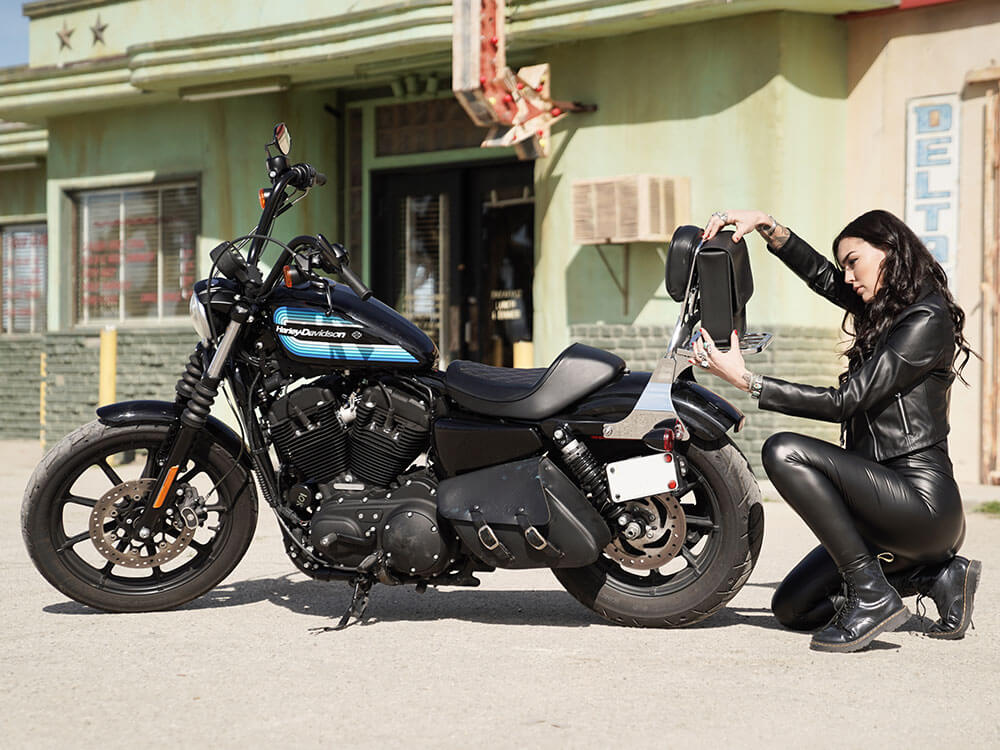
Sissy bar bags. Strap to the backrest instead of the frame, so there's nothing to bolt on permanently. A good fit for a rider who wants extra capacity for a weekend but doesn't want the commitment of full saddlebag hardware.
Hard saddlebags. Paired, lockable, and the most weather- and theft-resistant option, at the cost of needing model-specific mounting brackets.
Leather saddlebags. Similar capacity to hard bags with a different look and feel, still generally needing bike-specific mounting hardware.
Tank bags. Add capacity up front, useful alongside saddlebags on longer trips, though they can crowd the reach to the handlebars on some cruisers.
A paired set of saddlebags covers a weekend without requiring a full touring setup. For longer trips, paired hard or leather saddlebags plus a tank bag give the capacity and weather protection extended travel actually needs.
If you want to compare actual model-specific motorcycle saddlebags and sissy bar bag options, Viking Bags has fitment-matched choices worth a look.
14. New vs. Used Cruiser Motorcycles
New buys you a full warranty, current safety technology on many models (ABS, traction control, ride modes), and no unknown mechanical history. You pay for it with a higher purchase price and the steepest depreciation of the bike's life, concentrated in the first two or three years.
Used buys you a meaningfully lower price and slower depreciation from that point on, at the cost of unknown maintenance history unless it's documented, and the need for your own inspection or a professional one.
A used cruiser isn't inherently risky. It just shifts the burden of verification onto you.
15. What to check, and what it actually tells you
Cold start. Ask to start the bike from cold, not after it's been idling for twenty minutes. A rough cold start can reveal carburetion, fuel, or electrical issues that a warm engine hides.
Oil leaks. Check under the engine and around gaskets and seals for fresh residue.
Fork seals. Look at the fork tubes for signs of oil weeping past the seals.
Steering head and wheel bearings. With the front wheel off the ground, turn the bars lock to lock and feel for notchiness in the steering head bearing, then rock the wheels side to side to check for play in the wheel bearings.
Brakes. Pad thickness, disc condition, and fluid clarity.
Tires. Cracking or uneven wear, even on a low-mileage bike, points to age or an alignment problem rather than normal use.
Battery and charging system. A weak battery is a minor, cheap fix; a failing charging system is a bigger one. A multimeter check at idle and at speed will tell you which you're looking at.
Drive system. Check chain slack and rust, or belt wear if the bike is belt-driven.
Frame and forks. Look them over for crash damage: misaligned bars, scraped crash bars, or uneven wear on one fork tube are all red flags worth walking away from.
Aftermarket wiring or exhaust modifications. Not automatically disqualifying, but poor-quality electrical work is a common source of intermittent problems down the road, so budget time to understand what's been changed.
VIN and title. Confirm they match and that the bike isn't salvage-titled without disclosure.
Service records. Missing records aren't disqualifying either, but they do mean planning for a full service shortly after you buy.
The distinction that matters more than the checklist itself: a tired chain, a worn battery, or a bike that's simply due for service are normal signs of an older motorcycle and part of the negotiation, not reasons to walk. A cracked frame, a bent fork, a charging system that's actually failing, or a title that doesn't match the VIN are reasons to walk, regardless of how good the price looks.
16. The True Cost of Owning a Cruiser
The purchase price is where the real number starts, not where it ends:
Insurance varies significantly by engine size, rider age, and location
Fuel, tires, and brake pads (and eventually discs) are recurring costs
Routine oil and service intervals add up over a riding season
The battery will need replacing at some point in the bike's life whether you plan for it or not
If you don't already own riding gear, that's a first-year cost too, and so is any luggage you add
Financing terms change the picture further: a low sticker price on a longer loan can end up costing more than a pricier bike paid off faster
None of this argues against buying a cruiser. It argues against comparing two bikes by sticker price alone. Exact dollar figures vary too much by region, insurer, and model to state responsibly here, so get real quotes for your specific model and location before you budget against a guess.
17. Safety Features Worth Understanding
ABS reduces the chance of wheel lockup under hard braking. It doesn't replace correct braking technique, and it won't guarantee a shorter stopping distance in every condition.
Traction control helps manage wheelspin on inconsistent surfaces, but it can't compensate for riding too fast for the conditions in front of you.
Ride modes adjust throttle response and, on some bikes, how aggressively ABS or traction control step in. That's useful for matching power delivery to conditions, not a substitute for skill or training.
None of these features make a motorcycle safe in any absolute sense. Each reduces one specific risk under specific conditions, and tire condition and brake maintenance affect real-world safety at least as much as any electronic system does.
For a broader look at safety across motorcycle categories, not just cruisers, see What Is the Safest Type of Motorcycle?
18. Common Cruiser Buying Mistakes
Shopping by seat height alone and skipping the in-person fit test
Assuming a bigger engine automatically means too much bike for a beginner, or that a smaller one is automatically easy
Buying for looks first and skipping a highway test ride when highway use is actually part of the plan
Skipping a professional inspection on a used bike to save a small amount up front
Underestimating total cost of ownership relative to the number on the price tag
Choosing a lightweight cruiser for a build that will regularly carry a passenger and a full set of luggage, without checking its payload rating first
19. Cruiser Buying Checklist
Define your primary use case (commute, weekend rides, touring, two-up) before you look at specific models.
Set a realistic total budget that includes gear, insurance, and first-year maintenance, not just the sticker price.
Sit on candidates in person and run the fit test above. Don't shortlist by seat height spec alone.
Test-ride at both low speed (parking-lot maneuvers) and, if possible, highway speed.
For used bikes, check cold start, fluids, bearings, brakes, tires, battery, charging system, and frame for crash damage, and confirm the VIN and title match.
Confirm payload rating and two-up capability if you'll regularly carry a passenger.
Decide on ABS and traction control as a requirement or a preference before you start shopping, not after.
Confirm saddlebag fitment for your exact model if luggage is part of the plan.
New to riding? Read through your first month on a bike before you're relying on it for daily commuting.
20. Frequently Asked Questions
What is a cruiser motorcycle?
A style defined by a relatively low seat, relaxed riding posture, and typically a torque-focused engine, built for comfortable, stable riding rather than cornering performance. Foot control position and engine configuration vary by model.
What's the difference between a cruiser and a standard motorcycle?
A standard has mid-mounted foot controls and a neutral, upright riding position built for balanced handling. A cruiser has a lower seat and a more relaxed, often reclined stance built around comfort and stability rather than agility.
What's the difference between a sport cruiser and a power cruiser?
A sport cruiser is lighter and lower-powered, built for easy handling and often recommended to beginners. A power cruiser keeps the cruiser posture but adds a genuinely fast, higher-displacement engine aimed at experienced riders.
Is a bagger the same thing as a touring cruiser?
Not exactly. Bagger specifically means a cruiser centered on hard saddlebags with a relatively small fairing. Touring cruiser is the broader category, and it also includes larger full dressers with more extensive wind protection and passenger amenities.
Do I need a specific license endorsement for a bigger cruiser?
Requirements vary by state and country, and sometimes by engine displacement, so check with your local licensing authority before assuming any cruiser you're considering falls under a standard motorcycle endorsement.
The right cruiser is the one that fits you, matches how you actually ride, and stays manageable in the situations you'll really put it in, not just in the ones you imagined when you first looked at the spec sheet.



Leave a comment
All comments are moderated before being published.
This site is protected by hCaptcha and the hCaptcha Privacy Policy and Terms of Service apply.