American motorcycle clubs do not share one code. Some use strict bylaws, prospecting stages and patch traditions, while others are informal riding groups. The eight themes below explain what can matter in organized club life without presenting unsafe, abusive or exclusionary conduct as universal requirements.
Table of contents
A patch can mean years of loyalty. A group ride can mean showing up when the weather is less than ideal. And a simple question like "Can I leave whenever I want?" can matter more than the motorcycle parked outside.
That is why motorcycle club rules attract so much curiosity. From membership and prospecting to club colors and private meetings, there are customs that outsiders rarely see. The catch is that America does not have one motorcycle-club rulebook. A structured traditional MC, a one-percenter club, a veterans' association, and a casual riding group may have very different expectations.
Quick answer: Eight commonly discussed motorcycle club expectations concern who can join, the prospect period, motorcycle requirements, riding commitments, leaving a club, respecting its colors, protecting its reputation, and keeping internal business private. Some clubs enforce detailed bylaws; others are much more informal. None of these customs makes intimidation, unlawful discrimination, violence, or dangerous riding a legitimate obligation.
The American Motorcyclist Association's club-formation guide explains how organizations set out their own constitutions and bylaws. That is where a formal club's actual policies should be confirmed, not in a viral list. Here is what these eight ideas mean, where they differ, and the questions worth asking before you commit.

1. The eight rules at a glance
Club expectation |
What it can mean |
The important distinction |
1. Membership standards |
Eligibility, character, shared interests |
Race-based exclusions are not universal |
2. Prospect period |
Learning the culture before membership |
Mentorship is not a license for hazing |
3. Motorcycle requirements |
Certain brands, styles or a roadworthy bike |
There is no nationwide Harley-only rule |
4. Riding commitment |
Rides, meetings and group discipline |
Safety and traffic laws come first |
5. Leaving the club |
Returning club property and following procedures |
Threats or violence are never acceptable |
6. Colors and patches |
Respect for earned membership insignia |
Rules for vests vary by organization |
7. Reputation |
Representing the club responsibly |
Looking intimidating is not a rule |
8. Club business |
Privacy of meetings and members |
Secrecy is not an excuse for wrongdoing |
1.1 Membership standards: who is actually allowed to join?
Membership restrictions are a real part of some clubs' histories, but they cannot be generalized across American motorcycling. For example, a 2019 federal indictment involving one named club alleged racial exclusions and an American-made motorcycle requirement. Those were prosecutors' allegations about a particular organization, not evidence that every MC follows the same rules or that prison politics governs every chapter.
A documented counterexample is the Chosen Few Motorcycle Club. The New York Public Library's archive dates its founding by Black riders in Los Angeles to 1959 and describes it as an early multiracial club by 1960. The club's own account recalls its first white member arriving around that time. Those records undercut any claim that a single racial code has always applied to every motorcycle club.
Then there are organizations whose membership revolves around something else entirely: military service, a shared motorcycle brand, a riding discipline, a geographic area, or simply enjoying weekend rides. Formal clubs may put eligibility requirements in a constitution or bylaws; others explain them through an application or conversation.
What to ask: Who can join, how is membership decided, and are the rules written down? If an organization pressures you to discriminate against people or accept abusive behavior, treat that as a serious warning sign—not an unavoidable part of motorcycling.


1.2 The prospect period: earning trust versus putting up with hazing
In some traditional MCs, joining is not a matter of buying a vest and paying dues. A newcomer might spend time as a guest or "hang-around" before becoming a prospect. During that period, members learn whether the person is dependable, respects group decisions, knows how to ride with others, and understands the club's expectations. Full membership can involve a vote.
Prospects may be asked to help with event setup, ride logistics, cleanup, or other routine tasks. Those expectations differ between organizations and chapters. A social riding club might have no prospect stage whatsoever.
The important distinction is between a trial membership process and hazing. Helping organize an event is not the same as being pressured into humiliating, threatening or illegal conduct. Those demands are not necessary tests of riding skill or friendship. If a club treats new people as disposable, consider what membership would feel like later.
Before starting any prospect period, ask what duties are expected, who supervises new members, how long the process may last, whether dues are refundable, and how someone can step away. For a fuller discussion of applications and membership stages, Viking Bags already has a guide to becoming a motorcycle club member. This article is about evaluating the rules, not repeating that joining process.

1.3 Motorcycle requirements: does every club demand a Harley?
No. The idea that every American motorcycle club requires a Harley-Davidson—or even an American-made motorcycle—is a myth.
Some traditional clubs do require a certain make, engine size, or style. A cruiser-oriented chapter may want riders on large displacement motorcycles. A sportbike group may prefer sport-oriented machines. An owners' club may exist specifically around one brand. Other clubs care more about a motorcycle being legal, insured, mechanically sound, and capable of completing the planned route.
Even when a club sets a displacement threshold, there is no single nationwide 1,300cc rule. The American-made requirement alleged in the 2019 case above concerns one named club, not every MC. Check with the group itself rather than guessing from its patches or the motorcycles in a photo.
There is a practical reason to ask early. A motorcycle can be perfectly capable of highway riding and still be the wrong choice for a particular club's activities. The goal should be an honest fit with the riding you enjoy, not buying a machine just to satisfy an image.
Before buying a bike for membership, confirm: the required brand or motorcycle category, whether modifications are allowed, how the group handles passengers, and what equipment is needed for its typical rides. Do not spend thousands of dollars based on secondhand claims about a chapter.
1.4 Riding commitments: showing up matters, but safety matters more
Here is where club life becomes real. A regular member may be expected to attend scheduled rides, help with charity events, join meetings, and sometimes travel with the group. Reliability matters because leaders plan routes, fuel stops, and group sizes around who turns up.
But there is a dangerous line between commitment and pressure. Riding exhausted, taking excessive risks in poor weather, or breaking the speed limit to stay in formation is not a sensible measure of loyalty. If a pack accelerates beyond your limits, do not chase it. The Motorcycle Safety Foundation's group-riding guide explicitly advises separated riders not to break the law or ride beyond their skills to catch up.
For a safe group ride, an organized club should agree on a lead and sweep rider, communicate the route and regrouping plan, and adjust spacing and formation to the road. Staggered formation can work on open, suitable roads; winding sections, limited visibility, or deteriorating surfaces call for greater space and often single file. Our group-riding introduction covers the basics without turning this article into a formation manual.
And group riding creates one practical question that often gets overlooked: what are you bringing for a long day out? A rain layer, water, phone charger, basic tools, and a first-aid kit can make stops easier. Our saddlebag essentials checklist covers the packing side in detail.
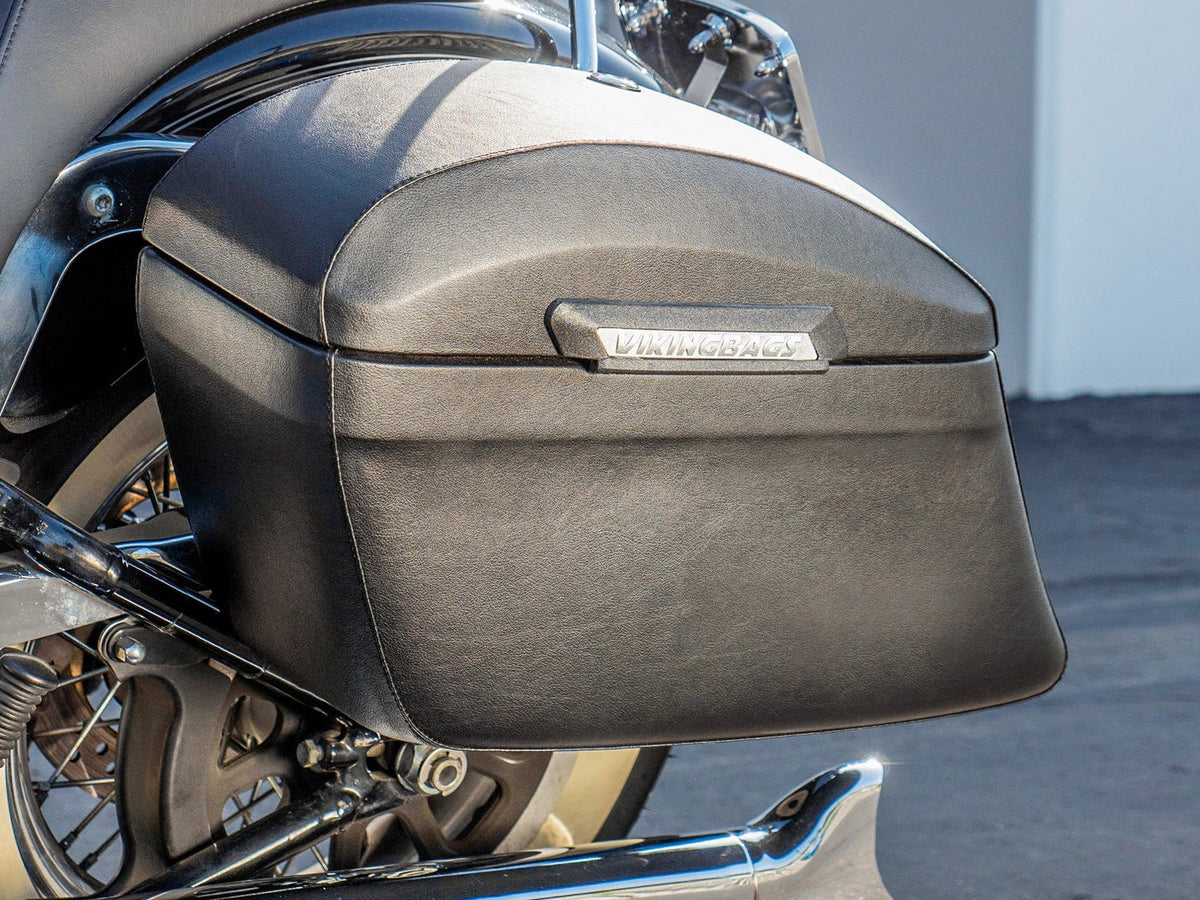
Riding a Harley and need room for that kit? Harley-Davidson saddlebags organized by model let you shop by the bike rather than guessing from a photo.
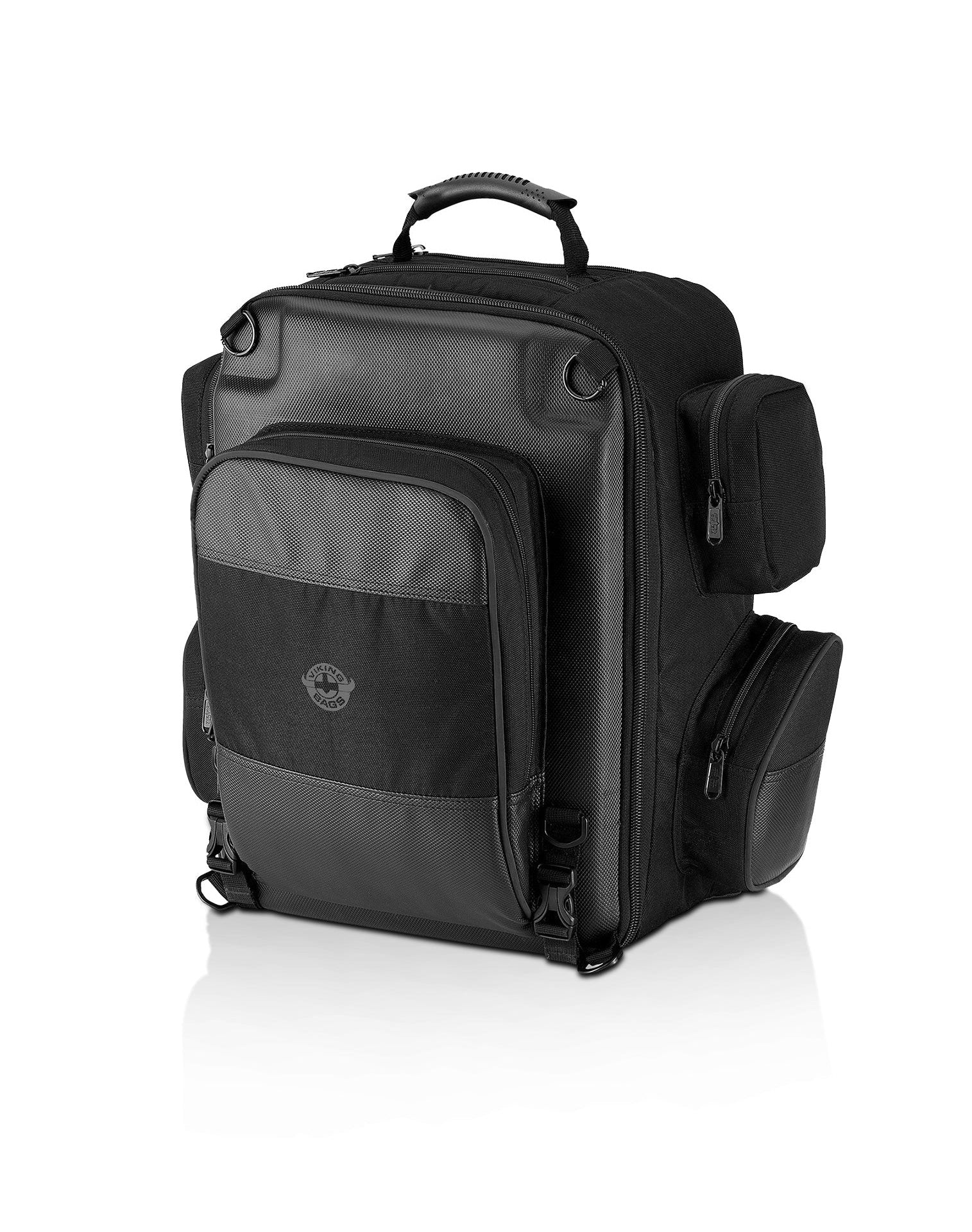
With a suitable sissy bar, a 32L Renegade motorcycle sissy bar bag is another option for spare layers and travel essentials. Viking Bags recommends a sissy bar at least 24 inches tall for secure mounting. Confirm the setup, strap routing and clearances before buying.
1.5 Leaving a motorcycle club: understand the exit rules before joining
Joining gets plenty of attention. Leaving deserves just as much.
A structured MC may have rules about resignations, returning club-owned colors or insignia, unpaid dues, and eligibility to rejoin later. Some members separate on good terms. Others may leave after a disagreement and face personal conflict. There is no fair basis for telling readers that every club retaliates against people who resign.
You may hear "out good" and "out bad" in traditional MC discussions. These labels generally describe whether a club considers a member's departure to be in good standing or disciplinary/disputed. They are club-specific judgments, not legal findings. A disagreement does not give anyone the right to intimidate or attack a former member.
The video raises accounts of forced tattoo cover-ups, confiscated motorcycles, and other intimidation. Those are serious allegations or reported experiences, not a standard procedure that an organization has a right to impose. A club's internal customs do not entitle anyone to steal property, threaten a former member, or commit assault.
Ask what belongs to the club and what belongs to you. A club patch may be governed by membership rules; your independently owned motorcycle is not automatically club property. Find out whether a resignation needs to be written, whether dues or deposits are outstanding, and how club property is returned.
If threats are involved, prioritize personal safety and seek appropriate local professional or law-enforcement assistance rather than trying to settle the dispute in a confrontation. The most revealing question may be: How did this club treat the last person who left respectfully?

1.6 Club colors and patches: respect the meaning without inventing rules
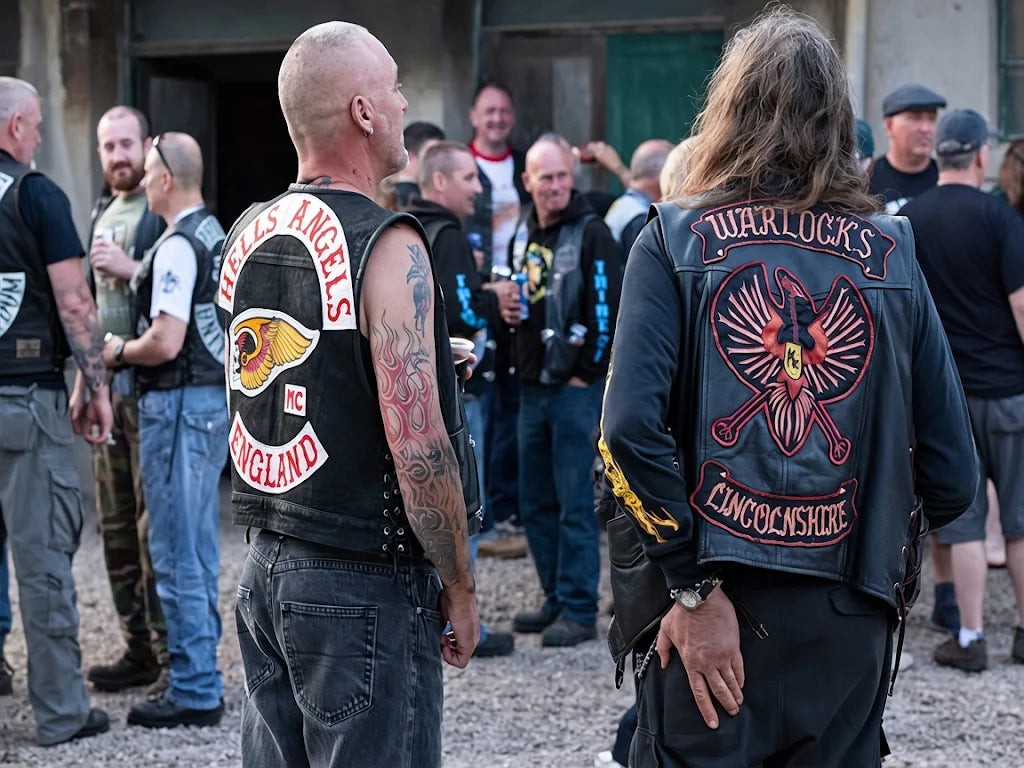
For members of traditional patch-wearing clubs, the vest or "cut" is not a random fashion accessory. It may represent a trial period, a membership vote, friendships, service, and years of rides. That helps explain why copying another club's logo or presenting yourself as a member can cause offense.
However, there is no universal rule on exactly how every MC must wear, fold, store or transport its colors. Some groups have traditions about where a vest may be worn and how insignia must be returned. One publicly posted club protocol, for instance, regards wearing club colors in a car as disrespectful. That is one organization's protocol, not a nationwide rule. Even the shape of a patch does not, by itself, prove that a rider committed a crime.
For someone outside the club, a good rule of thumb is simple: don't wear an organization-specific emblem you haven't earned, and don't assume that someone wearing colors wants to discuss private club business. If you're curious about one-piece versus three-piece patches and other distinctions, see our separate biker patch rules and etiquette guide.
The larger lesson isn't that every patch has a secret meaning. It's that a uniform can matter deeply to the people who have agreed to represent an organization.
1.7 The 'bad-boy image': a reputation is not a membership requirement
You can spot the appeal of motorcycle-club imagery from a mile away: the machines, the matching vests, the long column of headlights, and the sense of belonging. Films and social media often sharpen that image into something more intimidating.
But acting threatening is not a universal motorcycle club rule. It is an image some individuals cultivate and others reject. Clubs also organize charity events, support veterans, plan community rides, and create a place for people who otherwise ride alone. The American Motorcyclist Association publishes guidance on club constitutions, bylaws, and mission statements precisely because legitimate clubs can be structured around shared interests and service.
Before joining, pay attention to conduct rather than appearance. Are members respectful to other road users? Do they follow through on commitments? Can someone raise a concern without being humiliated? Is the club proud of what it contributes, or does it rely entirely on making outsiders uncomfortable?
A logo cannot answer those questions. Behavior can.
1.8 Keeping club business private: discretion has clear limits
Some motorcycle clubs expect members to keep meetings, finances, internal votes, and personal details within the organization. That can be ordinary organizational privacy. Even a harmless weekend riding group should handle members' phone numbers, addresses, and travel plans responsibly.
Yet confidentiality is not a reason to hide violence, abuse, threats, or illegal activity. Members should never be pressured to put family members at risk or lie to protect wrongdoing. The distinction is between keeping personal information private and being asked to participate in dangerous secrecy.
It's fair to ask what information may be shared with a spouse or partner, whether ride details are public, how members' data are stored, and who has authority to speak for the club. Healthy boundaries should be understandable, not deliberately confusing.
You do not need to disclose someone else's private information to be a responsible member. You also do not need to surrender your judgment or personal safety to show loyalty.
2. What should you ask before joining any motorcycle club?
You can learn more from a thoughtful conversation than from watching hours of dramatic club stories. Before accepting a prospect position or paying dues, get clear answers to these questions:
- Purpose: Is the group mainly about riding, charity work, a shared motorcycle type, or a more formal chapter structure?
- Written rules: Can you review its constitution, bylaws, dues, and discipline process?
- Time: What rides and meetings are actually mandatory, and how are family or work conflicts handled?
- Road safety: Can riders opt out of unsafe weather, excessive speeds, or routes above their ability?
- Membership and exit: How are newcomers accepted, and how do members resign or return club property?
- Privacy: What is confidential, and what support exists if someone feels threatened or mistreated?
A club whose answers make you feel confident is a better bet than one that asks you to prove loyalty before explaining its expectations. Riding should add community to your life, not remove your ability to make basic decisions for yourself.
3. Frequently asked questions about American motorcycle club rules
Are these eight rules followed by every motorcycle club in America?
No. They are recurring subjects in motorcycle-club culture, not a national code. Requirements differ by club, chapter, mission, and membership type. Many recreational riding groups have no prospect period or formal colors at all.
Are motorcycle clubs and one-percenter clubs the same thing?
No. Motorcycle club is a broad term for an organized riding community. Some groups identify as one-percenters, but a traditional club structure or a three-piece patch alone does not prove criminal conduct. For context on that distinction, read our guide to outlaw motorcycle clubs and one-percenters.
Do I need a Harley-Davidson to join an MC?
Not necessarily. Some groups have brand or engine requirements; many do not. Verify the specific club's written criteria before purchasing or changing motorcycles.
Do all clubs haze prospects?
No. Some use a trial period with routine responsibilities, and some have no prospect process. Humiliation or violent treatment should not be treated as a normal price of admission.
What if I can't keep up with a motorcycle club ride?
Ride at a safe, legal pace for your skills and conditions. Do not exceed the speed limit or take unsafe risks to catch up. Agree on stops and regrouping procedures before the ride.
Can you leave a motorcycle club?
Members can decide to leave; club-specific administrative and property-return procedures may apply. Threats, assaults, or taking someone's personal motorcycle are not legitimate exit procedures.
What does "out bad" mean in a motorcycle club?
"Out bad" is terminology some traditional MCs use for a member expelled or considered to have left on unfavorable terms. "Out good" generally refers to a departure the organization considers to be in good standing. These are club-specific labels, not legal judgments.
Can motorcycle club colors be worn in a car?
It depends on the club. Some organizations restrict wearing their colors while traveling in an automobile; others have different policies. Ask the organization rather than treating one group's practice as a universal biker rule.
Can anyone wear a motorcycle club patch?
Avoid wearing the identifying colors or logo of a club you do not belong to. General motorcycle-themed clothing is different from representing yourself as a member of a specific organization.
4. The bottom line
The common thread among these eight topics isn't intimidation. It's expectations: who belongs, how trust develops, what riding together requires, and where individual responsibility fits into club life. Every motorcycle club has its own culture, and no amount of tradition turns unsafe or unlawful behavior into a rule riders must accept. Ask questions, verify the specifics, and choose a community where you can enjoy both the ride and the people around you.



Leave a comment
All comments are moderated before being published.
This site is protected by hCaptcha and the hCaptcha Privacy Policy and Terms of Service apply.