
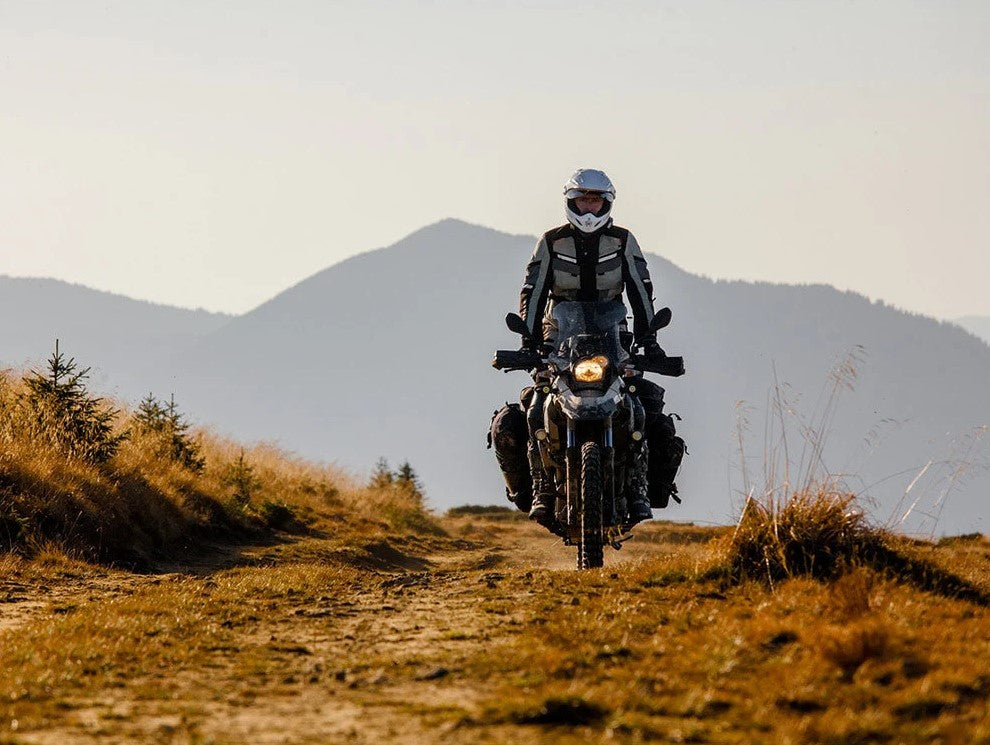
Hard cases and soft panniers both work for ADV riding, but they solve different problems. Hard cases generally offer more security, weather protection, and organized storage, while soft panniers are lighter and more flexible, which can matter on technical off-road terrain. Whether hard cases increase injury risk in a crash is a genuinely open debate, with conflicting experiences from riders on both sides. The right choice depends mainly on how much of your riding happens off pavement, along with confirming fitment for your exact bike’s make, model, and year.
Table of contents
Hard cases and soft panniers solve the same problem in different ways, and neither one is correct for every rider. Hard cases give you more security, more weatherproofing, and a fixed amount of organized space. Soft panniers are flexible and may reduce some of the risks associated with rigid cases in a fall, though actual crash outcomes depend on the type of fall, riding position, motorcycle, luggage setup, and terrain, not on luggage type alone. Which one is right depends mostly on how much of your riding actually happens off pavement.
This article breaks down the real differences, when each type makes sense, and what to check before buying side cases for your specific bike.

1. What's the Real Difference Between Hard Cases and Soft Panniers?
Hard cases are rigid boxes, usually aluminum or hard plastic, that bolt to a dedicated rack. Soft panniers are flexible bags, usually made from a coated or laminated fabric, that strap or clip onto a rack or directly onto the bike's subframe. The core tradeoff is protection and security versus weight and flexibility. Side cases are one category within the broader set of motorcycle luggage types, most of which, like saddlebags, tour packs, and sissy bar bags, are built around road-going cruiser and touring mounting points rather than the rack and subframe layout ADV bikes use.
|
Factor |
Hard Cases |
Soft Panniers |
|
Weight |
Generally heavier |
Generally lighter |
|
Weather Resistance |
Usually strong with a sealed lid |
Depends on roll top, seams, and construction |
|
Security |
Usually easier to lock |
Limited security on most designs |
|
Off Road Handling |
More rigid and heavier |
More flexible and generally lighter |
|
Crash Behavior |
Can dent or crack and remain rigid during a fall |
Can flex or deform during an impact |
|
Mounting |
Usually requires a dedicated rack |
Some systems use straps or simpler mounting |
|
Durability |
Rigid and durable, but can dent or crack |
Flexible and resistant to some types of impact damage |
|
Field Repair |
Some aluminum cases can be reshaped or repaired |
Repairability depends on fabric, seams, and mounting system |
|
Best For |
Touring, commuting, security, and mixed road use |
Technical off road riding and weight conscious setups |
|
Cost |
Usually higher |
Often lower |
2. Aluminum vs Polymer Hard Cases: Which Material Holds Up Better?
Aluminum cases are a popular choice for adventure touring because dents in some aluminum cases of ADV Luggage can sometimes be reshaped or temporarily repaired, depending on the damage and construction, which matters if you're days from the nearest dealer. Polymer or hard plastic cases are lighter and often cheaper, and they flex slightly on impact rather than deforming, but a hard enough hit can crack the shell outright, and a cracked polymer case is generally harder to field-repair than a dented aluminum one.
Some aluminum cases add reinforced edges, though the material and construction of that reinforcement varies by manufacturer; some use fiberglass, others use rubber or a different composite. The functional purpose is the same either way: reducing scuffing and cracking at the corners where most impacts happen. That's a genuine detail worth checking on a spec sheet, not just a styling choice.
3. Can Hard Cases Actually Injure You in a Crash?
This is a real, ongoing debate in the ADV riding community, and it is not settled fact in either direction. Off-road publications and long-distance riders have reported leg and ankle injuries from getting a foot or leg caught under a hard case during a low-speed tip-over, especially when riding standing up on technical terrain. Other riders report the opposite experience: that a wide, sturdy hard case has acted as a crash bar and kept the bike's frame and their leg off the ground in a fall, and some suggest this effect is more pronounced on bikes with cylinders or engine guards that create a second point of contact.
Riders and publications describe genuinely different experiences here, and the outcome depends heavily on the type of crash, terrain, riding position, motorcycle, and luggage setup, not on luggage type alone. The practical, balanced takeaway is that this is a factor worth weighing more heavily for aggressive off-road and technical trail riding, where low-speed tip-overs with a leg pinned underneath are more likely to occur, and a smaller factor for pavement-heavy touring, where drops tend to happen at a stop or at low parking-lot speed. Neither hard cases nor soft panniers should be treated as universally safer.

4. How Much Weight Should You Actually Carry in ADV Side Cases?
There's no single correct number, because it depends on your bike's suspension rating, your riding terrain, and the specific case's own weight limit. Heavier luggage can influence handling, suspension behavior, and balance, particularly when it's mounted high or far from the motorcycle's center. Off-road, this matters more than it does on a cruiser or touring bike, because the bike is already dealing with suspension travel, standing-position weight shifts, and uneven terrain. The practical guidance holds regardless of terrain: heavier items should generally be packed low and evenly distributed between both sides.
Check your motorcycle's owner's manual for its rated payload capacity, and check the case manufacturer's own weight rating rather than assuming all cases in a given size class carry the same amount safely.
5. Side Cases vs a Top Case: Do You Need Both?
A top case adds additional storage and can be convenient for items you need to access quickly, since it sits directly behind the rider rather than off to the side. Its actual capacity depends on the specific case, so it's worth checking the listed volume rather than assuming one top case holds the same as another. The tradeoff is that it adds weight high and far back on the bike, which is a bigger handling factor off-road than the same weight split between two side cases. Some riders who prioritize technical off-road handling choose to skip a top case entirely and rely on side cases plus a tank bag, saving the top case for pavement-heavy trips where the added capacity outweighs the handling tradeoff.
6. What Should You Check Before Buying Side Cases for Your Specific Bike?
Fitment is model-specific, not universal, even across bikes in the same general category. A rack built for one year or trim of a bike may not clear the exhaust or subframe on a different year of the same model. Before buying, confirm the exact make, model, and year, since side case systems for platforms like the Harley-Davidson Pan America, the BMW GS series, the Suzuki V-Strom 1050, the Honda Africa Twin, the Triumph Tiger 1200, and the Kawasaki Versys 1000 are each built around that specific bike's frame rather than sold as one universal fit. If a listing doesn't specify your exact model and year, verify compatibility before ordering rather than assuming it will work.
If you're comparing side cases against other ADV luggage types for the same bike, such as tank bags, tail bags, or a top case, it's worth looking at the full ADV touring luggage lineup for your platform rather than buying pieces separately, since rack and mounting hardware compatibility is easier to confirm when everything is built for the same bike.

7. Common Mistakes Riders Make When Loading ADV Side Cases
- Packing heavy items on top instead of low. A dense item like a tool roll or a battery pack is generally better placed low and close to the motorcycle's center, not stacked above lighter gear.
- Loading one side significantly heavier than the other. Keeping left and right side loads reasonably balanced matters more off-road than on pavement, since uneven loading is more noticeable on loose surfaces.
- Not testing the lock before a trip. A key-lockable case that hasn't been tested recently is a bad thing to discover doesn't work at a gas stop.
- Assuming the lid gasket is still sealing properly. Gaskets wear with age and UV exposure. A case that was waterproof when new isn't guaranteed to still be waterproof years later without inspection.
- Buying a universal-fit rack for a bike that has a model-specific one available. A universal rack may technically bolt on, but it's more likely to sit slightly off, rattle, or interfere with the exhaust than a rack built for that exact model.
8. Frequently Asked Questions
Are hard cases or soft panniers better for adventure touring?
Neither is universally better. Hard cases generally offer stronger security, rigid protection, and convenient organization, which suits pavement-heavy touring well. Soft panniers generally offer lower weight and greater flexibility, which can be useful for riders who spend significant time on technical off-road terrain.
Do I need a special rack for hard side cases?
For most hard side case systems, yes. Fitment normally depends on the bike's subframe, exhaust routing, passenger peg position, model, year, and trim, which is why hard cases are typically sold with a model-specific rack rather than as a universal fit.
Can soft panniers get as wet-proof as hard cases?
Both systems can provide strong weather protection, but performance depends on construction. Hard cases with properly sealed lids can provide strong water resistance. Soft panniers with roll-top closures and welded seams can also provide excellent water protection, but not every soft pannier is equally waterproof, so it varies more by design than hard cases do.
Do adventure motorcycle side cases fit any bike?
No. Fitment is generally model and year specific, since the mounting rack has to clear each bike's individual subframe, exhaust, and passenger peg layout. Always confirm compatibility with your exact motorcycle before buying.
Is it safe to ride off-road with hard cases installed?
Many riders use hard cases successfully on gravel and less technical terrain without incident. Riding off-road with hard cases isn't automatically unsafe, but some riders prefer soft panniers for demanding, technical off-road riding because of their lower weight and flexible construction. Which setup makes more sense depends on how technical your typical terrain is.

Viking Bags
Written by the Viking Bags ADV & Touring Gear Team - riders and gear specialists with hands on experience fitting, testing, and troubleshooting hard cases, soft panniers, and side case racks across BMW GS, Honda Africa Twin, Harley Davidson Pan America, Triumph Tiger, Suzuki V Strom, and Kawasaki Versys platforms.



Leave a comment
All comments are moderated before being published.
This site is protected by hCaptcha and the hCaptcha Privacy Policy and Terms of Service apply.