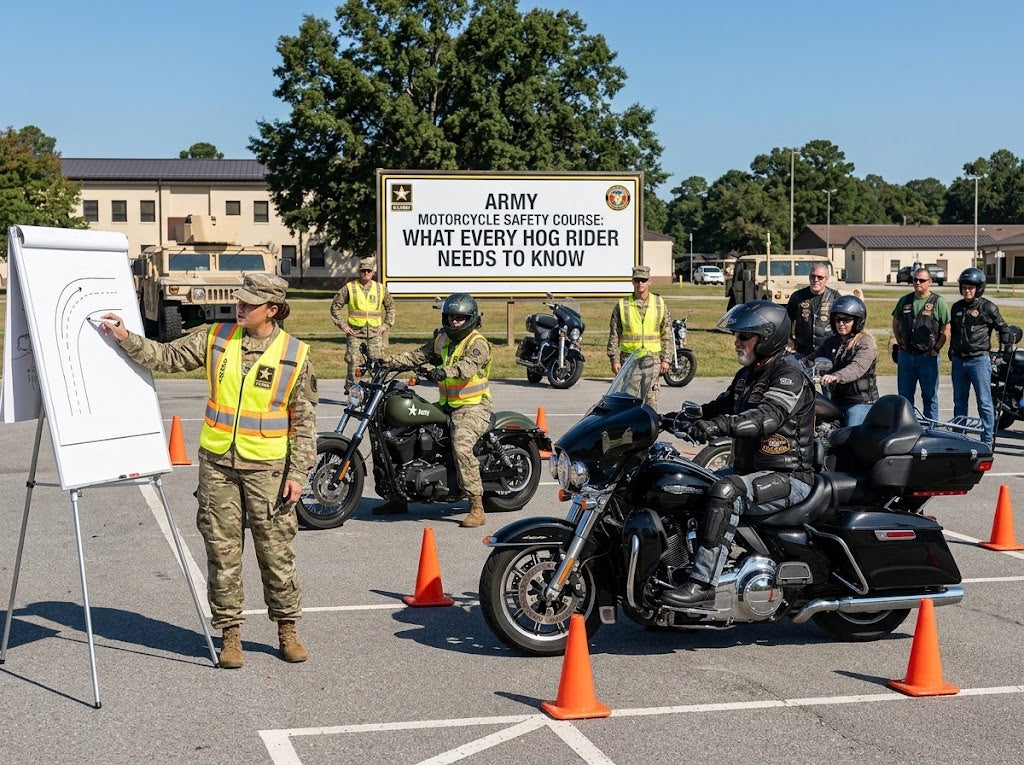
The Army motorcycle safety course is a DoD-mandated training pipeline (DODI 6055.4, AR 385-10) requiring every active-duty motorcycle rider to complete a Basic Rider Course, followed by an Experienced/Advanced Rider Course within 12 months, and periodic refresher or sustainment training after deployments, bike-class changes, or every five years. PPE requirements — helmet, eye protection, gloves, long sleeves, and sturdy footwear — apply throughout. For Harley-Davidson riders, gearing up right after certification means pairing required PPE with dependable Harley saddlebags for safe, organized, long-haul riding.
Table of contents
If you're a service member who rides — or wants to ride — a motorcycle, the Army motorcycle safety course isn't optional. It's a Department of Defense requirement, and for good reason: motorcycling carries a much higher risk profile than driving a car, which is exactly why the Army built a structured motorcycle safety training pipeline around it. Whether you're rolling out on a sportbike or settling into the saddle of a Harley-Davidson, this guide breaks down what the training covers, who's required to take it, and how to gear up right — including the saddlebags that carry your kit — before you ever hit the highway.
1. What Is the Army Motorcycle Safety Course?
The Army motorcycle safety course is a mandatory training program for soldiers who own or operate a motorcycle, built around Motorcycle Safety Foundation (MSF) curriculum and governed by DoD Instruction 6055.4, which sets the baseline training and operation requirements for motorcyclists across the Department of Defense. Individual services layer their own regulations on top of that baseline — for the Army, that's AR 385-10, the Army Safety and Occupational Health Program.
The program exists to help the Army and Department of Defense reduce motor vehicle-related accidents on and around military installations. As one Fort Belvoir safety specialist put it plainly to Army.mil: On a motorcycle, a mistake can be the difference between life and death.

2. Why Motorcycle Safety Training Is a Command Requirement
Every installation enforces this differently in the details, but the structure is consistent Army-wide:
- Every active-duty service member must complete the Basic Rider Course before riding a motorcycle at all.
- Soldiers must complete an Experienced Rider Course within 12 months of finishing the basic class, and a Motorcycle Refresher Training course within three years of passing the experienced course.
- Motorcycle Refresher Training is also required for any licensed, motorcycle-owning soldier returning from a deployment longer than 180 days, and must be completed before riding on public or private roads again.
- Sustainment training requirements are outlined in the current AR 385-10 and generally must be repeated on a set cycle to keep certification current.
3. Course Levels: From Basic Rider to Experienced Hog Rider
Army motorcycle safety training is tiered by experience and bike type:
1. Basic Rider Course (BRC)
The Basic Rider Course runs two days and remains the mandatory starting point for every active-duty rider. It includes 14 riding exercises followed by an evaluation, covering clutch/throttle/brake coordination, low-speed maneuvers, cornering, and emergency stops.
2. Experienced Rider Course (ERC) / Advanced Rider Course (ARC)
Required within 12 months of completing the Basic Rider Course, and again every five years to maintain certification. This level sharpens defensive riding strategy and street-specific skills — group riding formation and lane positioning — which matters if you're riding with a Harley Owners Group (HOG) chapter or unit riding club.
3. Military Sportbike Rider Course (MSRC)
A separate intermediate-level track (MSF ARC or MSRC) for sportbike operators, with more emphasis on higher-speed dynamics and braking traction limits.
4. Sustainment / Refresher Training
Required within five years of completing intermediate training, after inactivity, or when acquiring a new motorcycle or changing bike class. Riders are also encouraged to retake it after a major PCS or geographic move.
4. Who Is Required to Take the Course?
- Any active-duty soldier who owns or operates a motorcycle, on or off post
- All operators of government-owned, rented, or leased motorcycles, regardless of prior civilian licensing
- Soldiers returning from a deployment longer than 180 days who need refresher training before riding again
- Riders acquiring a new motorcycle or changing bike class — including a first move into cruiser or touring bikes like a Harley-Davidson
- Reservists, National Guard members (on orders), and in many cases DoD civilians and family members, space permitting — policy on this varies by installation, so check local Traffic Safety office requirements before assuming you're covered or exempt
5. PPE Requirements: What You're Required to Wear
Army PPE standards are strict and specific. Every rider and passenger must wear a properly fastened DOT-approved helmet, eye protection (goggles or a full-face shield), sturdy over-the-ankle footwear, full-fingered gloves, long trousers, and a long-sleeved shirt or jacket. Fluorescent or retro-reflective vests are encouraged but not required under AR 385-10 — though most installation safety offices still push riders to wear them.
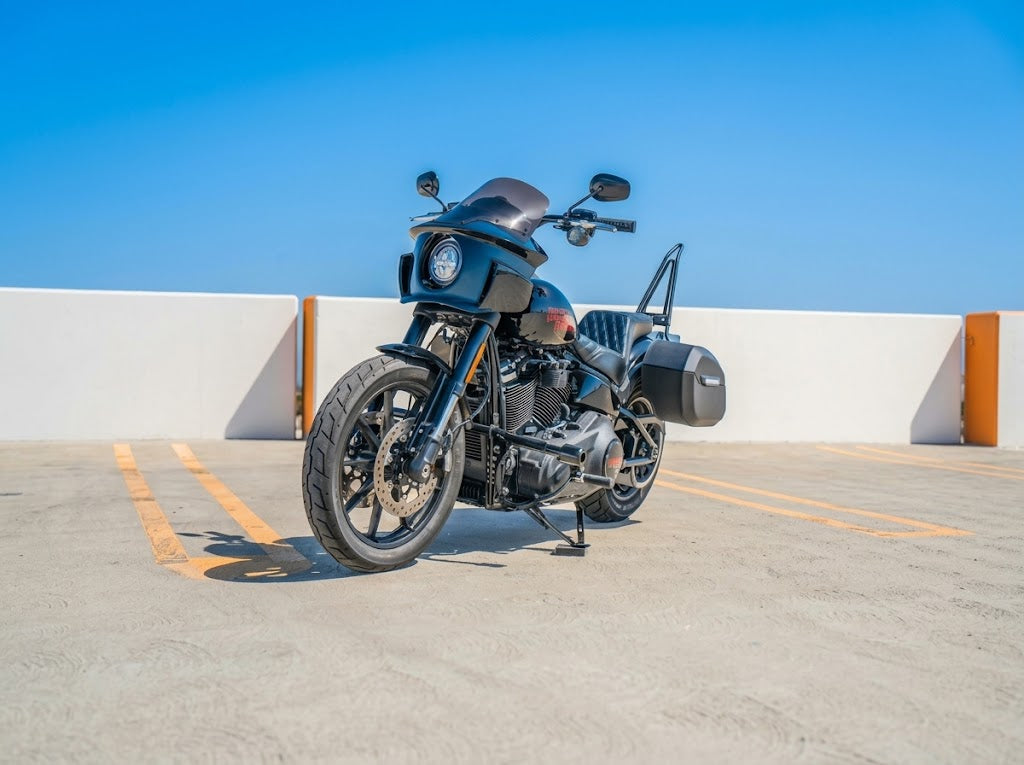
This is where hog rider education earns its keep. Cruiser and touring riders typically carry more gear than sportbike riders — rain layers, spare gloves, a first-aid kit, tools — and that's exactly why a properly fitted set of Harley saddlebags belongs on every serious rider's checklist. Once you're certified and cleared to ride, dedicated saddlebags let you carry required PPE and trip essentials without throwing off the bike's balance — whether you're commuting on post or riding cross-country with your HOG chapter.
6. What to Expect on Training Day
- eCourse prerequisite — most installations now require soldiers to complete an online eCourse through the Motorcycle Safety Foundation before sitting for classroom instruction.
- Classroom instruction — traffic law, risk assessment, and the Army's specific PPE and reporting requirements.
- Range/skills evaluation — a closed-course riding test, typically on an installation-provided training motorcycle.
- Written knowledge test — pass/fail, based on MSF curriculum standards.
- Certification — course registration runs through the Army Installation Registration System (AIRS), and successful completion issues an MSF completion card most states accept toward a motorcycle license endorsement.

7. Tips for Passing the Army Motorcycle Safety Course
- Register and show up. Some installations now require a minimum of five students physically present to run a Basic or Advanced Rider Course — a no-show can cancel training for everyone else signed up, so cancel early if your plans change.
- Arrive rested. Range days run long, and fatigue affects clutch/throttle control fast.
- Break in your gear beforehand. Stiff new boots or gloves on test day is a common, avoidable mistake.
- Practice slow-speed balance. Most first-attempt failures happen in tight, low-speed maneuvers, not high-speed sections.
- If you're prepping for a cruiser or Harley, spend time getting comfortable with the added weight and longer wheelbase before range day — it handles differently than a lighter street bike.
8. Hog Rider Education: Beyond the Course
Passing the Army motorcycle safety course is the starting line, not the finish line. Many soldiers who ride Harley-Davidsons go on to join a HOG chapter, either through the installation or a local civilian chapter. These groups reinforce everything the course teaches — formation riding, hazard communication, mentorship for newer riders — while building the long-haul touring habits that separate a weekend rider from a road-ready one.
For long rides, proper storage matters as much as proper riding technique. Viking Bags builds motorcycle saddlebags specifically fitted to Harley-Davidson models — from throw-over bags for quick weekend runs to extended bagger saddlebags for soldiers doing serious mileage — so your required safety gear, tools, and essentials stay secured and balanced instead of shifting mid-ride or getting left behind on a multi-day group trip.
9. FAQs: Army Motorcycle Safety Course
Is the Army motorcycle safety course mandatory?
Yes. Every active-duty soldier who owns or operates a motorcycle must complete the Basic Rider Course before riding, on or off post.
How long does the Army motorcycle safety course take?
The Basic Rider Course runs two days, combining classroom instruction with hands-on range training and a final skills/knowledge evaluation.
When do I need the Experienced Rider Course?
Within 12 months of completing the Basic Rider Course, and again every five years after that to maintain certification.
Do I need to retake training if I switch from a sportbike to a Harley?
Generally yes — acquiring a new motorcycle or changing bike class triggers a requirement to complete the appropriate intermediate training course again.
Do I need refresher training after a deployment?
Yes, if you're a licensed, motorcycle-owning soldier returning from a deployment longer than 180 days. Refresher training must be completed before you ride on public or private roads again.
Does the Army provide the motorcycle for training?
For Basic Rider Course training, yes — installations typically provide training motorcycles. Riders bring their own bike only for certain intermediate or refresher courses.
Is a DOT-approved helmet required even off-post?
Army PPE requirements apply to government-owned, rented, or leased motorcycles and generally to on- and off-post riding for service members — confirm current policy with your installation Traffic Safety office, since enforcement details vary by base.
Can family members take the Army motorcycle safety course?
Some installations allow spouses and DoD civilians to attend, space permitting. Availability varies by installation, so check with your local Army Traffic Safety office before assuming a seat is guaranteed.
10. Sources
- U.S. Army — "Soldiers required to take motorcycle safety course," Army.mil
- U.S. Army — "Army updates motorcycle safety course requirements," Army.mil
- U.S. Army — "Changes coming to motorcycle safety courses," Army.mil
- U.S. Army Fort Detrick — "Requirements for Motorcycle Riders," home.army.mil
- U.S. Army Fort Drum — "Motorcycle Safety Foundation Course," home.army.mil
- Joint Base Lewis-McChord — "Motorcycle Safety Course," home.army.mil
- U.S. Army Safety Center — "Advanced Motorcycle Training," safety.army.mil
- Naval Postgraduate School — "Motorcycle Safety," nps.edu

Viking Bags
Viking Bags is the world's largest manufacturer of motorcycle luggage and aftermarket parts, founded in 2007 and based in Los Angeles, California. Viking Bags has served over 200,000 riders with hard and leather saddlebags, sissy bar bags, trunks, and touring accessories built for Harley-Davidson, Honda, Suzuki, Kawasaki, Yamaha, Indian, Triumph, and more. Recognized by Newsweek as one of the best online stores for motorcyclists, Viking Bags combines in-house R&D with a passion for the riding community — including the many service members and veterans who ride with us. Learn more on our story page.



Leave a comment
All comments are moderated before being published.
This site is protected by hCaptcha and the hCaptcha Privacy Policy and Terms of Service apply.