
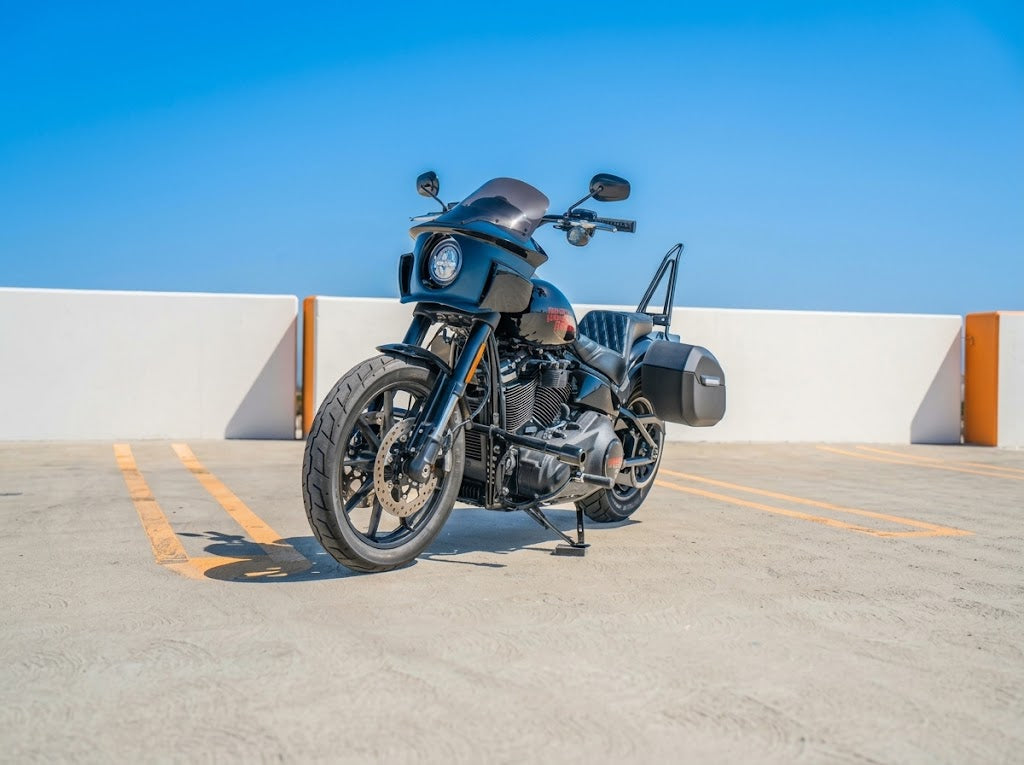
“Choosing the right motorcycle saddlebags comes down to fit, capacity, mounting, and how you ride. This guide shows you exactly what to measure, how to compare real bag dimensions with your bike’s available space, which material and mounting style suits different riders, and what to check for exhaust, wheel, suspension, and passenger clearance. It also covers the mistakes that commonly cause poor fitment, giving you a practical checklist to choose saddlebags confidently before you buy.”
Table of contents
Quick answer: The right motorcycle saddlebags come down to four things — fit (measured against your bike's actual available space), capacity for your typical trip length, a mounting style that matches how often you remove them, and a material suited to your weather exposure. Measuring your bike before buying, rather than choosing by capacity or looks alone, prevents most fitment problems.
The saddlebags that fit your riding buddy's bike may not fit yours, even if the two bikes look similar. Size, material, and mounting style all depend on your specific bike, and getting any one of them wrong usually means bags that rub the exhaust, block a turn signal, or sag once they're loaded. This guide walks through how to size motorcycle saddlebags for your bike, how to measure before you buy, what to check before installation, and the mistakes that send riders back to the return counter. Once you know what you're looking for, Viking Bags' motorcycle saddlebags collection is organized by size, material, and bike make so you can compare real options against your own measurements.

1. What Size Motorcycle Saddlebags Do You Actually Need?
Saddlebag capacity is generally grouped into three rough size classes, and which one makes sense depends more on your typical trip length than on your bike's size.
| Size Class | Typical Capacity | Best For |
|---|---|---|
| Small | Roughly 10–15 liters per pair | Daily riding, commuting, minimalist packing |
| Medium | Roughly 15–25 liters per pair | Weekend trips, a balance of capacity and profile |
| Large | Roughly 25–35+ liters per pair | Extended touring, camping gear, maximum storage |
Bike type narrows this further. Sportster and other narrow-fendered cruisers, including bikes like the Indian Scout, often have less physical room between the seat and rear turn signals, which is why solo bags and small saddlebags in the roughly 10–15 liter range are common on these bikes rather than full touring-sized sets. Touring bikes like a Street Glide or Road King generally have more built-in clearance and are more often paired with medium or large bags. This is a starting point based on typical bike geometry, not a rule specific to any one model, so it's still worth measuring your own bike before ordering, which the next section covers.
Capacity and physical dimensions are two different things, and buying by capacity alone is how mismatched bags happen. Liters describe how much a bag holds; length, width, and height describe whether it physically fits between your seat, exhaust, and turn signals. For example, imagine two bags both listed at 20 liters: one is long and flat, the other is short and deep. On a bike with only 15 inches of usable length between the seat and the turn signals, the long, flat bag may not fit even though it holds exactly as much as the shorter one that does. The capacity number tells you nothing about which shape you're getting — always check the listed dimensions, not just the capacity number, against your own measurements before buying.
2. Do Saddlebags Fit Every Motorcycle?
No. Fitment depends on your bike's exact make, model, and year, not just its general style. Two bikes that look similar — a Street Bob and a Softail Standard, for example — can have different fender shapes, exhaust routing, and turn signal positions that change what actually clears. A bag that fits one perfectly can rub the exhaust or block a signal on the other.
This is why bike-specific saddlebag listings exist alongside universal ones, including model families like Indian saddlebags. A universal-fit bag is built to work across a range of bikes reasonably well, but "reasonably well" can still mean adjusting a bracket, relocating a turn signal, or accepting a slightly imperfect angle. A bag listed for your exact model and year is more likely to sit flush without extra work. If a listing doesn't specify your exact bike, it's worth confirming compatibility directly rather than assuming a similar-looking model means an identical fit.
If you ride an adventure or dual-sport bike rather than a cruiser or touring bike, saddlebags in the sense this article covers usually aren't the right category at all. ADV bikes generally use a different rack-and-case system built around their subframe; the adventure touring side cases guide covers that setup specifically.
3. How Do You Measure Your Bike for Saddlebags?
Measuring takes about ten minutes and prevents most of the fitment problems riders run into. Work through these in order:
- Measure the available length. Measure from the back of the seat to your rear turn signals. This is the maximum saddlebag length your bike can accommodate before the bags start to overlap the signals. On some bikes, fitting a longer bag means relocating the turn signals rather than downsizing the bag, and turn signal relocation kits are a normal, common accessory for exactly this reason.
- Measure the available height. Measure from the fender rail up to the top of your exhaust. This tells you how much vertical room you have before a bag risks contacting a hot pipe.
- Check wheel and belt or chain clearance. With the bag held in position (or the bracket test-fitted), confirm nothing overhangs into the rear wheel, belt, or chain, since this is a moving part clearance issue, not just a static fitment one.
- Check passenger peg clearance, if relevant. If you ride two-up, confirm the bag doesn't crowd the passenger's foot position, since this is one of the most commonly overlooked measurements until a passenger actually rides and finds out.
- Recheck length and height with the suspension compressed. Sit on the bike, or press down on the seat, and recheck steps 1 and 2. Clearance measured with the bike parked and unloaded can shrink once your weight and the bike's own suspension travel are factored in.
Once you have these numbers, compare them against the dimensions listed for the specific saddlebags you're considering rather than relying on the size class alone, since two bags in the same "medium" category can differ by an inch or two in actual dimensions.

4. How Do You Read a Saddlebag's Spec Sheet?
Saddlebag listings typically include several numbers, and knowing what each one actually tells you prevents a mismatched order:
- Capacity (liters): How much the bag holds. On its own, this says nothing about shape, so pair it with the dimensions below.
- Length: How far the bag extends front to back. Compare this against your seat-to-turn-signal measurement.
- Height: How tall the bag sits. Compare this against your fender-to-exhaust measurement.
- Width or depth: How far the bag sticks out from the bike. This affects lane splitting or filtering clearance and, on some bikes, passenger leg room.
- Mounting dimensions: The bracket or strap spacing the bag is built for. This matters most for hard-mount and quick-disconnect systems, where the bag has to match a specific bracket rather than just sit in the available space.
Confirm whether the listed capacity is per bag or for the complete pair. Listings aren't always consistent about this, and mistaking a per-bag figure for a pair figure, or the reverse, is an easy way to end up with roughly double or half the storage you actually planned for.

5. Leather, Hard, or Textile Saddlebags: What's the Real Tradeoff?
Material affects durability, weather resistance, and weight more than it affects how much the bags hold. The three main options:
Leather saddlebags are the classic cruiser look and flex to fit odd-shaped loads, but need occasional conditioning and aren't the best choice for daily rain exposure on their own. Many leather bags, including Viking Bags' own line, are built around an internal hard shell so the bag holds its shape rather than relying on the leather alone for structure.
Hard saddlebags, typically fiberglass, ABS, or aluminum, are rigid and generally the most weather resistant option, and are often lockable, which matters if you plan to leave gear unattended.
Textile or synthetic saddlebags, usually nylon, polyester, or canvas with reinforced panels, sit between the two: lighter than hard bags, generally more water resistant than untreated leather, and often the most affordable option, though typically less durable over years of hard use than leather or a hard shell.
For a fuller breakdown of how throw-over, hard-mount, and quick-disconnect systems work mechanically, the motorcycle luggage guide covers that in detail. The short version for choosing between them here: throw-over works on nearly any bike with no drilling required, hard-mount gives the most stable, permanent setup, and quick-disconnect is the middle ground most riders who want both stability and removability end up choosing. If your bike's fender genuinely doesn't have room for saddlebags of any style, a sissy bar bag is worth considering instead, since it mounts to the sissy bar rather than straddling the rear wheel.

6. What Kind of Saddlebag Rider Are You?
Size, material, and mounting all come together differently depending on how you actually ride. A few common patterns:
- Daily commuter: A manageable, easy-access size matters more than maximum capacity. Durability and secure mounting matter since the bags are on the bike every day, in all conditions.
- Weekend rider: A balanced medium capacity and reasonable dimensions cover most weekend trips without the bulk of a full touring set. Weather protection matters more than for a commuter, since weekend trips are less predictable about rain.
- Long-distance touring rider: Larger capacity, strong weather resistance, and a stable mounting system matter most. This is where hard-mount or quick-disconnect systems tend to earn their keep over throw-over.
- Two-up rider: Passenger foot position and leg room take priority over maximizing capacity. A bag that crowds a passenger's peg is a real, recurring complaint, not a minor inconvenience.
- Rider who removes luggage often: A quick-disconnect system is generally worth the extra cost over hard-mount, since it keeps the stability of a permanent bracket while still letting the bags come off in seconds for a day without them.
7. What Should You Check Before Installing Saddlebags?
A handful of checks, done before you ride rather than after, catch most of the problems that show up later.
- Exhaust clearance. Installation guides and manufacturer instructions commonly recommend a minimum of 2 to 4 inches of clearance between the bag and the exhaust, even on bags with heat-resistant material, since manufacturers generally treat exhaust contact damage as improper installation rather than a product defect.
- Turn signal and taillight clearance. Confirm the bag doesn't block or press against a turn signal, brake light, or taillight, since this is both a fitment problem and a legal visibility issue.
- Suspension travel. Dry-fit the bags, then compress the rear suspension by hand or sit on the bike, to check that nothing shifts into the wheel, belt, chain, or exhaust zone under load, not just at rest.
- Hardware torque. Mounting bolts should be properly tightened, and thread locker is worth using on hardware that's exposed to constant vibration if the bag manufacturer recommends it.
- Even loading before the first ride. Load both bags to roughly the same weight before your first real ride, since a heavily lopsided load is the easiest problem to fix before you leave the driveway and the hardest one to notice once you're already on the highway.
If your bike didn't come with dedicated saddlebag mounting points, this is also the stage to confirm whether an aftermarket bracket kit is truly bike-specific or a universal fit, since universal brackets are more likely to need adjustment to clear your particular exhaust and suspension setup.
8. Common Mistakes Riders Make When Buying Saddlebags
- Buying by capacity alone, without checking physical dimensions. Two bags with the same liter rating can be shaped differently, and a bag that's technically the right volume can still be too long or too tall for your bike's available space.
- Assuming universal fit will look and perform the same as a bike-specific bracket. A universal bracket may technically bolt on, but is more likely to sit slightly off-angle or require extra adjustment than a kit built for your exact model.
- Skipping the exhaust clearance check because the bag is marketed as heat-resistant. Heat-resistant material reduces risk; it doesn't eliminate the need for physical clearance, and most manufacturers don't cover exhaust contact damage under warranty regardless of the material.
- Not accounting for turn signal relocation when sizing up. Riders who want a larger bag than their bike's factory turn signal position allows sometimes discover this only after the bag arrives, rather than checking measurements and relocation options first.
- Overlooking passenger peg or saddlebag guard interference. On bikes that carry a passenger regularly, it's worth confirming the bags don't crowd the passenger's foot position before finalizing a purchase.
- Checking clearance only at rest, not with the suspension compressed. A bag that clears the exhaust and wheel while the bike is parked can shift closer once weight is loaded and the suspension settles, which is why a compressed-suspension check catches problems a static one misses.
- Assuming mounting hardware is included without checking the listing. Whether hardware ships with the bags varies by brand and product, and ordering without confirming this can mean an unplanned second order before installation.
- Choosing an oversized bag for a bike with limited rear fender space. A large touring-capacity bag on a narrow-fendered bike like a Sportster is more likely to need turn signal relocation, custom bracket work, or simply not fit, compared to sizing to the bike's actual available space from the start.
- Misreading capacity as per-bag when the listing means per-pair, or the reverse. This is a quiet, easy mistake since not every listing states it clearly, and it changes your actual expected storage by roughly half or double depending on which way you got it wrong.
9. Final Pre-Purchase Checklist
Before placing an order, confirm you have each of these:
Your bike's exact make, model, and year
Measured available length (seat to turn signal)
Measured available height (fender to exhaust)
Passenger peg clearance, if you ride two-up
Target capacity, and whether that number is total or per bag
The listing's actual length, height, width/depth, and mounting dimensions, compared against your own measurements
Mounting type: throw-over, hard-mount, or quick-disconnect
Whether mounting hardware is included or needs to be ordered separately
Material: leather, hard, or textile, based on your weather exposure and security needs
If every item on this list checks out before you order, most of the fitment problems covered in this guide won't apply to you. When you're ready, browse the full motorcycle saddlebags lineup filtered by bike make, size, and material to compare against your own numbers.
10. Frequently Asked Questions
What size saddlebags should I get for weekend trips?
A medium-capacity pair, roughly 15 to 25 liters combined, is generally enough for an overnight to weekend trip when paired with efficient packing, though exact needs vary by what gear you carry.
Do saddlebags fit all motorcycles?
No. Fitment depends on your bike's exact make, model, and year, since fender shape, exhaust routing, and turn signal position vary even between similar-looking bikes. Bike-specific listings fit more precisely than universal ones.
Is saddlebag capacity listed per bag or for the pair?
It varies by listing, and this is one of the most common points of confusion when buying online. Check the specific product description rather than assuming, since mistaking one for the other means ending up with roughly half or double the storage you planned for.
How much exhaust clearance do saddlebags actually need?
Most installation guides and manufacturer instructions recommend a minimum of 2 to 4 inches, checked both at rest and with the suspension compressed, since clearance can change once the bike is loaded and moving.
Are leather or hard saddlebags better?
Neither is universally better. Hard saddlebags generally offer more weather resistance and lockable security; leather offers a classic look and flexes to fit odd-shaped loads, though it needs more regular care to stay weather resistant.
Can I install larger saddlebags than my bike originally had?
Sometimes, but check turn signal position and exhaust clearance first. Sizing up often means relocating the turn signals rather than a straightforward swap, so it's worth measuring before ordering rather than after.
What information should I have ready before ordering saddlebags online, without seeing them in person first?
Your bike's exact make, model, and year, your own length and height measurements, and the listing's stated dimensions and mounting type. Ordering without these is the most common reason online saddlebag purchases don't fit.
Do motorcycle saddlebags come with mounting hardware?
This varies by brand and product, so check the specific listing. Many bike-specific saddlebag sets, including Viking Bags' saddlebags for Harley-Davidson models, include mounting hardware, but this isn't universal across every saddlebag on the market.
Can I use saddlebags if I regularly ride with a passenger?
Yes, but check passenger peg and legroom clearance specifically, since this is one of the more commonly overlooked fitment issues on bikes that carry a passenger regularly.

Viking Bags
Viking Bags is a motorcycle luggage and aftermarket parts company founded in 2007 and based in Southern California. The company manufactures bike-specific saddlebags, sissy bar bags, and touring luggage for Harley-Davidson, Indian, Honda, Kawasaki, Yamaha, Triumph, and other major motorcycle brands.




Leave a comment
All comments are moderated before being published.
This site is protected by hCaptcha and the hCaptcha Privacy Policy and Terms of Service apply.