
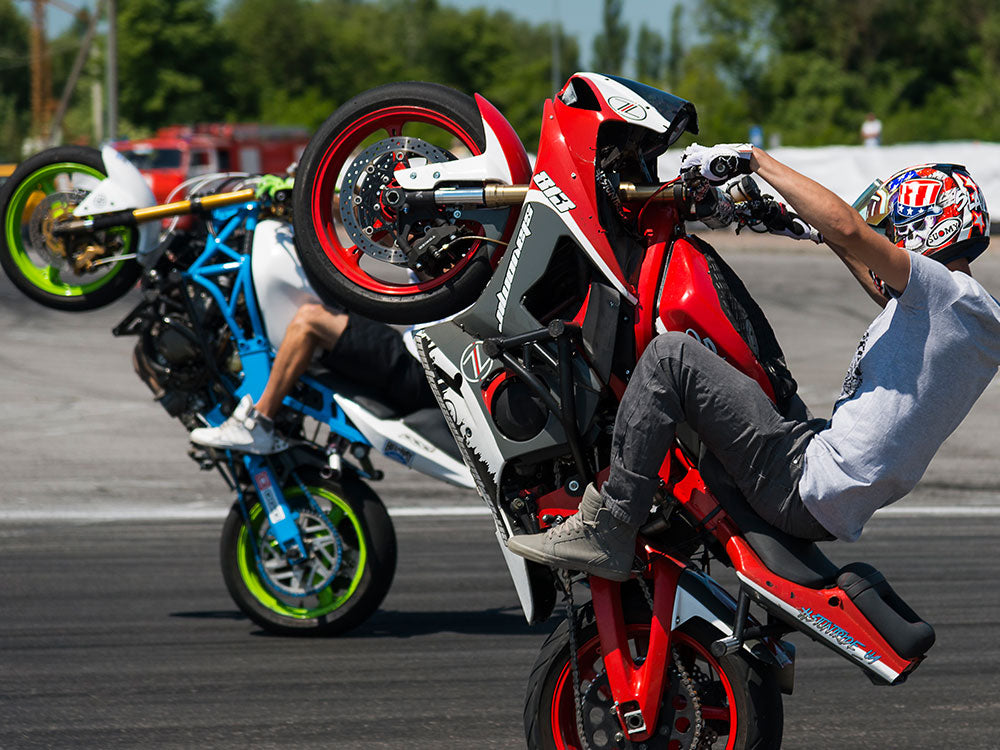
Finding the right motorcycle for stunt riding is about more than horsepower or engine size. This guide compares nine motorcycles across supersport, naked, small-displacement, and supermoto categories, covering both current and established used platforms. It examines the factors that can make one platform more relevant than another, including size, weight, engine character, chassis and ergonomics, parts availability, repair costs, market availability, and overall condition.
The important part is understanding why a motorcycle fits a particular use case rather than choosing one based only on horsepower or engine size.
This guide looks at nine motorcycles across several categories, including current supersports, established used platforms, naked bikes, a small motorcycle, and a supermoto. The goal is to give you enough information to compare the platforms and decide which type makes the most sense for your situation.
Table of contents
1. How We Selected These Motorcycles for Stunts
These motorcycles were selected using a combination of factors relevant to stunt-bike research, including documented use or discussion within stunt communities, platform characteristics, parts and aftermarket availability, current or used-market accessibility, and the amount of information available for evaluating each motorcycle.
Not every motorcycle on this list has the same level of documented stunt-community association. Some are included because they have an established history in stunt discussions, while others represent a platform type that is worth comparing based on its size, engine configuration, chassis, or market availability.
The list is not a ranking, and inclusion does not mean a motorcycle is inherently safer or better suited to stunt riding than another model.

2. What Makes a Good Stunt Bike?
Before comparing individual motorcycles, it helps to understand the characteristics that matter.
Weight and Size
A motorcycle's physical size affects how easy it is to manage during ordinary riding and how demanding it can be to control when the motorcycle's balance changes.
There is no universal ideal weight of motorcycles for stunts. A full-size supersport, compact naked bike, and small motorcycle can all offer very different riding experiences.
Power Delivery
Engine size alone does not tell you how a motorcycle will feel. Two bikes with similar displacement can have very different engine configurations, gearing, torque delivery, and throttle response.
For stunt-bike research, the useful question is not simply "How much horsepower does it make?" It is how the engine's character fits the rider's experience and intended use.
Chassis and Ergonomics
Sport bikes generally place the rider in a more forward position, while naked bikes tend to provide a more upright riding position. Supermotos introduce another combination of seat height, suspension travel, and chassis geometry.
Those differences can matter just as much as engine size when comparing platforms.
Parts, Support, and Repair Costs
A motorcycle that has been on the market for years may have a large used-parts supply and extensive owner knowledge. A newer model may offer updated components but cost more to purchase.
If a motorcycle is being considered for demanding use, repairability and parts availability deserve attention before purchase.
3. Comparison: 9 Motorcycles Worth Considering
Motorcycle |
Platform |
Current/Used |
Engine Class |
Main Reason to Consider |
Main Tradeoff |
Kawasaki Ninja ZX-6R |
Supersport |
Current |
636cc |
Established middleweight sport-bike platform |
Higher purchase and repair costs |
Honda CBR600RR |
Supersport |
Current |
599cc |
Current 600-class supersport |
Sport-bike ergonomics |
Suzuki GSX-R600 |
Supersport |
Current/used |
599cc |
Long-running sport-bike platform |
Generation and condition matter |
Yamaha MT-07 |
Naked |
Current/used |
689cc |
Upright alternative with a twin-cylinder engine |
Different chassis and engine character |
Honda Grom |
Small motorcycle |
Current/used |
124cc |
Compact, simple platform |
Not comparable to full-size sport bikes |
KTM 390 Duke |
Naked |
Current/used |
398.7cc |
Compact naked-bike platform |
Single-cylinder character |
Suzuki DR-Z4SM |
Supermoto |
Current |
398cc |
Supermoto alternative |
Different platform from supersports |
Suzuki GSX-R750 |
Sport |
Current/used |
750cc |
More displacement in a compact sport-bike format |
More displacement is not automatically better |
Honda CBR600F4i |
Sport |
Used |
599cc |
Established older 600-class platform |
Age and condition are major factors |
i. Kawasaki Ninja ZX-6R
The Kawasaki Ninja ZX-6R is one of the clearest examples of why the term 600-class is more useful than an exact 600cc label. The current model uses a 636cc inline-four engine and remains a full supersport motorcycle.
Its place on this list is supported by both its current specifications and its long history of discussion within stunt communities. Older ZX-6R and 636 models have appeared repeatedly in stunt-bike forums, making the platform relevant when researching established stunt motorcycles.
The current ZX-6R is a different purchase proposition from an older used stunt platform, however. Kawasaki lists the 2026 model with a base MSRP of $11,599 before the ABS version and additional purchase costs are considered.
Why it stands out: A current 636cc supersport gives buyers access to a modern middleweight sport-bike platform while retaining the basic size and configuration that have made the ZX-6R relevant in enthusiast and stunt discussions.
Buying consideration: A newer ZX-6R can cost substantially more than an older used platform. If the motorcycle will be exposed to unusually high wear or falls, the purchase and repair costs deserve serious consideration.

ii. Honda CBR600RR
The Honda CBR600RR represents the traditional 600-class supersport approach. The current motorcycle uses a 599cc liquid-cooled inline-four engine, a close-ratio six-speed transmission, and a fully developed sport-bike chassis.
Unlike some older motorcycles on this list, the CBR600RR is available as a current model. Honda lists the 2026 CBR600RR with a starting MSRP of $11,499, before destination, taxes, registration, and other dealer costs.
Its inclusion gives the comparison a current Honda option in the 600-class supersport category.
What to compare: The CBR600RR makes the most sense to research if you specifically want a modern supersport rather than an older used motorcycle.
Tradeoff: Its race-oriented ergonomics and current-bike pricing make it a very different proposition from an older CBR600F4i.

iii. Suzuki GSX-R600
The Suzuki GSX-R600 is another established 600-class supersport platform. The current version uses a 599cc four-cylinder engine, aluminum twin-spar frame, and adjustable sport-bike suspension.
The GSX-R family also has a long history within stunt-bike communities. Older stunt forums contain extensive discussion of GSX-R600s and GSX-R750s, including questions about using the motorcycles as stunt platforms.
That history matters because someone shopping for a used GSX-R600 is not starting with a platform that has only recently entered the enthusiast market.
Buying consideration: Generation matters. An older GSX-R600 can have a very different ownership proposition from the current model, particularly when evaluating condition, previous modifications, maintenance history, and replacement parts.
The used market can also change the economics considerably. J.D. Power's current valuation data, for example, places average retail values for certain mid-2010s GSX-R600 examples around the mid-$8,000 range, although actual listings vary by year, mileage, condition, and location.

iv. Yamaha MT-07
The Yamaha MT-07 shows why stunt-bike research should not focus exclusively on supersports.
The 2026 MT-07 uses a 689cc liquid-cooled parallel-twin engine and an upright naked-bike layout. Yamaha lists a starting price of $8,599 for the 2026 model before destination and other charges.
Its inclusion is primarily about platform diversity. A rider researching stunt motorcycles may prefer the ergonomics and engine character of a naked bike rather than the forward riding position of a supersport.
The MT-07 has also appeared in modern custom and stunt-oriented builds, giving it some practical relevance beyond its basic specifications.
Where it fits: Consider the MT-07 when an upright naked-bike platform is more appealing than a fully faired supersport.
Tradeoff: The MT-07's twin-cylinder engine and chassis give it a different character from the inline-four 600-class motorcycles on this list. It should be compared as a naked-bike alternative, not simply as another 600.

v. Honda Grom
The Honda Grom is the biggest departure from the full-size motorcycles in this guide.
The current Grom uses a 124cc air-cooled single-cylinder engine, a five-speed transmission, a 30-inch seat height, and a curb weight of 224 pounds. Honda lists the 2026 base model at $3,599 before destination and other costs.
The Grom also has a documented presence in stunt-oriented communities, with dedicated stunt builds and parts appearing in enthusiast discussions.
That does not make it equivalent to a 600-class sport bike. Its appeal comes from its compact size, low weight, small physical dimensions, and the large customization culture surrounding the model.
Why it is different: The Grom belongs in this article because it demonstrates that stunt-bike research does not have to start with a supersport.
Tradeoff: Its 124cc engine and small chassis make it unsuitable as a direct substitute for a full-size sport bike. A rider looking for full-size performance should compare it accordingly.

vi. KTM 390 Duke
The KTM 390 Duke brings another naked-bike option to the comparison.
The 2026 model uses a 398.7cc single-cylinder engine, a six-speed transmission, and a steel trellis frame. KTM lists the motorcycle at 165 kg fully fueled.
The Duke family also has documented examples of stunt riding, including dedicated 390 Duke stunt builds and riding footage. That gives the model more direct relevance to the subject than simply assuming that any lightweight naked bike belongs on a stunt-bike list.
Where it fits: The 390 Duke is worth researching if you want a compact naked-bike platform without moving into the size of a 600-class supersport.
Tradeoff: Its single-cylinder engine gives it a very different character from the inline-four sport bikes. It should not be judged by the same expectations.

vii. Suzuki DR-Z4SM
The Suzuki DR-Z4SM represents the supermoto category.
The current DR-Z4SM uses a 398cc liquid-cooled single-cylinder engine, a five-speed transmission, long-travel suspension, and 17-inch road-oriented wheels. Suzuki lists a curb weight of 340 pounds and a seat height of 35 inches.
Its reason for inclusion is straightforward: supermoto motorcycles provide a completely different chassis concept from a traditional supersport.
The DR-Z platform also has a documented history within stunt communities. Older stunt discussions include riders using the DR-Z400SM alongside sport bikes, showing that supermoto motorcycles have long been part of the wider stunt-bike conversation.
Why it matters: If you are comparing motorcycle platforms rather than simply searching for the most powerful sport bike, the DR-Z4SM gives you a legitimate supermoto alternative.
Tradeoff: Its tall seat and supermoto chassis make it a very different motorcycle from the low, compact ergonomics of a supersport.

viii. Suzuki GSX-R750
The GSX-R750 occupies an interesting middle ground.
It uses a 750cc inline-four engine, but Suzuki continues to pair that engine with a compact chassis based around the proportions of a 600-class supersport. The 2026 model has a listed base MSRP of $13,249 before destination and other charges.
The GSX-R750 also has a long history of stunt-community discussion. Older stunt forums contain direct conversations about using GSX-R750s for stunt riding.
The extra displacement is part of the reason riders research the model, but it should not be treated as an automatic advantage.
What to compare: The GSX-R750 makes sense for someone specifically interested in a sport-bike platform with more displacement than the typical 600-class machines.
Tradeoff: More engine displacement can change the motorcycle's character without necessarily making it a better fit for every rider.

ix. Honda CBR600F4i
The Honda CBR600F4i is the oldest motorcycle on this list and one of the clearest examples of why used-market availability matters.
Honda introduced the F4i in 2001 as a 599cc four-cylinder sport bike with electronic fuel injection. Honda's historical material identifies it as the final model in the CBR600F series, while contemporary Honda documentation also shows that an F4i-based race version was produced.
The model has a particularly strong connection to stunt-bike discussions. Stunt forums contain extensive F4i conversations, and the motorcycle has also been used in documented stunt riding.
Today, the F4i is strictly a used-bike proposition.
Used-market question: With a motorcycle this old, condition matters more than the badge on the tank. Service history, crash damage, corrosion, previous modifications, and replacement parts should all be investigated before purchase.
J.D. Power's current valuation data for a 2005 CBR600F4i illustrates how wide the condition spread can be, with values ranging from roughly $1,735 for a fair example to $7,285 for an excellent example. Actual asking prices can differ significantly.

4. Why Are 600-Class Bikes So Common in Stunt-Bike Discussions?
The term 600cc stunt bike is often used as shorthand for a broader class of middleweight sport bikes.
That is important because the motorcycles discussed as "600s" do not always have exactly 600cc engines. The current Ninja ZX-6R, for example, uses 636cc, while the CBR600RR and GSX-R600 use 599cc engines.
So why does the 600-class appear so often in stunt-bike discussions?
Several factors overlap:
Middleweight dimensions: These motorcycles are generally smaller and lighter than liter-class sport bikes.
Sport-bike chassis: The category has a long history of compact, performance-focused chassis designs.
Large used-market population: Older 600-class motorcycles are widely encountered on the used market.
Long enthusiast history: Models such as the ZX-6R, GSX-R600, CBR600F4i, and related sport bikes have been discussed in stunt communities for years.
Parts and knowledge: Older, widely sold motorcycles can benefit from established owner knowledge and used-parts availability.
That does not mean every 600-class motorcycle is equally suitable for every rider. It means the category provides a useful starting point for comparison.
5. Sport Bike vs. Naked Bike vs. Supermoto
The motorcycle's category can tell you more than the displacement alone.
Sport Bikes
ZX-6R, CBR600RR, GSX-R600, GSX-R750, and CBR600F4i fall into the sport-bike side of this comparison.
They generally offer compact chassis dimensions and performance-oriented ergonomics.
Naked Bikes
The MT-07 and 390 Duke provide upright alternatives.
Their exposed bodywork, different riding positions, and different engine configurations make them useful comparisons for riders who do not want a fully faired supersport.
Small Motorcycles
The Grom is in its own category.
Its small dimensions and low weight make it fundamentally different from the full-size motorcycles in this article.
Supermoto
The DR-Z4SM represents a different approach again, combining a single-cylinder engine with a tall chassis and long-travel suspension.
The takeaway is simple: choose the motorcycle category first, then compare models within that category.
6. Current vs. Used Stunt Bikes
A current motorcycle offers the obvious advantages of newer components, warranty coverage, and less age-related wear.
A used motorcycle can provide a much lower purchase price and access to established platforms with years of owner knowledge behind them.
The difference can be substantial.
For example, current U.S. MSRP figures include about $3,599 for a base 2026 Honda Grom, $8,599 for a 2026 Yamaha MT-07, $11,499 for a 2026 Honda CBR600RR, $11,599 for a non-ABS 2026 Kawasaki ZX-6R, and $13,249 for a 2026 Suzuki GSX-R750. These are manufacturer prices before taxes, registration, dealer fees, and other charges.
Used values can be considerably lower, but they vary by age and condition. Current valuation examples include roughly $5,850–$7,700 for a 2019 MT-07, $7,435–$9,785 for a 2021 ZX-6R, and $6,420–$8,450 for a 2015 GSX-R600. Older motorcycles can have an even wider spread.
These figures are U.S.-market reference points, not universal prices. Local markets, import costs, taxes, exchange rates, mileage, condition, and modifications can change the actual price substantially.
7. What to Check Before Buying a Used Stunt Bike
If you are considering a used motorcycle, inspect the bike as a motorcycle first and a stunt platform second.
Look for:
Signs of frame or subframe damage
Evidence of previous crashes
Bent controls or levers
Damaged wheels
Fork or shock leaks
Unusual engine noises
Oil or coolant leaks
Worn chains and sprockets
Electrical problems
Missing maintenance records
Non-factory wiring or poorly executed modifications
Excessive corrosion
Evidence that the motorcycle has been repeatedly neglected
A cheap motorcycle can become expensive quickly if it needs major mechanical work.
For a broader motorcycle-buying framework, see How to Choose Your First Motorcycle.
8. How to Choose a Stunt-Bike Platform
Instead of asking which motorcycle is universally the best, start with the type of platform you actually want to compare.
If You Want a Current Supersport
Look at the Kawasaki Ninja ZX-6R or Honda CBR600RR.
Both are current middleweight supersports, but they use different engines, chassis setups, and manufacturer approaches.
If You Want a Used 600-Class Platform
Look at the Suzuki GSX-R600 or Honda CBR600F4i.
Here, condition, maintenance history, generation, and purchase price become especially important.
If You Want a Naked Bike
Compare the Yamaha MT-07 and KTM 390 Duke.
They are not interchangeable motorcycles, but both provide alternatives to a fully faired supersport.
If You Want a Small Motorcycle
The Honda Grom is the obvious platform in this list to investigate.
Its small dimensions make it fundamentally different from the other motorcycles discussed here.
If You Want a Supermoto
Research the Suzuki DR-Z4SM.
Its chassis and suspension configuration make it the dedicated supermoto option in this comparison.
If You Want More Displacement in a Sport-Bike Platform
The Suzuki GSX-R750 gives you a 750cc engine in a compact supersport-style chassis.
The additional displacement is a characteristic to evaluate, not a reason to assume that it is automatically the right choice.
9. What Should a Beginner Look For?
A beginner should separate two questions:
Is this motorcycle manageable for normal riding?
and
Is this motorcycle appropriate for stunt practice?
They are not the same question.
For ordinary motorcycle ownership, a newer rider should consider physical size, predictable controls, manageable power, repair costs, parts availability, and the motorcycle's overall mechanical condition.
Training also matters. Learning in a controlled, legal environment with professional instruction is fundamentally different from experimenting on public roads.
A motorcycle that feels manageable during everyday riding is not automatically appropriate for stunt practice.
10. Do Stunt Bikes Need Modifications?
Some motorcycles used for stunt riding are heavily modified, while others begin as relatively standard motorcycles.
The modifications you may encounter can include protective equipment, changes to controls, suspension adjustments, gearing changes, and other purpose-built components.
However, modifications should be evaluated individually. A modification designed for one motorcycle or riding style may not be appropriate for another.
If you are buying a used motorcycle that has already been modified, find out exactly what was changed and whether the work was professionally installed.
This is also one reason a clean, mechanically sound used motorcycle can sometimes be easier to evaluate than a heavily modified example with an unclear history.
11. Safety and Legal Considerations
Motorcycle stunts can involve a high risk of injury and property damage.
Do not practice stunts on public roads or in traffic. Check local laws and use an appropriate controlled environment where this type of riding is permitted.
Protective equipment, motorcycle condition, rider training, and the riding environment all matter.
This article is intended to help you research motorcycle platforms. It is not a guide to performing motorcycle stunts.
12. FAQs
What is a stunt bike?
A stunt bike is generally a motorcycle that has been selected or modified for stunt riding. The term does not describe one specific motorcycle model or engine size.
What is the best stunt motorcycle?
There is no single model that is the best choice for every rider. The useful comparison is between motorcycle platforms, such as 600-class supersports, naked bikes, small motorcycles, and supermotos.
Are 600cc motorcycles good stunt bikes?
600-class motorcycles are common in stunt-bike discussions because they combine middleweight dimensions with established sport-bike chassis designs and a large used-market presence. However, individual models and generations can differ significantly.
What makes a good stunt bike?
Factors worth researching include physical size, weight, engine character, chassis design, ergonomics, parts availability, repair costs, purchase price, and the motorcycle's mechanical condition.
Are used motorcycles worth considering?
A used motorcycle can make sense when the model has an established parts supply and the individual bike has been properly maintained. Age, crash history, modifications, and condition should be checked carefully.
How much does a stunt bike cost?
There is no fixed stunt-bike price. Current U.S. examples range from around $3,600 for a new Honda Grom to more than $13,000 for a new Suzuki GSX-R750 before additional costs. Used motorcycles can range from a few thousand dollars to much more depending on model, year, condition, and market.
13. TAKEAWAY
Choosing a stunt-bike platform is less about finding one universal winner and more about deciding what type of motorcycle you want to compare. Supersport, naked, small-displacement, and supermoto motorcycles all offer different characteristics.
Consider factors such as physical size, engine character, ergonomics, parts availability, repair costs, price, mechanical condition, and your riding experience. Looking at these factors alongside the motorcycle's category and history gives you a more useful starting point than choosing based on displacement, horsepower, or the word "stunt" alone.
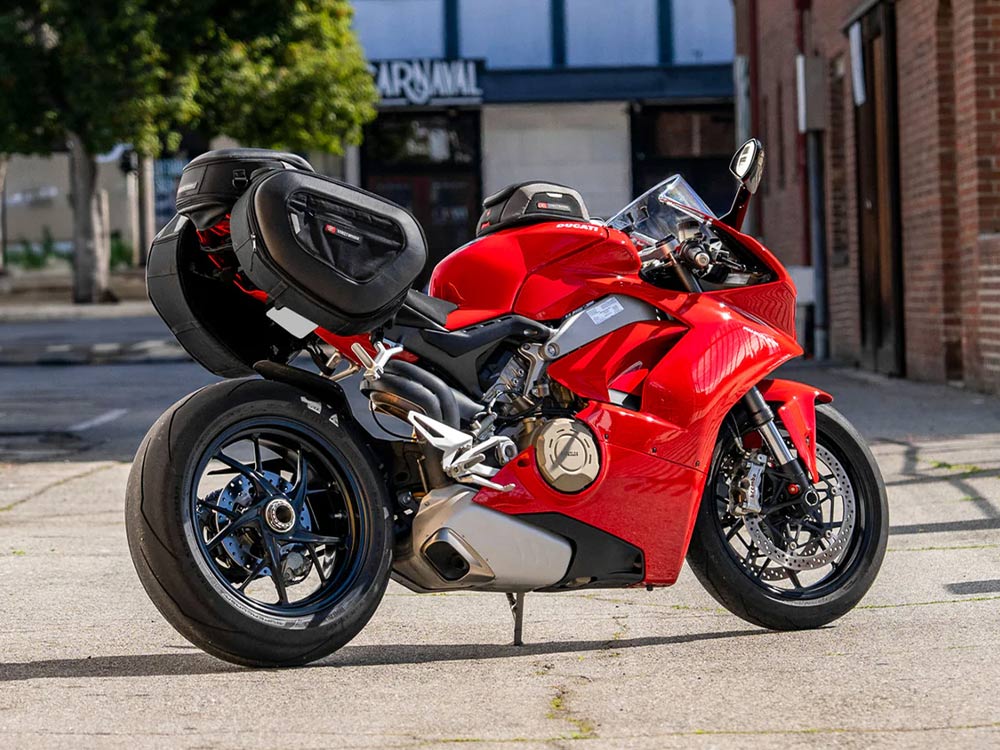
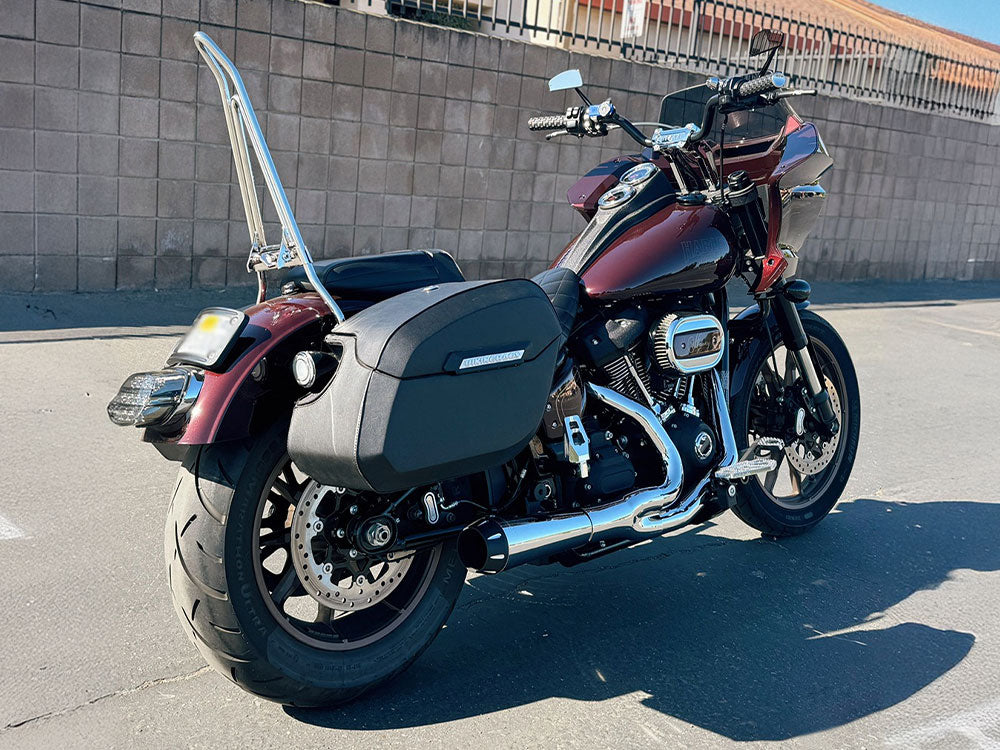
These motorcycles can also be used for everyday riding and touring. Adding suitable luggage can provide extra carrying capacity for longer rides, making a stunt-oriented motorcycle useful beyond recreational riding.



Leave a comment
All comments are moderated before being published.
This site is protected by hCaptcha and the hCaptcha Privacy Policy and Terms of Service apply.