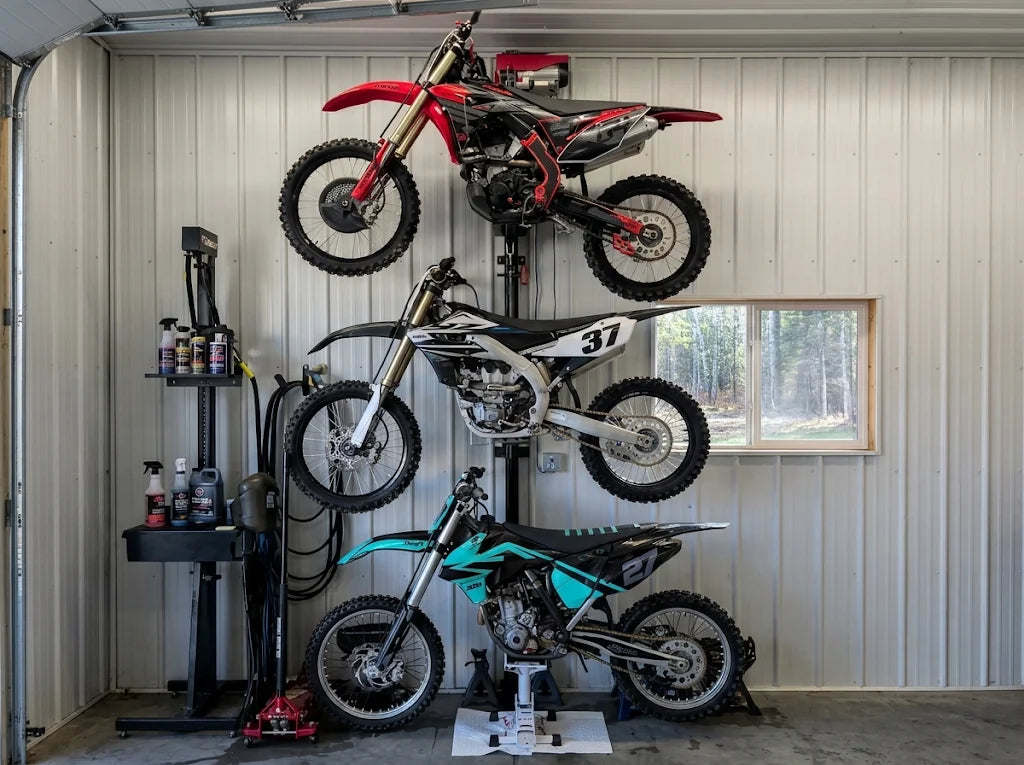
Five small, inexpensive upgrades make home wrenching easier: a cardboard bolt map, a T-handle socket, socket adapters, ball-end hex drivers and a magnetic pickup tool. This guide explains how to use each one safely and which ones are small enough to carry on the bike.
Table of contents
Quick answer: The most useful low-cost garage upgrades are a cardboard bolt map, a T-handle socket, socket adapters, ball-end hex drivers and a magnetic pickup tool. They keep fasteners organized, reach tight spots and rescue dropped bolts. The smaller ones also fit in a motorcycle tool bag for roadside fixes.
Most riders learn garage lessons the hard way. A bolt disappears, a hex head rounds off, or the socket you own won’t reach the fastener you need. Our guide to must-have motorcycle tools covers the big items like stands, torque wrenches and compressors. This guide is about the small tricks that make those tools work better.

1. A piece of cardboard: your free bolt map
This is the cheapest item here and arguably the most useful.
Sketch the part you’re removing on a flat piece of cardboard, such as an engine cover or side panel. Then push each bolt through the card at the spot it came from. Every fastener now has a labeled home.
Why it matters: Bolts on one part are often different lengths, and a long bolt in the wrong hole can damage threads or the part itself. A bolt map also saves you from finishing a job with a mystery leftover.
Tip: Photograph the part before you start and note the removal order on the cardboard for multi-layer jobs.
2. A T-handle socket
A T-handle is a T-shaped handle with a socket on the end, so it’s quick to use and easy to keep in a pocket. Some versions have a different size at each end.
Many bikes use a handful of common metric sizes, often 8, 10, 12, 14 and 17 mm, so a T-handle in the sizes your bike uses can cover a lot of jobs. Check your owner’s manual for your bike’s actual sizes before you buy.
Why it matters: It’s fast, compact and light, which makes it a good candidate for your roadside kit.


3. A socket adapter set
A ratchet only works with sockets that match its drive size. Adapters let one ratchet drive sockets of other sizes, and angled versions help in tight spaces.
Why it matters: An adapter set costs much less than a second ratchet and widens what the one you own can do.
Use them carefully: Stepping a small drive up to a larger one makes it easy to apply more force than the smaller parts were built for, so go slowly. If you use a torque wrench, a plain adapter or straight extension doesn’t change the torque setting, but anything that offsets the socket or lengthens the lever can. Follow your tool maker’s instructions and your bike’s torque specs.
4. Ball-end hex drivers
Standard Allen keys work well until a bolt sits at an awkward angle. A ball end lets you turn a hex bolt without lining up perfectly, which helps on fairing hardware, levers and tight spots.
It also helps you avoid rounding the hex socket, which riders often call “cheesing” the bolt.
The trade-off: A ball end grips less than a straight end. Use the straight end to break a stubborn bolt loose and for the final tightening, and use the ball end to spin it in and out.

5. A magnetic telescopic pickup tool
Everyone drops bolts. A magnetic pickup tool reaches places your hand can’t, like deep in an engine bay or under the bike.
Prevention beats rescue: Lay a clean rag over open areas before you start so small parts can’t fall into them, and keep the pickup tool within reach.
5.1 Honorable mentions
- Safety wire pliers for wire locking fasteners
- Impact driver for stubborn screws; use the correct bit so you don’t damage the head
- Speed wrench for running fasteners on and off quickly
- Circlip pliers for installing and removing circlips (retaining clips)

6. Which of these belong in your tool bag?
Not everything needs to ride with you. Ask two questions: Is it small, and would I need it on the road?
A T-handle, ball-end hex drivers and a magnetic pickup tool usually pass both tests. Leave the cardboard and bulkier tools at home. If you’re deciding what else goes in, see our lists of what to carry in your saddlebags and saddlebag essentials. For tool-bag choices, our best motorcycle leather tool bags roundup compares styles.
Viking tool bags mount on the front forks, either under or over the headlight, and the straps come with the bag. Before you order, check the clearance listed on the product page, because it varies by bag.
Our motorcycle tool bags collection includes the Dark Age Plain, Armor Plain and Twist Essential. Some riders keep a few tools in theirs, and others use a small one for a wallet and phone.
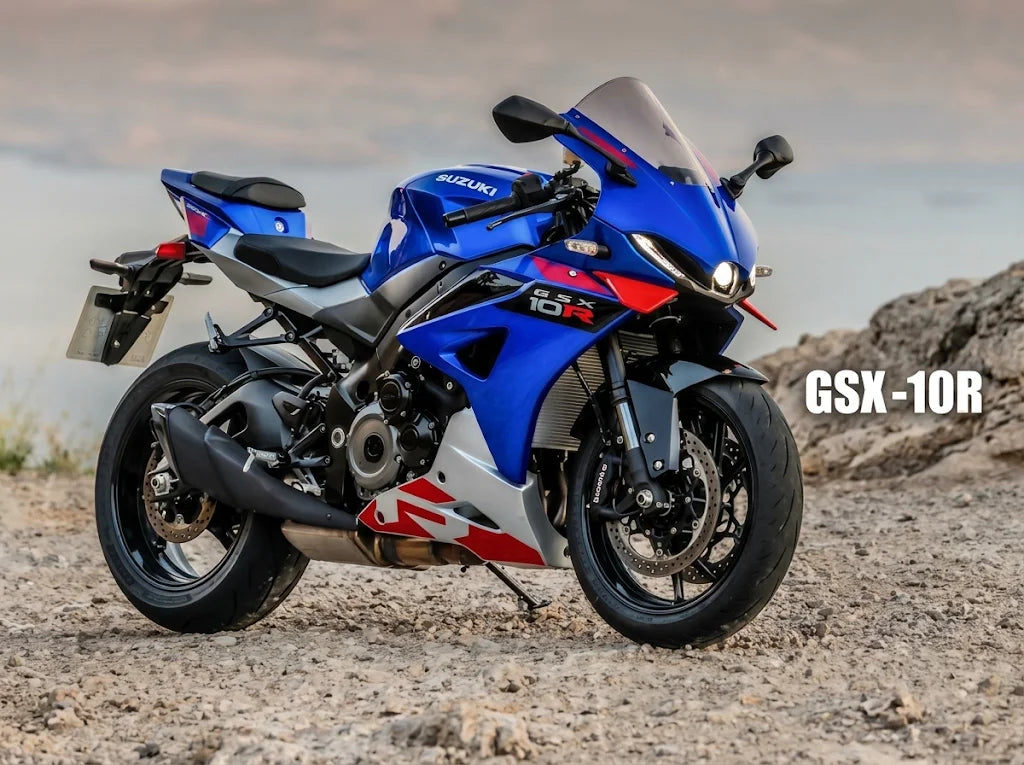
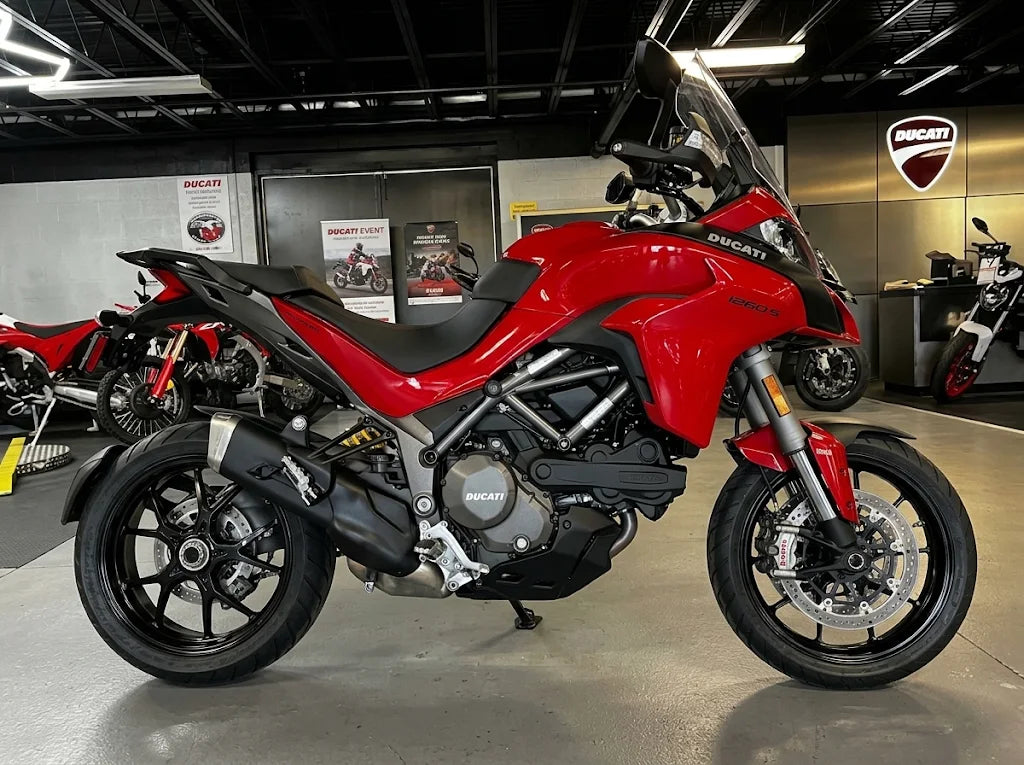
If you’d rather browse by bike, we have tool bag collections for Harley-Davidson, Indian, Triumph, Ducati, Suzuki and Victory. Adventure riders can see the ADV touring tool bags or KTM adventure touring luggage. Every Viking product carries a 1-year warranty.
6.1 Keep the garage habits going
Good tools are only half of it. Once the bolts are organized, put them to use on cleaning your engine, charging the battery or recognizing signs you need an oil change.
7. FAQs
What is the best way to keep track of bolts when taking a motorcycle apart?
Draw the part on cardboard and push each bolt through the spot it came from. Photograph the part first, since bolts on one part are often different lengths.
What is a T-handle socket used for?
It’s a handle with a socket on the end, used to loosen and tighten nuts and bolts quickly. It’s compact enough to carry on the bike.
What is a ball-end hex driver for?
It turns hex bolts at an angle, which helps in tight spots. Use the straight end to break a bolt loose and for final tightening.
Can I use socket adapters with a torque wrench?
Yes, but follow your tool maker’s instructions. A plain adapter or straight extension doesn’t change the torque setting, but anything that offsets the socket or lengthens the lever can.
What tools should I keep in a motorcycle tool bag?
Compact tools that match your bike’s fasteners, plus roadside basics. Our saddlebag packing guide has more ideas.
Where does a Viking tool bag mount?
On the front forks, under or over the headlight. Straps are included, and each listing states the clearance it needs.
8. Final thoughts
A cardboard bolt map, a T-handle, a few adapters, ball-end hex drivers and a magnetic pickup tool cost very little and prevent a lot of frustration. Start with the cardboard, add tools as jobs demand them, and carry the compact ones in a tool bag that fits your bike.



Leave a comment
All comments are moderated before being published.
This site is protected by hCaptcha and the hCaptcha Privacy Policy and Terms of Service apply.