

Table of Content
This news was a big blow to the market in early 2025. The ambitious entry into the electric bikes market by Harley Davidson was collapsing. The brand, LiveWire, the bold spin-off that targeted to win the future of the motorcycle industry, had hit a wall of red ink and had lost hope. The figures gave a bloody tale, which made it quite obvious what’s going on with the Harley LiveWire.
1. Harley-Davidson Electric Motorcycle Sales Drop

1.1 Harley LiveWire Sales Figures and Losses
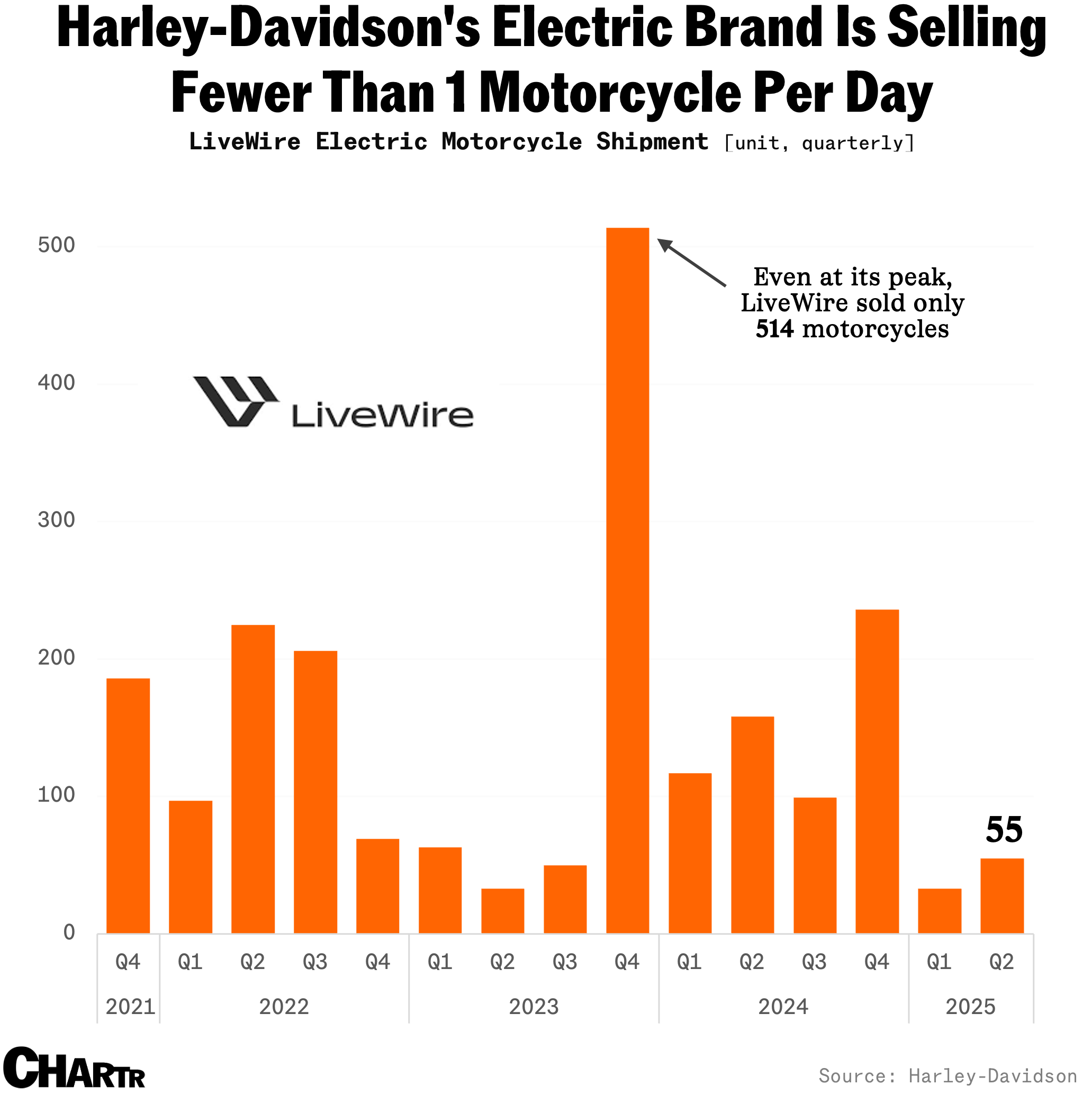
Harley LiveWire was only able to sell 33 motorcycles in the first three months of 2025.
It was a 72% drop recorded in the same period of the previous year.
In the first quarter of 2024, almost 117 units of LiveWire were sold.
The loss to the company in the three months reached $20 million.
Calculate the figures, and you will realize that every bike that was rolled out cost about $606,000 to sell.
The problem at hand wasn’t just the slow sales. It was a complete meltdown of a business.
1.2 Intensifying LiveWire Sales Crisis
The crisis continued to intensify towards the summer. Towards the second quarter of 2025, LiveWire had only sold 55 electric bikes. It was a 65% stomach-wrenching decline over the previous year of the same period.
As the parent company of Harley was struggling to keep itself afloat with a 23% drop in revenues, the electric bike side of the company was bleeding much more.
2. What Caused the Decline of Harley LiveWire Sales: Key Issues and Factors
But how did the company, H-D LiveWire, get here? A few years ago, LiveWire used to have large dreams and plans. The brand planned to make 100,000 electric bikes by 2026. This target looked tough to strike at that time. By 2024, it was already pure fantasy. LiveWire only sold 612 electric bikes that year, as compared to 660 last year. The operating loss of 2024 was $110 million, and it didn’t seem to stop or slow down.
The decline of the H-D LiveWire sales did not result from a single fault. Instead, it was due to several issues that showed up at the same time. To begin with, there was the situation in the broader market.
2.1 Higher Interest Rates
There was high interest, making it difficult to borrow money for bikes or cars. You do not purchase a fun toy when you could lose your job or your life savings anytime. The consumer mood became even darker in 2024 and 2025.
2.2 What Harley Has to Say About the LiveWire Sales Drop
A poor financial situation and lack of trust on the part of the buyer were the reasons pointed out by the brand itself. It was a good way to put it:
“People do not want to use their money on our bikes as of now. To be honest, people are doubtful about electric bikes in the first place.”
2.3 Common Buyers’ Questions
Then there is the cold reality of electric bikes as a type. Although bike makers, who make such machines, have been trying to make better batteries and other motors, the issue still exists.
Where do you charge your electric bike?
What is the range of the bike?
How long does it take to top up?
These are the questions that buyers keep asking, and in most cases, the answers were not up to the mark.
2.4 Lack of Charging Stations Infrastructure

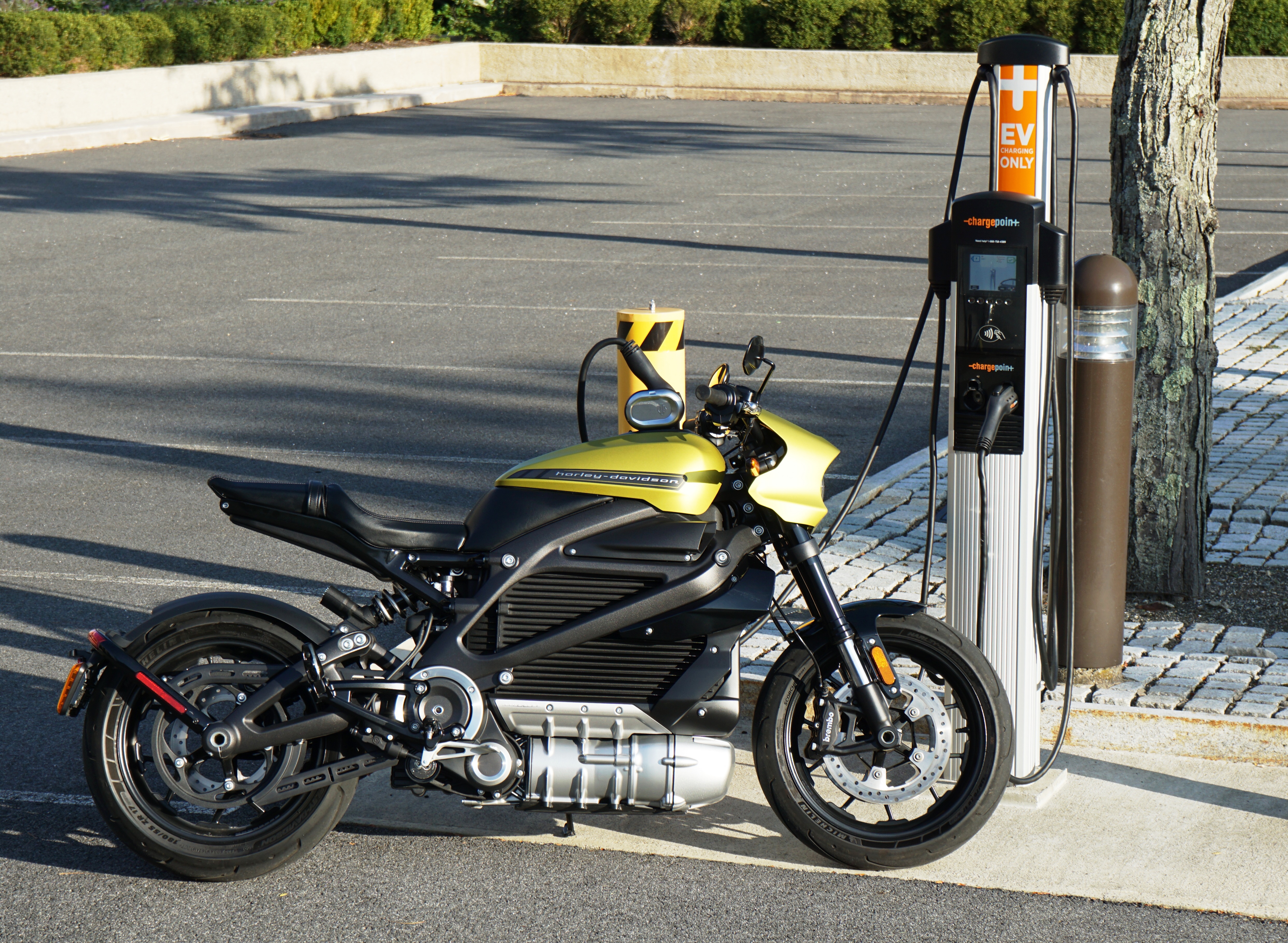
The US does not have a system of rapid charging stations that the owners of electric bikes and cars can use. When you take a LiveWire bike and ride it out of the city, you may find yourself spending hours in search of a place to charge your bike. In case you find one, it may not work.
2.5 The Price Problem with Harley LiveWire Bikes

The other biggest problem with the H-D LiveWire is the cost. The LiveWire bikes remained very costly to most riders. This is after LiveWire lowered its price in August 2025.
2.5.1 Even the Cheapest LiveWire Seems Expensive
The company has cut $4,000 from the S2 Alpinista to make it $11,999. Even then, it is still a big amount of money to spend on an electric ride that can just cover about 100 miles or so. You will have to seek out a plug if you want to ride again.
On the other hand, you have a petrol bike that can cost you around $5,000 to $8,000 and cover around 300 miles on a single tank. Above all, you can find a gas station with ease near you.
2.5.2 Is LiveWire Way Too Overpriced?
The math simply didn’t work for LiveWire. As per a review by another company, LiveWire machines are viewed by buyers as being 3 to 8 times more expensive than they should be. To most, it did not make sense to pay massively for a bike that doesn’t go as far.
2.6 Brand Fit Issue with LiveWire
The brand fit problem also exists here. Harley has made its name on the sound of its large V-Twin engines. The loyal fans of the brand understand power, freedom, and an open road. A silent electric bike is quite the opposite of what a real Harley means.
2.7 Distribution Issue
Besides, Harley distributed the LiveWire bikes in the same dealer shops that usually serve older riders. This is not the place where young tech enthusiasts purchase their first bikes.
3. What Added Fuel to the Fire for LiveWire’s Low Sales
Things got worse as the White House's direction changed. In 2025, the Trump administration withdrew its effort to encourage people to switch to electric bikes. This made the future of the entire electric bike market even darker. It also sent buyers a message that the atmosphere in Washington had shifted against EVs, making them even less interested in switching.
Harley-Davidson is one of those brands that was hurt by recent tariff changes, and this hit was passed along to LiveWire. The new tariffs will likely cost the firm an estimated $27 million in additional expenses in 2025. This further complicated the brand's competition and pricing.
4. Are There Signs of Hope for Harley LiveWire?
There was a small silver lining to the dark cloud towards the end of 2025. During the third quarter, LiveWire registered an 86 percent increase in unit sales, selling 184 bikes compared to 99 bikes in the same quarter in 2024. It may not be much, however, it was a decent change as compared to the terrible first half.
The company had also initiated a new push, named Twist and Go, in which the brand drastically reduced the prices on its S2 line. Initial signs suggested that reduced prices would increase sales, but the company continued to decline, with cash losses accelerating at an alarming pace.
Another new plan was initiated at LiveWire. Instead of pursuing the vision of making all riders go electric, the brand shifted to smaller, less expensive bikes for new users. The company displayed the S4 Honcho, a light motorcycle with a weight equal to that of a 125 cc gas motorbike. It may be a breakthrough, as these will likely be purchased by many riders in Europe and other countries if the price is affordable.
Another company that became involved with LiveWire was a Taiwanese one, known as Kymco, to build an electric maxi-scooter. This new ride will be coming before the first half of 2026. It will tap into an entirely new segment of the population that simply wanted fun, fast urban rides without worrying about charging the battery. These new models showed that the brand was attempting to learn from its flops and move in a new direction.
5. The Bigger Picture
The collapse of LiveWire sales can be seen as part of a gloomy outlook for the entire Harley company. The number of new Harley sign-ups worldwide in the first half of 2025 declined by 27.7 percent. The brand had problems in all parts of the world. Its main market, North America, saw a 20.7 percent decline in sales.
This has led the parent firm, Harley, to re-examine its entire game strategy. Harley has started developing a low-cost model, known as the Harley Sprint, whose price will likely be under $6,000. The company was aware that it had to attract younger consumers, and the only way to do so was to offer bikes that would not break the bank.
All-New 2026 Harley-Davidson Sprint

Must Read: 10 Best Harleys for Beginners
7. Final Thoughts
Nevertheless, another serious question remains: Who wants to ride motorcycles nowadays? The entire industry is experiencing gradual deterioration because more young people are no longer finding bikes as a way to fun and freedom. That was to be solved by electric rides. The LiveWire initiative was an indication of the distance that Harley had to travel to remain cool and relevant.
At the end of 2025, the company had planned to reduce the annual case burn at LiveWire to 72 to 77 million dollars. That is an enormous loss, but at least it was a sign that this brand was making efforts to reduce the bleeding.
The LiveWire story shows that strong brands cannot remain in the past. However, the reverse can also be said. It is difficult, dangerous, and costly to move forward. In the case of Harley-Davidson, the coming years will be the determining factor on whether old tricks can still be used in a new era of bikes.



Leave a comment
All comments are moderated before being published.
This site is protected by hCaptcha and the hCaptcha Privacy Policy and Terms of Service apply.