Table of Content
There was a time when roads were dominated by two-stroke motorcycles. They were quick, nimble, and had a good punch that riders enjoyed. However, by the beginning of the 2000s, these bikes had virtually disappeared in the majority of stores and streets around the globe.
You may be asking yourself what became of these amazing machines if you have been brought up with bikes. The answer to the question: “What happened to 2-stroke motorcycle?”, “Why did they disappear?” isn’t simple. It involves science, reasons, and the way the market has evolved over time.

1. The Golden Age of 2-Stroke Motorbikes
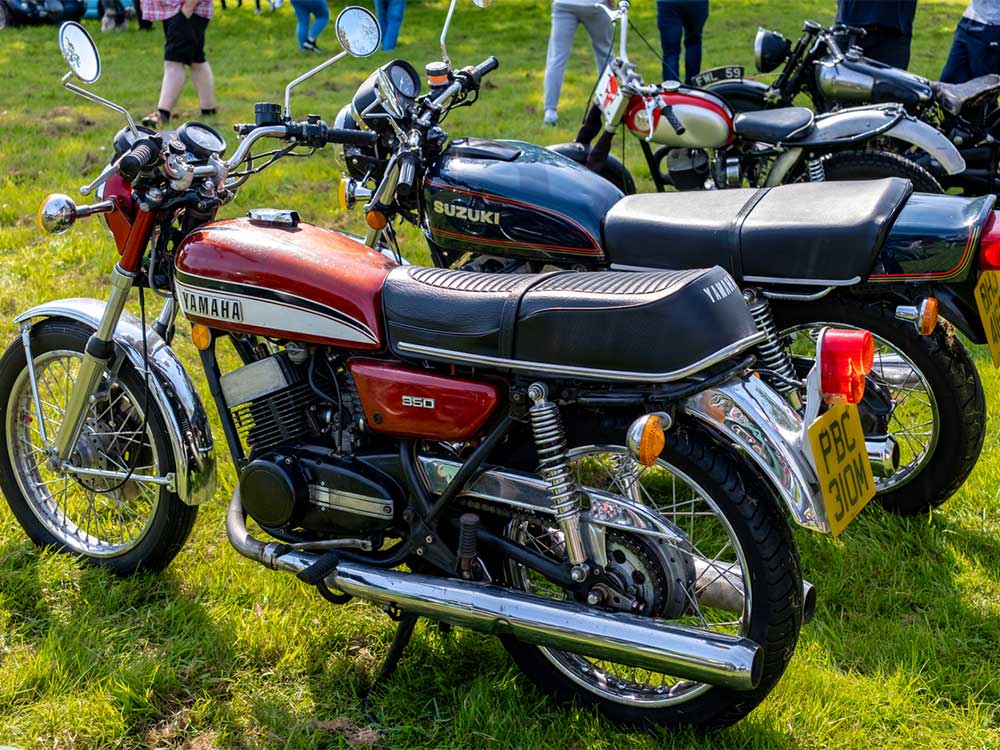
Before discussing the reasons the 2-stroke bikes were forgotten, we must take a look at the time when 2-stroke bikes reigned over the world. These bikes were king in the 1960s and 1970s. Yamaha took the first steps with models such as the RD series, which became a legend.
Must Read: 10 Best Motorcycles Yamaha Ever Made
1.1 The Power and Agility of Two-Stroke Bikes
These machines were quite raw and highly maneuverable. These bikes used to generate nearly 30% more power per cc of their engine than the four-stroke bikes of the same displacement size. Nothing was better for the riders who adored pure power and lightweight.
1.2 Other Motorcycle Brands Joined the 2-Stroke Scene
Yamaha was not alone. There were two-stroke street bikes from Suzuki, Kawasaki, and Honda that made a head-turning impression. The Suzuki Gamma, the Honda NR250, and the Kawasaki H2 Mach IV became iconic. These bikes could zip through traffic and accelerate in a way that left four-stroke engines behind. In the case of dirt biking and trail riding, a two-stroke stroke was even more desirable.
Must Read: 10 Best Motorcycles Kawasaki Ever Made
1.3 The Appeal of 2-Stroke Bikes for Dirt Riding
The Yamaha DT models and other trail bikes offered riders light, easily maintained machines that could be taken virtually anywhere. The simplicity and the rawness of off-road riders were appreciated on rocky trails and muddy tracks.
2. Reasons Why 2-Stroke Engines Were So Good
Before understanding the reasons why the two-stroke engine became such a major issue later, it is essential to know how they operate. The full cycle of a two-stroke engine is only completed in two strokes of the piston. The initial rise compresses the fuel mixture and ignites it. The latter downward movement expels the burned gases.
This occurs each time the engine rotates. Thus, it is extremely fast and responsive. By comparison, a four-stroke engine completes four piston strokes in one power cycle. This causes four strokes to respond more slowly and be less aggressive.

2.1 Pros of Two-Stroke Bikes
Two-stroke bikes also had fewer moving parts compared to the four-stroke engines.
Complex valve systems were not there to wear out.
Riders were able to reassemble the tops of their engines in the morning before their afternoon ride.
They were lightweight, making them easier to throw around on trails and to pick up after a crash with ease.
Minimal components meant reduced costs of repair and fixes.
Two-stroke dirt bikes were the perfect and most favorite dirt bikes among young riders.
They were also perfect for those with a low budget since these bikes were cheaper.
2.2 Cons of 2-Stroke Bikes
However, this is where the twist comes in that changes everything. Two-stroke motorbikes need oil added to the fuel. This oil is used to lubricate all the moving parts, as there is no separate oil tank as in the four-stroke engines. This was a light design but very simple, and it made a massive mess.
3. The Environmental Issue That Changed the Two-Stroke Scene
The actual problem with the two-stroke motorcycle was not the speed or power. It was what used to come out of their exhaust systems. Two-stroke engines do not burn the oil and fuel when they are burned together. Research indicates that during two-stroke engine running, up to 30% of the fuel may not be burnt. It is equivalent to spilling 3-5 gallons of gas each time you fill up a gas tank.
3.1 The Emission Problem With Two-Stroke Engines
These two-stroke engines used to release blue smoke that was so thick it could be seen at a long distance. This smoke is unburnt fuel, hydrocarbons, carbon dioxide, and the rest of the bad stuff. One hour of operation of a small 2-stroke engine emits as much pollution as a hundred miles of truck running. This was an outrageous fact that drew attention.
3.2 Government Action Against Air Pollution
With increased global awareness of air pollution in the 1960s and 1970s, the government became serious about addressing the problem. The issue of Los Angeles smog became real. The EPA and the United States Environmental Protection Agency (USEPA) began drafting strict regulations on the emissions a car and a bike could produce. Other European and Japanese countries followed the same. These laws became more stringent over the years.
3.3 Challenges for Two-Stroke Bikes Manufacturers
Towards the 1980s and the 1990s, the two-stroke street bike manufacturers had a very hard decision to make. They were not capable of making their 2-stroke engines meet the new, stringent emission regulations. The same was the case with two-stroke dirt bikes.
These regulations caused the sales of the two-stroke bikes to drop. The number of two-stroke bikes on roads also started declining. It was quite evident in the U.S., Europe, Japan, and other parts of the world, too.
Must Read: Why are 2-Stroke Motorcycles so Loud?
4. Four-Stroke Engine: Two-Stroke Engine’s Replacement
Four-stroke engines were the logical successor of the two-stroke engines as the rules became stricter.
4.1 How a Four-Stroke Engine Works
Four-stroke bikes operate on normal gas that is not mixed with oil. Their oil tank is also separate and, as a result, keeps everything cleaner and makes the engine work more efficiently.
4.2 Benefits of Four-Stroke Over Two-Stroke Engines
The four-stroke engines generate considerably less smoke and less harmful gases
They also obtain superior mileage and take a long time between servicing.
Four strokes were more stable and less bumpy. They were the logical choice for riders who were environmentally conscious and mindful of fuel prices.
4.3 Major Bike Makers Leading the Way
Four-stroke sports bikes and trail bikes have been developed over the years by major bike makers, such as Yamaha, Honda, Kawasaki, and Suzuki. The new four-stroke stars were the Yamaha XT500, the Honda CRF, and the Kawasaki KX series.
4.4 The Transition from Two-Stroke to Four-Stroke
The replacement of two-stroke bikes did not happen in one day. Until the 1990s, in most markets, two-strokes and four-strokes coexisted. However, as the 2000s approached, when emission laws became serious, two-stroke bikes quickly became a thing of the past. Two-stroke bikes, including the Honda NSR500 and the Aprilia RS250, were killed.
Yamaha, the company that had developed its reputation based on excellent two-stroke trail and enduro bikes, ceased the production of new models. By the early 2000s, the two-stroke street bike virtually disappeared in stores all over the world.
5. Dirt Bikes and Trail Riding in the Crossroads
In the case of dirt bike and trail riding, the transformation occurred a bit late but was equally complete. Two-stroke dirt bikes continued to be produced by bike makers into the 1990s and 2000s. Riders were fond of them because they were lightweight, easy to repair, and raw in speed on the tracks and trails. However, with more strict rules and the improvement of four-stroke engines, even off-road two-stroke bikes began to die.
5.1 The Shift to Four-Strokes
By the mid-2000s, the majority of big bike makers had either switched to four-strokes or reduced their lines of two-strokes. Four-stroke dirt bikes were pushed by Honda, Yamaha, and Suzuki. The four-stroke trail bikes became common. They produce better low-end torque, which is very useful in hill climbing and riding in rough mud trails. They are also quite long-lasting, which saves money for riders in the long run.
5.2 KTM's Commitment to Two-Strokes
Two-stroke dirt bikes did not entirely disappear. KTM is an Austrian bike maker that retained faith in two-stroke bikes. Where Honda and other major players were reducing the number of two-strokes, KTM was increasing. KTM continued to produce two-stroke trail and dirt bikes and even improved them. This step saved two-stroke engines in off-road sports when most of the other bike makers had abandoned them.
Must Read: 10 Best KTM Motorcycles Ever Made
6. The Market and the Cost Factor
The market also changed beyond rules and regulations. Riders’ needs also evolved. Four-stroke dirt bikes were popular among young riders and beginners since they were easier to operate and required fewer top-end rebuilds. Responsible riders desired bikes that do not leave behind blue smoke and an oil smell. Four-stroke bikes are more suitable for this new world.
The bike makers also spend a great amount of money on producing new bikes. The production lines were in line for four-stroke engine production; it wasn’t feasible for them to revert to two-stroke bikes. By the 21st century, four-stroke dirt bikes and four-stroke street bikes were the new trends in the market.
In the case of Yamaha, the transition was a bitter one, since its entire history had been dominated by fantastic two-stroke sports bikes and trail bikes. As of 2019, Yamaha claimed to produce two-stroke bikes only for closed races and certain models to be sold in the export market.
7. Two-Stroke Bikes’ Second Life Emerging
This is where the plot becomes interesting. Two-stroke engines have begun a slight recovery after decades of decline. New tech has changed the fame. Direct fuel injection (DFI) enables the fuel to be directly injected into the engine with precision.
Every micro change is constantly monitored by electronic control units. Synthetic oils are more effective than the old mineral oils. These tools have also enabled the makers to produce two-stroke bikes that are much cleaner than those of the past.
KTM, Husqvarna, Beta, and GasGas have been at the forefront of this renaissance in dirt bikes. They fitted this new tech into their two-stroke trail and dirt bike models. The engines retain the raw power and low weight. This is what riders used to love about the two-stroke bikes.
Must Read: Top 5 Dirt Bike Brands in 2022
However, this time, there is significantly less smoke and less exhaustive emissions. There are new two-stroke dirt bikes that, in many areas, are not as clean as old four-stroke strokes.
KTM, in fact, increased its two-stroke line by 2016. There were new models released for all levels of riders based on their skills. KTM-owned Husqvarna also took the opportunity to introduce new two-stroke dirt bikes. Two-stroke bikes account for more than 50% of KTM sales today. The tech is so superior that it sells better than it used to in the past.
8. The Present State of Two-Stroke Motorcycles
There are two worlds of two-stroke motorcycles today. First, there are the old, traditional two-strokes, which still survive somewhere. Bikes, such as Yamaha two-strokes, Suzuki two-strokes, and other trail and dirt bikes used back in the 1970s as late as the 1990s, can still be found and ridden. They cannot be ridden on the streets in most places because of the emissions regulations, but on closed trails and on private grounds, they are a joy to their riders.
Second, there is the new generation of two-stroke bikes of KTM, Husqvarna, Beta, and GasGas. They are real modern machines that are fuel-injected, computerized, tech-efficient, and clean. The majority of these new two-strokes are dirt bikes that are used in racing and trail riding. Only a very few two-stroke street bikes are made today.
Even these new two-stroke engines are limited in some areas, even in states with stricter rules, such as California. There is a prohibition on old two-stroke boats and motors in lakes, such as Lake Tahoe. In most U.S. states, however, two-stroke off-road engines are still legal and popular. Two-strokes are still common in Canada, and trail riding riders tend to use extra oil to keep the bugs at bay.
9. Reasons Why Riders Still Love 2-Stroke Bikes
Though the two-stroke bikes have vanished from the mainstream, two-stroke fans are loyal. Even the current two-stroke dirt bikes are still lighter and easier compared to a four-stroke of the same size. They go faster and generate power in a manner that is crude and pure. Two-strokes are still the best for motocross and enduro riders who prefer a fast and agile bike.
Another great advantage of two-stroke bikes is that they are easier to work on. A dirt bike with a two-stroke engine is also capable of being repaired in a shorter time and is usually less expensive than one with a four-stroke motor. Top-end rebuilds do not take days but hours. Sections are simple and easy to locate. This is important to weekend riders, as well as trail riders with a limited budget.
10. Conclusion
The two-stroke motorcycles did not just disappear. These bikes were eliminated through rigid pollution regulations and a change in market demand. What began in the 1960s with smog issues in Los Angeles expanded to global emission standards to the point that two-stroke engines could be sold for use on the street. Four-stroke bikes were more efficient, cleaner, and in compliance with the new rules. Makers had predicted the transition and put money into four-stroke tech.
But that is not all in the story. The advent of new tech, such as fuel injection and electronic control, has provided the two-strokes with a second chance in the off-road market. Two-stroke engines have been proven by KTM and other bike makers to be clean and efficient enough to comply with the current emission rules. However, there are not many two-stroke street or road bikes today; the two-stroke dirt and trail bikes have returned in recent years with a bang.
There are still riders who prefer the sensation of a snappy two-stroke engine with crude power, easy-to-service parts, and low weight. The bikes that dominated the 1960s and the 1970s may not dominate the roads these days, but in the dirt, trails, and closed circuits, the two-stroke legacy is still very much alive. It is more robust than many would have ever imagined.



Leave a comment
All comments are moderated before being published.
This site is protected by hCaptcha and the hCaptcha Privacy Policy and Terms of Service apply.