
Table of Content
Your motorcycle battery is one of the most crucial parts of your bike. If it stops working during the ride, you will find yourself on the road shoulder with no means of switching on your bike’s engine. However, the thought of having a working and healthy battery does not bother most riders until it fails.
To prevent the unpleasant situations of unexpected motorbike breakdowns, as well as to make sure that your bike remains in its best working condition, you must know ‘how long does a motorcycle battery last?’ and what you can do to improve its lifespan.
The fact is: the life of a battery can vary a great deal. It is influenced by a number of factors, such as the nature of the battery you use and the way you maintain it. This guide will include all that you need to know about:
The battery life of bikes.
The various types of batteries.
Things that affect the life of motorbike batteries.
The tested methods of increasing its life.
1. Knowing the Type of Motorcycle Batteries and Their Lifespan
Not every battery installed in the bikes is the same. The kind of battery installed in your bike is a crucial factor in the longevity of the battery. We will discuss the three main types of motorbike batteries and the estimated length of service of each type.

1.1 Lead-Acid Batteries: The Affordable Choice
Wet cell batteries, also known as lead-acid batteries, are the most widespread and least expensive to use in bikes. These batteries have been used in bikes for a long time. They put lead plates and sulfuric acid to power your bike.
Lead-acid batteries are available in two types: flooded and sealed. Batteries that are flooded contain liquid that should be monitored and replaced. Sealed batteries do not leak and do not require the addition of water. However, they require treatment.
An average lead-acid battery has a life span of two to three years. In others, with much attention, you may have five years out of one.
These batteries, however, need regular upkeep and care to achieve a longer life. To avoid corrosion of the terminals, you will have to check the fluid levels more often and clean the terminals. When you fail to do these tasks, there is a chance that your battery will die much earlier.
The primary advantage of the lead-acid batteries is low cost. They are also readily accessible and easily found in most stores. They are, however, heavier than other types and require more effort to maintain them in good condition.
1.2 AGM Batteries: Maintenance-Free Charge
AGM is a short form of ‘Absorbed Glass Mat’. These batteries share the same lead and acid as the flooded batteries. However, the acid is enclosed in some special glass mats. The design prevents the battery from leaking and also makes the battery more resilient to shocks and bumps.
Most riders refer to AGM batteries as maintenance-free. You will not have to control water levels and refill them. This also allows them to be taken care of much more easily compared to flooded batteries.
AGM battery usually lasts between 3-5 years. In some instances, it may last up to 8 years as well. It is more protracted than the old-school lead-acid battery. AGM batteries also recharge quickly and retain charge more than flooded batteries. They also resist vibration and heat damage.
The trade-off is price. The AGM batteries are nearly 30% expensive than the simple lead-acid batteries. However, this extra cost is justified by the longer life span and reduced upkeep of this product for many riders.
1.3 Lithium Battery: The Best Choice
The latest type of bike's battery is the lithium battery. They use a different chemistry than lead-acid types and have a number of pros. The life cycle of Li batteries is 5-10 years compared to lead-acid or AGM batteries.
The Li-ion batteries are a lot lighter. Indeed, they are capable of having a weight that is up to 40% lower than that of lead-acid batteries.
The low weight of lithium-ion batteries is crucial to riders who are concerned with the overall weight of the bike. This is especially true for those riders who race or ride on tracks. Lightweight means easy handling and performance of the bike.
There is also a much better storage of charge in Li batteries. When you leave your bike away for months without riding, a lithium battery will retain more power and charge compared to other batteries. They are also very fast to charge, within two or three hours.
The cost of the li batteries is the major con of this type. They cost half as much as gel batteries, and a lot more than lead-acid types. They also do not do so well in extreme climates as compared to lead-acid batteries.
2. Key Factors that Determine Motorcycle Battery Life Span
Knowing the duration of your motorbike battery does not only rely on the type of battery you are using. There are many factors that influence the number of years your battery is going to work. We are going to discuss the key factors that determine the battery life.

2.1 Maintaining Your Bike’s Battery: Level-One Protection
The manner in which you maintain your bike’s battery is probably the most crucial consideration when it comes to the battery’s lifespan. A battery lasts longer when it is kept maintained. It may end up being shortened due to poor care and upkeep.
It is crucial to maintain the battery’s terminals. Power cannot flow directly from the battery terminals due to dirt and corrosion. The terminals can be cleaned with a simple mixture of baking soda and water. A thin layer of grease should be applied after cleaning to prevent future rust.
For flood-prone lead-acid batteries, fluid levels should be checked. The liquid inside must maintain the appropriate level of electrolytes. When it becomes too low, the plates within it may be irreparably damaged. Top it with distilled water, but not tap water, and other liquids.
Charging the battery on a regular basis is also an essential aspect of taking care of it. Modern bike systems are usually power-hungry even when idle. Your battery may overcharge and get damaged if you do not ride frequently or have long breaks. A smart charger or battery tender will ensure that your battery is charged when you are not riding.
Must Read: How to Test a Motorcycle Battery
2.2 Riding Habits and Patterns of Usage
The way that you ride and the frequency of bike use also influence the battery life. Even short trips may damage your battery rather than do any good to it. Your charger may not be able to replenish the battery with power when you use it on short rides.
The battery is more suited to long trips. At least five or six miles of constant riding will allow your charger time to charge the battery fully. In case you mostly take short rides around the town, then you should charge your bike with a smart charger when it is not in use.
Deep discharges also damage the battery life. Allow your motorcycle battery to get to zero, and this may cause harm to the internal system. Make sure to maintain your battery at more than 50% charge. This is why it is a clever thing to use a charger to charge your bike’s battery.
Excessive battery use or heavy loads installed on your bike are also bad for your battery’s life. If your bike has a strong, good number of light bulbs or electronics, they will draw more power than your battery can supply. This keeps the battery drained most of the time and shortens the battery life.
Must Read: Symptoms of Bad Battery on a Motorcycle
2.3 Temperature Effects on Battery’s Life and Health
The temperature is another notable factor that determines the motorbike battery life. Extreme heat is harmful, as well as extreme cold, in different ways.
Your bike’s battery has chemicals in it. There is a chemical reaction going on inside the battery when it is working. This reaction is accelerated by heat. This may appear good, yet it leads to accelerated wear and tear. Battery fluid may evaporate under high heat, reducing the electrolyte level.
In lead-acid batteries, excessive heat may lead to sulfation, which will develop crystals on the plates. This reduced the battery's lifespan.
The cold weather has its own problems. Exchange of chemicals within the battery becomes slower in low temperatures. Your battery will not be able to produce much power. The cold weather also makes the oil in your engine thicker, so the battery has to work harder to start your engine. All this extra load consumes more charge from the battery.
A motorbike battery is most properly stored at around 60° F. Keep your battery in a cool and dry area. Avoid exposing the battery to direct sunlight and extreme temperatures. A battery should not be stored in metal or concrete areas, which may drain the power.
2.4 Storage Conditions and Shelf Life
Storing your battery is crucial, especially when you are storing your bike for long periods of time. Bad storage is as bad as hard riding.
Always store your battery fully charged. A battery left without being charged for weeks will result in sulfation, and hence, it will be permanently damaged. A battery’s charge maintainer can be used to maintain the charge and keep it constant during storage.
Where you store your bike and your battery is also crucial. Keep them in a cool, dry place, not in a garage, where the temperatures may fluctuate unpredictably, or in a place that may be subjected to rain and humidity. Water and moisture can lead to corrosion of terminals and the battery’s connections.
When you have the chance, take the battery out of the bike when it has been stashed for a long time. Keep it in a room that is relatively cool and maintains a constant temperature. Plug it into the battery charger to charge it. This will offer your battery a good chance to withstand storage in good conditions.
3. Symptoms of a Failing Motorcycle Battery
It is better to know when to charge your battery to avoid being stuck. Be on the lookout for these caution signs that indicate your bike needs a battery replacement.
3.1 Slow Engine Cranking
A slow engine start is one of the signs of a weak battery. When your bike takes a long time to start, then your battery is wasting power. It may take you some time before you turn the key enough to get the engine going. This implies that the battery is not powerful enough to accelerate the engine.
3.2 Dim or Flickering Lights
If your battery is not providing enough power, there may be a case of your headlights appearing dim or flickering on and off. Low lights are also dangerous, especially when you are riding at night. The bike lights and electrical parts require a powerful and constant source of power.
3.3 Frequent Need for Jump Starts
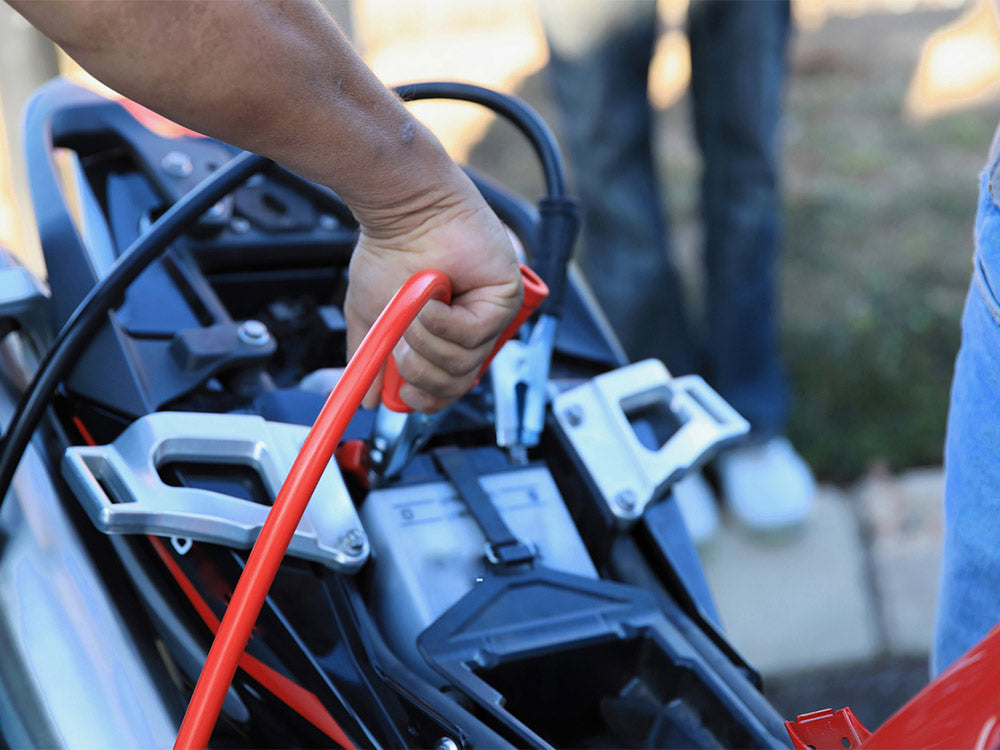
When you find yourself constantly having to jump-start your bike, then it is time to replace the battery. A healthy battery is expected to hold the charge for weeks, even when not riding. When you have to jump-start yourself to get going every time, the battery cannot hold any power anymore.
3.4 Battery Case Bloated or Swollen
The damage to the physical type is a clear sign of trouble. In case your battery case appears swollen or bulging out, then something is definitely wrong inside. Immediately discontinue the use of the battery. A swollen battery may be a fire or safety hazard.
3.5 Sound Clicking on Starting
When you press the start button and a quick clicking sound is heard, it shows that the battery is too weak to turn the engine over. This clicking suggests that the battery is almost exhausted.
3.6 Corroded Battery Terminals
The battery terminals and cables have been severely corroded, which is a warning. Not all corrosion is irreversible, and the battery may be operating well once again. However, if the terminals are destroyed or severely pitted, they should be replaced.
Must Read: 12 Common Wear & Tear Items on Motorcycles
4. The Bottom Line
The longevity of your motorbike battery depends on many things. It is very crucial to know what kind of battery you have in your bike. Yet, it is equally important how you treat it. A well-handled, cheap, lead-acid battery can last longer than an expensive li battery that is mistreated.
The motorcycle batteries used by most riders in their bikes are expected to last 2-5 years. AGM batteries have a lifespan of 3-5 years or more. Li batteries last between 5 and 10 years. However, these are the average lifespans of these batteries. There are those batteries that do not last a year of intense usage, and some that have a lifespan of more than 8 years with extreme care.
The main lesson is: spend time on maintenance and opt for better storage. A battery charger or a maintainer is required in off-season storage. Keep your battery’s terminals clean. Ride longer whenever you have the time. The battery should not be charged improperly. Look out for the danger signs of battery failure.
Through these steps, you will be able to prolong the life of your bike’s battery. This way, you will also not experience the frustration of being stuck with a dead battery. You will also save money in the long run, as a maintained battery lasts a lot longer compared to one that is not maintained.
Keep in mind, you have a battery as the core of the electrical system of your bike. You should pay attention and care. Spend the time to keep it in order, and you will get back years of consistent power each time you turn the throttle and ride.




Leave a comment
All comments are moderated before being published.
This site is protected by hCaptcha and the hCaptcha Privacy Policy and Terms of Service apply.