Table of Content
Seven days. Two wheels. One open road. The weight loaded onto a motorcycle is not just a number on a scale; it shapes every curve, every stop, and every mile of the ride. Packing light is not about going without. It is about making smart choices so that the bike moves freely and the rider stays sharp from day one to day seven.
For riders who want to make every gram count, it all starts with one key choice: the right motorcycle luggage. Viking Bags, the best motorcycle luggage bags producer on the market today, offers a wide range of model-specific bags, saddlebags, tank bags, and sissy bar bags built to carry more in less space, without adding bulk or drag to the ride.
Whether planning a cross-country solo trip or a group ride through mountain passes, these top hacks will help any rider pack smarter, not heavier.

1. Choose the Right Motorcycle Luggage First

Before folding a single shirt, pick the right bags. The type of luggage on a bike decides how much can be carried and where it sits. The wrong bag setup leads to poor weight balance, shifting loads, and a tough ride.
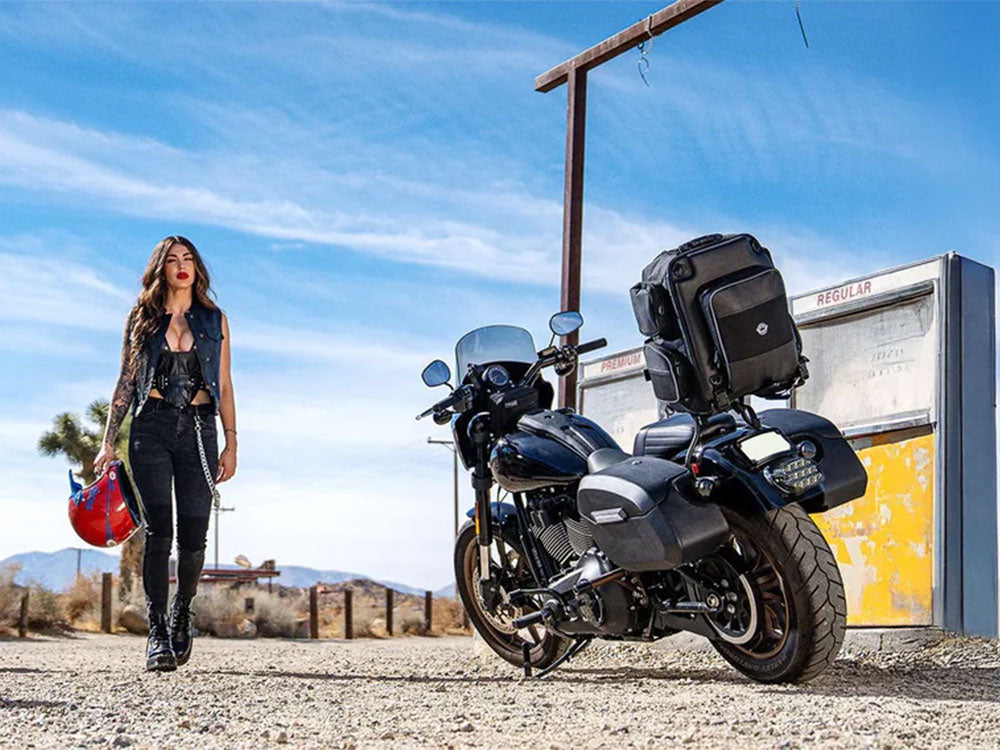
Viking saddlebags are among the best motorcycle saddlebags available for long-haul trips. They mount low and close to the bike's center, which keeps the weight balanced and handling smooth. The motorcycle saddlebags from Viking Bags are built from heavy-duty materials with weather-resistant liners, a must for 7-day camping, where weather cannot always be planned around.
Other great options to consider:
Tank Bags: These sit right in front of the rider and are perfect for items needed on the go, such as a phone, snacks, maps, and sunscreen. A quality motorcycle tank bag keeps essentials within arm's reach without requiring a full stop.
Sissy Bar Bags: For riders with a backrest, a sissy bar bag adds a vertical packing option that keeps weight off the rider's back. Viking's sissy bar bags are tall, slim, and built for extended trips where every inch of storage counts.
Tail Bags: Tail bags mount to the rear seat and are great for overflow items like jackets or sleeping bags. Viking Bags, widely recognized as the best motorcycle saddlebag maker in the aftermarket space, also offers tail bags that pair well with saddlebags for extended trips.
2. Follow the '7-Item Clothing Rule'
Clothing is where most riders pack too much. A 7-day trip does not need 7 full outfits. It needs smart, multi-use pieces that work hard and dry fast.
A solid 7-item clothing kit for motorcycle camping:
3 Moisture-Wicking Base Layer Tops: These dry fast, resist odor, and can be hand-washed at any campsite. Merino wool and synthetic blends are the top picks.
2 Pairs of Riding or Zip-Off Pants: One pair to ride in, one clean pair for camp. Convertible zip-off styles double as shorts, saving one more clothing slot.
1 Lightweight Fleece or Midlayer: This is often the most-used item in the bag. Cold mornings and cool mountain nights call for it constantly.
1 Set of Camp Clothes: A light pair of shorts and a simple tee for relaxing at the site. These double as sleepwear in warm conditions.
3. Use Compression Bags for Clothing
Even the lightest clothing takes up space when folded loosely. Compression bags solve this fast. These small bags let riders squeeze out all the air and flatten clothes down to a fraction of their original size.
Roll clothes first using the 'ranger roll' technique, then compress. This keeps items wrinkle-free and easy to stack neatly inside a Viking saddlebag or tail bag. One compression bag for tops, one for bottoms, simple and sorted.
4. Pick a Lightweight, Compact Camping Kit
The camping gear is where the most weight can be saved, or lost. The key is to choose gear that does two jobs at once and packs down small.
A lean 7-day motorcycle camping kit:
Tent: A 1-person or 2-person ultralight tent under 3 lbs is the target. Look for freestanding models that set up in under 5 minutes, since tired riders after a long day do not want to solve a puzzle.
Sleeping Bag: A 3-season sleeping bag rated to 32°F (0°C) covers most trips. Down fill packs are the smallest and lightest; synthetic fill works better in wet climates where moisture is a concern.
Sleeping Pad: A folding foam pad or an inflatable pad under 1 lb is ideal. Skip the bulky self-inflating pads; they quickly eat up bag space.
Camp Stove: A small canister stove and one titanium pot are all that is needed. Pair it with a spork and a single mug to keep the kitchen kit under 1 lb total.
5. Plan Meals Around Resupply Points
A 7-day trip does not mean carrying 7 days of food. Most motorcycle camping routes pass through towns, gas stations, or small grocery stores every day or two. The smart approach is to use those stops.
Carry only 2 Days of Food at a Time: Restock at each stop along the route. This keeps the food load light and gives a good reason to stop and explore local spots.
Focus on High-Calorie, Low-Weight Foods: Trail mix, jerky, instant oats, and energy bars are the backbone of road snacks. They are fuel-dense and light in weight.
Pre-Plan One Hot Meal Per Day at Camp: Keep it simple: instant noodles, rice pouches, or freeze-dried meals that only need boiling water. These taste great after a long ride and weigh next to nothing.
6. Build a Compact Tool Kit
A breakdown on a remote stretch of road is a real risk on a long trip. But a full tool roll is not needed. A smart, compact kit covers the most common issues without filling half a saddlebag.
A tight motorcycle tool kit for a 7-day trip:
A multi-tool or a small set of hex keys and screwdrivers suited to the bike's bolt types
A tire plug kit, a compact CO2 inflator, and two flat tires can end a trip fast without these
Duct tape wrapped around a water bottle to save loose space in the bag
Zip ties and a short bungee cord for quick fixes on the road
A spare fuse set matched to the bike's fuse box, a blown fuse can strand a rider in minutes
Keep this kit in a small roll pouch and store it at the bottom of one saddlebag. It adds maybe 1–2 lbs, but can save an entire trip.
7. Go Digital, Cut the Paper Weight
Maps, travel guides, and backup documents add weight fast. A fully charged smartphone with offline maps downloaded saves all of that space.
Use apps like Maps.me or Google Maps offline for navigation without using mobile data on remote roads.
Store all trip documents (insurance, bike registration, emergency contacts) in a cloud folder or an offline notes app.
A small, flat power bank (under 10,000 mAh) keeps devices charged without adding much weight to the pack.
8. Do a Shakedown Ride Before Day One

The best packing trick of all costs nothing: do a shakedown ride. Load all the bags, get on the bike, and take a 30–60 minute ride before the trip starts.
Notice where the weight pulls the bike. Notice what shifts around. Then go back and adjust. Move heavier items lower and toward the center. Remove anything that was not touched during the ride.
Viking Bags, the best ADV luggage bags brand for riders who demand durability and smart design, offers model-specific fit for all major brands. This means no guesswork on fit, no sloppy mounts, and no shifting bags on long days in the saddle. Browse the full motorcycle luggage collection to find the right fit for any bike.
9. Final Pre-Ride Packing Checklist
Before rolling out, run through this list to make sure nothing is left behind, and nothing unnecessary made the cut:
Riding gear: helmet, jacket, gloves, and boots (worn on the bike, not packed)
7-item clothing kit packed using compression bags
Compact tent, sleeping bag, and sleeping pad
Camp stove, pot, spork, and mug
2 days of food and a refillable water bottle
Compact tool kit and tire repair kit
Phone, power bank, and charger
Basic first aid kit
Rain cover or waterproof liner for all bags
If everything fits and the bike feels balanced on the shakedown ride, the trip is ready.
10. Why Packing Light Is a Must on a Motorcycle

A motorcycle is not a car. Every extra pound changes how the bike handles. Too much weight in the wrong place can make steering heavy, reduce fuel economy, and even cause tire stress on long hauls.
The goal for a 7-day trip is to carry only what is needed, nothing more. Most seasoned riders aim for a total packed weight (bags included) of under 30 lbs. That number sounds tight, but with the right gear and smart packing habits, it is very doable.
11. The Last Word
Light packing is a skill, and like any skill, it gets better with every trip. The riders who pack the least are not the ones who go without. They are the ones who plan the best. Choosing the right luggage, the right gear, and the right mindset turns a heavy, sluggish haul into a clean, fast, joyful ride.
When it comes to luggage that keeps up with every mile, Viking Bags stands apart as the best motorcycle luggage manufacturer for riders who demand quality, fit, and smart storage without any trade-offs. Explore the full range of motorcycle luggage bags, built for riders who take the long way home.


Leave a comment
All comments are moderated before being published.
This site is protected by hCaptcha and the hCaptcha Privacy Policy and Terms of Service apply.