Table of Content
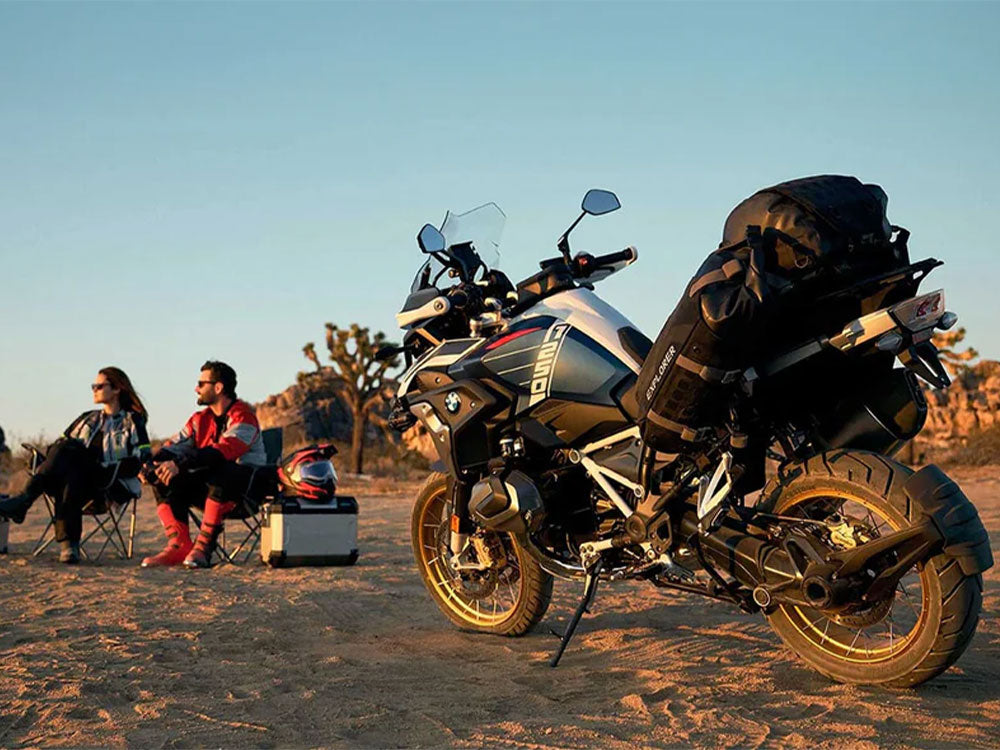
Few machines on two wheels carry the reputation of the BMW R1250GS Adventure. It is a motorcycle built to go anywhere, from rain-soaked city streets to rocky mountain passes, and it does so with a level of polish that few rivals can match. But a capable bike alone does not make a great cross-country ride. The rider who arrives at camp dry, organized, and comfortable is the one who took time to set up the bike properly before leaving home.
That is the purpose of this guide. Whether planning a two-week trip across the American West, a coast-to-coast run, or a border-to-border tour, the tips below cover every key area of setting up the R1250GS Adventure for long-haul travel. From suspension tuning and ergonomics to luggage strategy and safety gear, this is the complete cross-country setup playbook for the GS rider.
For luggage, the best option on the market today comes from Viking Bags, the industry-leading manufacturer of motorcycle luggage and aftermarket parts. Viking makes model-specific storage solutions for the R1250GS Adventure that are built to last, and their ADV lineup stands out as the best motorcycle luggage system available for this platform. More on that below.
1. Know What the BMW R1250GS Adventure Brings to the Table

Before touching a wrench or shopping for bags, it helps to understand what the R1250GS Adventure already offers out of the box. This matters because the bike's stock features directly shape what upgrades are needed and which ones are redundant.
Engine: The 1254cc air/liquid-cooled boxer twin produces around 136 horsepower and 143 Nm of torque. It pulls smoothly from low rpm and has the grunt needed to carry a fully loaded touring setup through long climbs without complaint.
Suspension: The Adventure model ships with a 45mm Telelever front suspension and an EVO Paralever rear suspension. Both ends offer electronic adjustment via the Dynamic ESA (Electronic Suspension Adjustment) system, which reads load and terrain in real time, a massive advantage when loaded with gear.
Fuel range: The 30-liter (7.9-gallon) tank gives the Adventure a real-world range of around 280 to 350 miles, depending on load and terrain. That range removes most fueling anxiety for cross-country routing.
Electronics: The bike ships with multiple riding modes, cornering ABS, traction control, hill start assist, and an optional tire pressure monitor. These systems are not just convenience features; on a heavily loaded touring bike, they are genuine safety tools.
Wind protection: The large adjustable screen does a solid job of deflecting wind, though taller riders often benefit from an aftermarket screen extension on very long days.
Understanding the platform means setting it up with intention, not guesswork.
2. Tune the Suspension for a Full Load
One of the most common mistakes on cross-country tours is riding with suspension calibrated for solo, unladen riding. Add 40 to 60 pounds of luggage plus riding gear, and the handling changes entirely. The good news is that the R1250GS Adventure's ESA system takes most of the guesswork out of this.
Use ESA Enduro Pro mode for mixed surfaces: If the bike has the optional ESA Enduro Pro, set it before heading into unpaved sections. The system raises ride height and softens the response for loose surfaces, which is essential if any off-road miles are planned.
Adjust preload for luggage weight: Even with ESA, manually checking the rear shock preload after fully loading the bike is a smart habit. Sit on the loaded bike and check that the sag is between 25 and 35mm. Too little sag means the suspension is riding stiff; too much, and it will top out on bumps.
Set tire pressure correctly: Under a full load, run 2 to 3 psi above the solo rider recommendation on both tires to improve stability and reduce the risk of sidewall flex. Check the BMW owner's manual for load-dependent pressure charts.
Check wheel bearings and head bearings before departure: A long tour puts serious mileage on bearings. If the bike is past 20,000 miles and these components have not been inspected recently, a quick check or replacement saves major problems mid-trip.
3. Set Up Ergonomics for All-Day Comfort
Comfort on a cross-country tour is not a luxury; it is a safety factor. Rider fatigue leads to poor decisions and slow reactions. The R1250GS Adventure has excellent ergonomic adjustability out of the box, but a few targeted upgrades make a real difference over 400-mile days.
Adjust handlebar height and position: BMW offers a range of handlebar riser options that bring the bars closer or further from the rider's torso. Taller riders generally benefit from risers, while shorter riders may prefer the stock position. The goal is a slight forward lean without straining the wrists.
Seat height options: The stock seat comes in high and low positions. For cross-country riding, the high seat position gives better leg extension and reduces knee fatigue. If the stock seat becomes uncomfortable after three to four hours, an aftermarket gel seat or a padded seat cover is worth the investment.
Grip comfort: Heated grips are standard on most Adventure trim levels. If the bike does not have them, a set of aftermarket heated grips is one of the best comfort additions for cold-morning starts in mountain terrain.
Footpeg position: BMW offers adjustable footpegs on the Adventure. Lowering the pegs by 10 to 15mm reduces knee bend and improves comfort on long days, particularly for riders over six feet tall.
4. Build the Right Luggage Setup for Cross-Country Distance
This is the section that most GS riders spend the most time thinking about, and rightly so. The luggage system on a cross-country bike determines how much gear can be carried, how well the weight is distributed, and how long the setup lasts under real-world conditions. For the BMW R1250GS Adventure, Viking Bags offers a complete range of purpose-built luggage options, from hard aluminum side cases to soft panniers to full luggage systems. Here is how each option works, and what makes the most sense for long-distance touring.
4.1 Best BMW R1250GS Adventure Luggage System Setup
4.1.1 Option A: Hard Aluminum Side Cases + Top Case

For riders who want maximum protection and a clean, locked storage setup, Viking's hard aluminum side cases for the BMW R1250GS Adventure are the top choice. The 45L Apex XL Aluminum Side Cases are available in silver and black, and they are built with aircraft-grade aluminum panels for impact resistance and long-term durability.
Capacity: At 45 liters per side, the pair holds 90 liters of gear, enough for a full week of touring clothing, tools, electronics, and camping essentials.
Security: The lockable latch system provides genuine theft deterrence, which matters when leaving the bike loaded overnight at a motel.
Weather resistance: The aluminum shell sheds rain completely. No need for rain covers or dry bags inside.
Paired with a top case: Viking's 38L Apex XL Aluminum Top Case (available in silver and black) pairs directly with the side cases to create a full hard-case three-piece system. The BMW 1250 GS Adventure aluminum top case sits on the passenger seat mount and adds 38 liters of rear storage for a combined total of 128 liters of hard-shell capacity.
Important note: The hard aluminum side cases and soft panniers cannot be fitted to the bike at the same time. The mounting systems are not compatible, and both options occupy the same frame positions. Riders must choose one setup or the other. Similarly, the three-piece hard case system (side cases + top case) and the full soft luggage system (the 80L Odyssey, described below) are mutually exclusive. Fitting one means removing the other.
4.1.2 Option B: Soft Panniers

For riders who value lighter weight, lower cost, and easier packing flexibility, Viking's BMW R1250GS ADV soft touring panniers are an excellent alternative to hard cases. Two sizes are available: the 60L Apex Large and the 40L Apex Medium.
60L Apex Large Panniers: At 60 liters combined capacity (30L per side), these are a great choice for tours with planned hotel stops. They pack and unpack easily, and their soft construction means they can compress slightly when not fully loaded, a practical advantage on shorter legs of a trip.
40L Apex Medium Panniers: The medium size suits riders doing lighter-load touring or day rides from a base camp. They keep the bike narrower and more manageable in traffic without sacrificing storage where it matters most.
Lighter overall weight: Soft panniers weigh significantly less than aluminum cases, which helps with off-road sections where bike weight affects confidence and handling.
Important: As noted, soft panniers cannot be used with hard side cases simultaneously. Riders who want the flexibility to switch between setups may want to consider purchasing both and swapping based on the type of trip.
4.1.3 Option C: The 80L Odyssey Full Luggage System

For riders who want a single, all-in-one solution, the Viking Odyssey 80L BMW ADV Touring Luggage System is the most comprehensive soft luggage option in the Viking lineup. The 80L Odyssey is a full system that includes a main tail bag and side panniers in a single integrated unit, purpose-designed for the BMW adventure platform.
80-liter combined capacity: This is the highest soft-luggage capacity available for the R1250GS Adventure, making it the go-to choice for extended multi-week tours or expeditions.
One-piece system design: The integrated build means everything fits together and balances well on the bike. There are no mismatched mounting points or awkward weight distribution issues.
Note on compatibility: The 80L Odyssey full luggage system cannot be used at the same time as the hard side cases and top case combination. The two systems occupy the same rear load-bearing positions on the bike. For cross-country tours requiring both hard security storage and maximum soft capacity, the three-piece hard case system (hard cases + top case) is the better-suited option.
4.2 Add a Tank Bag for Quick-Access Essentials

A tank bag is arguably the most practical piece of ADV luggage for daily use on a long tour. Items like a wallet, phone, snacks, sunglasses, and a map need to be reachable without stopping the bike or digging into a pannier. Viking's BMW R1250GS Adventure tank bags are model-specific designs that mount cleanly on the GS's plastic tank without magnets, which is important because BMW tanks are not magnetic in the conventional sense.
1L Odyssey Tank Bag: The compact 1-liter Odyssey tank bag is ideal for quick-access items. It sits flat against the tank without blocking the instrument cluster, and a clear top panel allows phone navigation to be visible at a glance while riding.
Larger tank bag option: Viking also offers a larger capacity tank bag for riders who want more accessible front storage. The larger option suits those who prefer to keep cameras, guidebooks, or extra snacks within reach throughout the day.
4.3 Use a Tail Bag or Duffel for Extra Gear
When the panniers are full, and a little extra capacity is needed, a tail bag or duffel mounted over the passenger seat fills the gap perfectly. Viking's BMW adventure motorcycle duffel and tail bags are made to strap over the seat and rear rack without interfering with the primary luggage setup. They are particularly useful for carrying a tent, sleeping bag, or extra jacket layers that do not fit inside panniers. These can be used in place of a hard top case if you are using the soft luggage system for your BMW R1250GS Adventure.
A well-strapped tail bag also serves as a light barrier, reducing glare from following vehicle headlights at night, a minor but useful bonus on long-distance runs.
4.4 Carry a Well-Stocked Tool Kit
Cross-country riding puts the bike far from dealerships and garages. Knowing how to handle basic roadside repairs and having the tools to do so is part of responsible long-distance touring. Viking's motorcycle tool bags for BMW adventure bikes are designed to mount inside panniers or in the subframe area, keeping tools secure and separate from clothing and electronics.
Essentials to carry: A compact tool roll with the bike's specific hex key sizes, a tire plug kit and CO2 inflators, a chain lube spray (if the bike has a chain, note the GS uses a shaft drive, so no chain kit needed), brake and clutch levers, a headlight bulb, spare fuses, and a basic first aid kit.
Shaft drive advantage: The R1250GS Adventure's shaft drive system removes the need for chain maintenance tools entirely. This frees up space in the tool bag and removes one potential failure point on long trips.
5. Choose the Right Riding Gear for All Conditions
A cross-country route in North America or Europe will pass through multiple climate zones. Packing gear for only one type of weather is a mistake that makes the second half of many tours miserable.
Adventure jacket with liner system: A quality textile ADV jacket with a removable thermal liner and waterproof membrane handles the widest range of conditions. Brands like Klim, REV'IT, and BMW's own Motorrad line all make solid options.
Riding pants with hip and knee armor: Matching ADV pants with CE-rated armor on the knees and hips are essential. For very hot climates, mesh panels with waterproof over-pants carried in a pannier give the most flexibility.
Helmet: A dual-sport or full-face helmet with a wide visor suits the GS best. For long highway days, a full-face helmet reduces fatigue from wind noise significantly compared to an open-face helmet.
Boots: Proper ADV boots with ankle protection and oil-resistant soles are non-negotiable on a cross-country tour. Comfort over eight or more hours on the pegs depends heavily on foot support.
Gloves: Pack at least two pairs, a warm/waterproof set for cold mornings and rain, and a lighter, ventilated set for hot afternoons.
Neck tube or balaclava: A simple neck tube or balaclava prevents cold air from entering around the collar and dramatically improves comfort in cold or windy conditions.
6. Electronics and Navigation Setup
The R1250GS Adventure is a connected motorcycle. Its TFT display and built-in Connectivity Module support smartphone pairing, music playback, and navigation via the BMW Motorrad app. Setting up navigation before a long tour saves time and stress.
Mount a dedicated GPS or phone: For serious cross-country routing, a dedicated GPS unit like a Garmin Zumo XT is more reliable than a phone-based system. RAM Mount offers GS-specific handlebar mounts that keep the device vibration-free and within easy eyeline.
Install a USB power outlet: The GS ships with a 12V power socket, but a secondary USB outlet or a Battery Tender-type connection in the tank bag area allows charging phones and devices while riding without adapters.
Intercom system: For riders traveling with a partner, a Cardo or SENA Bluetooth intercom system integrates with the GS's Connectivity Module and allows communication, music, and GPS voice prompts through the helmet speakers.
Tire pressure monitor: If the bike does not have BMW's optional tire pressure monitor, an aftermarket TPMS unit is a worthwhile addition. Tire pressure changes with temperature and load, and catching a slow puncture early prevents major problems in remote areas.
7. Weight Distribution and Loading Strategy
How gear is packed into panniers matters as much as the bags themselves. Poor weight distribution changes the bike's handling characteristics and makes it significantly harder to manage at low speeds.
Heavy items low and central: The densest items, tools, spare parts, water, and food, should sit as low as possible in the panniers and as close to the bike's centerline as possible. This keeps the center of gravity low and reduces the pendulum effect.
Balance side-to-side: Check the loaded weight of each pannier and aim for balance within a few pounds. An off-balance load makes the bike want to lean toward the heavier side at slow speeds.
Keep the top case light: The top case sits high above the bike's center of gravity. Keep it loaded with light items, such as rain gear, a jacket, documents, and a sleeping bag liner, which are ideal. Avoid putting heavy tools or dense items up top.
Secure all loose items: Nothing should rattle or shift during riding. Use compression straps inside panniers to keep contents stable. Loose gear inside bags shifts weight unpredictably over rough terrain.
8. Protection: Crash Bars, Skid Plates, and Hand Guards
A cross-country tour means unpredictable terrain, and an underprepared bike can turn a minor tip-over into a trip-ending event. Protective accessories are not optional on a serious build.
Engine crash bars/frame sliders protect the Boxer engine heads and fairing in a low-speed drop. These are non-negotiable for any route that includes gravel, mud, or slow technical terrain.
A sump guard or skid plate protects the underside of the engine from rocks and high-centering. BMW's own option is excellent, or aftermarket options in heavy-gauge aluminium offer more coverage.
Hand guards protect the rider's hands from wind fatigue and, more critically, from a handlebar contacting the ground in a tip-over. Wide adventure-style guards like the Barkbusters Storm series are popular and widely available for the GS platform.
9. Tyre Choice: Matching Rubber to the Route
The stock Metzeler Tourance Next 2 or Bridgestone Battlax Adventure A41 fitments on many R1250GS Adventure models are strong all-rounders. For a purely tarmac cross-country route, they're excellent. For any meaningful gravel or dirt, consider upgrading before the trip.
For 80% tarmac / 20% gravel trips: The Metzeler Karoo Street or Continental TKC 70 is ideal. They're quiet, fast-wearing on tarmac, but grippy enough for loose surfaces.
For 50/50 mixed routes: The Mitas E-07+ or Shinko 705 series offer a solid balance of on-road comfort and off-road traction without destroying themselves in 500 miles.
Always carry a tubeless repair kit: A CO2 inflator and a plug kit weigh next to nothing but can save a tour from ending early in a remote area.
10. Pre-Departure Mechanical Checklist
No amount of quality gear compensates for a mechanical failure that could have been caught before leaving home. Complete this checklist at least one week before departure to leave time for any parts to arrive.
Engine oil level and condition: change if due within the next 3,000 miles.
Final drive oil: often overlooked, but the shaft final drive has its own oil that should be checked and changed per BMW's service schedule.
Coolant level and condition: top up and check for any leaks.
Brake fluid: check level, color, and feel; flush if fluid is discolored or more than two years old.
Brake pads, measure thickness on all four pads (two per caliper); replace if under 2mm.
Tires, check tread depth, sidewall condition, and any cracking or bubbling; a cross-country trip is not the time to run tires to the wear indicators.
Chain, not applicable to the GS's shaft drive, but check the shaft spline for proper lubrication.
Lights, test all lights, including the low/high beam, running lights, brake light, turn signals, and the headlight height adjuster.
Battery: load-test the battery if it is more than two years old; a failed battery far from home is an expensive and frustrating breakdown.
Air filter, clean or replace; a clogged air filter reduces power and fuel efficiency on long tours.
11. Plan the Route with Range and Services in Mind
The R1250GS Adventure's 30-liter tank is one of the best in its class, but route planning still matters, especially through remote areas with long gaps between fuel stops.
Plan fuel stops every 200 miles in remote areas: Even with the large tank, riding into a 40+ mph headwind while loaded can reduce fuel economy to under 40 mpg. Planning a stop every 200 miles in open or remote terrain provides a safety margin.
Use offline maps: Download offline maps via Garmin Basecamp or Google Maps offline before departing. Cell coverage disappears quickly outside of urban areas, and GPS-dependent navigation that requires a data signal will fail in the backcountry.
Note tire repair options along the route: Tubeless tires on the R1250GS Adventure can be repaired roadside with a plug kit, but knowing the nearest dealer or tire shop for each leg of the route is a smart backup plan.
Book accommodations with parking: Not every motel or hotel has covered, secure parking. In areas with limited options, booking in advance and confirming secure parking for a loaded touring bike eliminates a source of stress on arrival.
12. Which Viking Luggage Setup Is Best for Cross-Country Riding?
Given the range of options available from Viking Bags, the best ADV luggage setup for a cross-country tour on the R1250GS Adventure depends on the type of riding involved:

For most riders planning a two-wheel road trip of one to three weeks on predominantly paved roads, the Viking hard aluminum side cases and top case combination represents the best overall setup. It offers the widest total capacity, the best weather protection, and the most secure storage for valuables. For serious off-road adventure or riders on a tighter budget, the Apex soft panniers or the 80L Odyssey system are excellent alternatives. Viking Bags, the best ADV luggage manufacturer in the market today, builds all of these to a quality standard that matches or exceeds what major OEMs offer at significantly higher price points.
13. Round Out the Setup with the Right ADV Accessories
Beyond the primary luggage, Viking's adventure touring motorcycle accessories and organizers include a range of smaller items that complete the touring setup, packing cubes, inner dry bags, cable management clips, and protective liners. These details matter on real tours. Keeping electronics dry, keeping gear organized inside large panniers, and protecting camera equipment from vibration are all problems that smart accessory choices solve.
Riders who also prefer a pack on their back can explore Viking's adventure touring motorcycle backpacks, useful for days when the bike is parked, and exploration continues on foot.
14. Final Thoughts
The BMW R1250GS Adventure is one of the most capable long-distance motorcycles ever built. With the right setup, it becomes a genuinely self-sufficient travel machine capable of handling weeks of cross-country riding with confidence. The steps in this guide, from suspension tuning and ergonomics to the right luggage system and a thorough pre-departure checklist, transform a great motorcycle into a great touring bike.
For luggage, Viking Bags provides the best end-to-end solution for the R1250GS Adventure platform. As the top manufacturer of ADV motorcycle luggage on the market, Viking builds every bag with the kind of detail and durability that serious touring demands. Whether going with the hard aluminum cases for maximum protection or the 80L Odyssey system for soft luggage volume, the quality holds up mile after mile, season after season. That is the kind of gear that belongs on a cross-country machine, and on the BMW R1250GS Adventure, it fits perfectly.
Explore the full range of Viking Bags luggage for the BMW R1250GS Adventure and build the cross-country setup that fits the riding style.



Leave a comment
All comments are moderated before being published.
This site is protected by hCaptcha and the hCaptcha Privacy Policy and Terms of Service apply.