
Table of Content
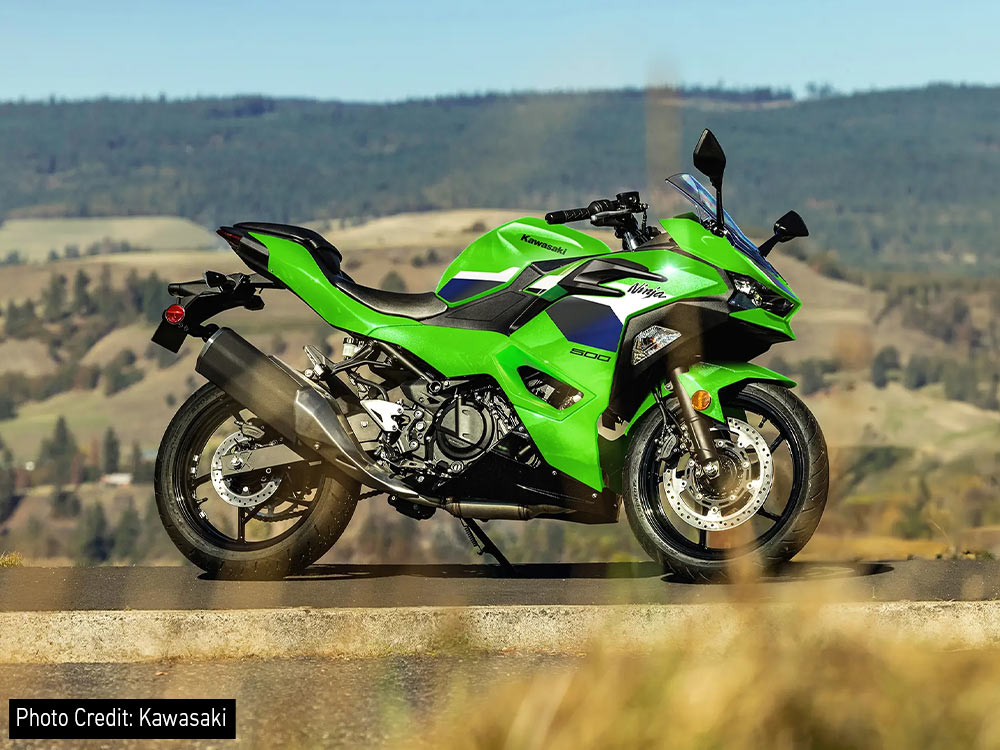
One of the most popular questions you will see circulating on the internet and in the motorcycling community remains: “Is the Ninja 500 a Good Beginner Bike?” The short answer is ‘Yes’. However, there are sure ifs and buts. The Kawasaki Ninja 500 is considered to be a good option for novice riders. Nonetheless, it depends on what you consider a beginner rider.
The Nnja 500 offers a good combination of power, smooth handling, low weight, and affordable price. This enables it to be ranked among the best beginner bikes on the market today. The bike offers new riders a 451 cc engine that generates 51 horsepower, allowing them to have fun without losing control, thanks to its safety and ease of use.
1. Understanding the Kawasaki Ninja 500’s Power Level

The first step for a novice rider is to find the appropriate level of power a bike offers. Excessive power will make a bike hard to control. At the same time, a lack of power will cause boredom. The Kawasaki Ninja 500 is just in the sweet spot for new riders.
The Ninja 500 is powered by a 451 cc parallel-twin, liquid-cooled engine. It delivers 51 hp of horsepower at 10,000 rpm and 31.7 lb-ft of torque at 7,500 rpm. Such power figures allow the Kawasaki Ninja 500 to reach a top speed of 126 mph. It must be noted that novice riders do not require such a high top speed.
The majority of new riders find the mid-range of the Ninja 500’s 451 cc engine ideal. This is where the Ninja 500 shines with consistent, even, manageable, and predictable power.
The 451 cc parallel-twin engine is intended to be forgiving. The power it offers is not sudden or harsh. Instead, it is smooth and steady. The Ninja 500 also allows you to learn on your own time, in contrast to the big sport bikes, which require you to handle quick acceleration and learn sharp moves. The engine also produces low vibration and sounds good, which many riders find amazing.
Must Read: 10 Best Motorcycles Kawasaki Ever Made
2. Does the Ninja 500’s Weight Fall Within Beginners’ Range?
The lighter the bike is, the easier it is to handle. Hence, weight is very crucial to riders. The latest Ninja 500 weighs around 377 lbs (ABS model). Meanwhile, the non-ABS variant is around 372.6 lbs. The low weight gives the bike a more balanced feel, and it does not feel like a bulk of metal between your legs as you ride.
A lightweight motorbike is indeed a blessing at low speeds, especially for beginners. The Ninja 500 may not be the lightest bike in the market, but it is easier to duckwalk the bike, balance it at stops, and is good for slow-moving turns as well. You will not strain your arms or legs if you ride the Ninja 500. As you accelerate, the bike's lightweight design enables you to turn corners with ease. This develops your riding confidence as a beginner.
3. Kawasaki Ninja 400 Vs Ninja 500: Better Beginner Bike

The Ninja 400 is nimble and lightweight with approachable low-end power, making it suitable for new riders interested in commuting to the city and building confidence. The Ninja 500 (occasionally sold as a 450-500 model) has a slightly bigger displacement, stronger midrange torque, and slightly different gearing, which is better on the highway cruising and overtaking. However, the Ninja 500 keeps the top power in a comparable range to the Ninja 400.
With the basic motorbike control skills you have, the extra torque and stability of the Ninja 500 is an easy upgrade. It responds well to the throttle and is less prone to being overexerted at the higher speed limit.
Nevertheless, the light curb weight, low seat height, and ergonomics of the Ninja 400 may be more appealing to absolute beginners who want to perform low-speed maneuvers and build confidence.
3.1 Ninja 500 Vs Ninja 400: Quick Pros and Cons
Less Weight and Easier to Handle: Ninja 400 (More ideal for absolute beginners).
Better Mid-Range Torque With Highway Comfort: Ninja 500 (For more extended rides and highway cruising).
Reduced Operating Costs and Low Fuel Consumption: Ninja 400 (Usually beats the Ninja 500).
Increased Overtaking and Hyper-Stability: The Ninja 500 shines on the open roads.
3.2 Recommendation: Ninja 400 Vs Ninja 500
Beginner with the Ninja 400 if you are a complete newcomer. Begin with the Ninja 500 in case you prefer a beginner-friendly bike with better performance, and if you are willing to train and practice properly.
4. Kawasaki Ninja 500’s Seat Height and Reach to the Ground

The Ninja 500 also features a slim seat design and a narrow gas tank. This plays a major role in making this bike more effective for new riders. You can sit on the Ninja 500 and touch the ground with your feet or toes, which adds to the rider's confidence and security while riding.
Novice riders can be of any size, from short to tall. The Ninja 500 tries to accommodate all of them. The seat height is 30.9 inches (785 mm), which is low for a bike of this type.
However, the seat height is not all that matters. It is about how the bike is designed to fit riders and make riding easy for beginners. The thing that counts for the Ninja 500 is that riders can sit with both feet on the ground.
The Ninja 500 is slimmer than other bikes in the same category. Riders who are 5 feet 4 inches tall can balance the bike on their toes. Those who are taller can have both feet on the ground to balance the bike at stops.
Such a height and seating position on the Ninja 500 provide peace of mind when you are stuck in a traffic jam or stopped at a red light. You don’t have to try hard to keep the bike balanced or to hold it in place. Such peace of mind will make you more relaxed and help you learn more.
5. Ninja 500 Has Manageable Controls: Brakes and Clutch
The Ninja 500 comes with the assist and slipper clutch. This is a great feature to have on a beginner bike. It was previously only available on race bikes. This clutch has two kinds of cams to assist you. The assist cam will make it easier to pull the clutch lever. This is important to the riders who find it hard to keep engaging the clutch or develop arm fatigue on long rides.
The second part is the slipper cam. When downshifting excessively, the slipper cam intervenes and prevents the rear wheel from jumping or skidding. This high-end clutch tech lets beginner riders make mistakes without facing the consequences. This enhances the rider's confidence.
The brakes installed on the Ninja 500 are also user-friendly. Towards the front, the bike has a single 310 mm disc, and in the rear, it has a single 220 mm disc. The ABS is optional on the Ninja 500. The braking is good enough for a 451 cc bike like this and provides good feedback.
The ABS feature is there to support beginner riders on wet or slippery roads, while also preventing the lock-up of wheels. The ABS is a great safety feature for novice riders that allows them to brake hard without the fear of skidding.
6. The Ninja 500’s Six-Speed Gearbox
A gearbox with a multiplicity of gears may appear difficult to use for beginners. However, it provides decent advantages for various riding conditions. The Ninja 500 features a 6-speed transmission that lets you ride in the right gear at any speed. This means:
The engine does not overwork when cruising at 85-90 mph on the highway.
You can ride around town at low speed in low gears.
This bike does not feel jerky, as you can gradually slow down by downshifting.
The extensive spread of gears also implies that the engine is kept in the sweet range of its power band. The gearing is designed to distribute the power evenly.
7. Kawasaki Ninja 500’s Handling: Sharp and Planted
Handling refers to the way the bike leans into a turn and corners. The Ninja 500 has the look of an aggressive bike, yet it feels pretty lightweight and nimble to ride, which beginners require.
The Ninja 500 has a steel trellis frame. It is smartly built by Kawasaki to ensure better strength and agility. The suspension consists of a 41 mm hydraulic telescopic front fork and a horizontal back-link with adjustable spring preload. The front one has 4.7 inches, and the rear one has 5.1 inches of wheel travel.
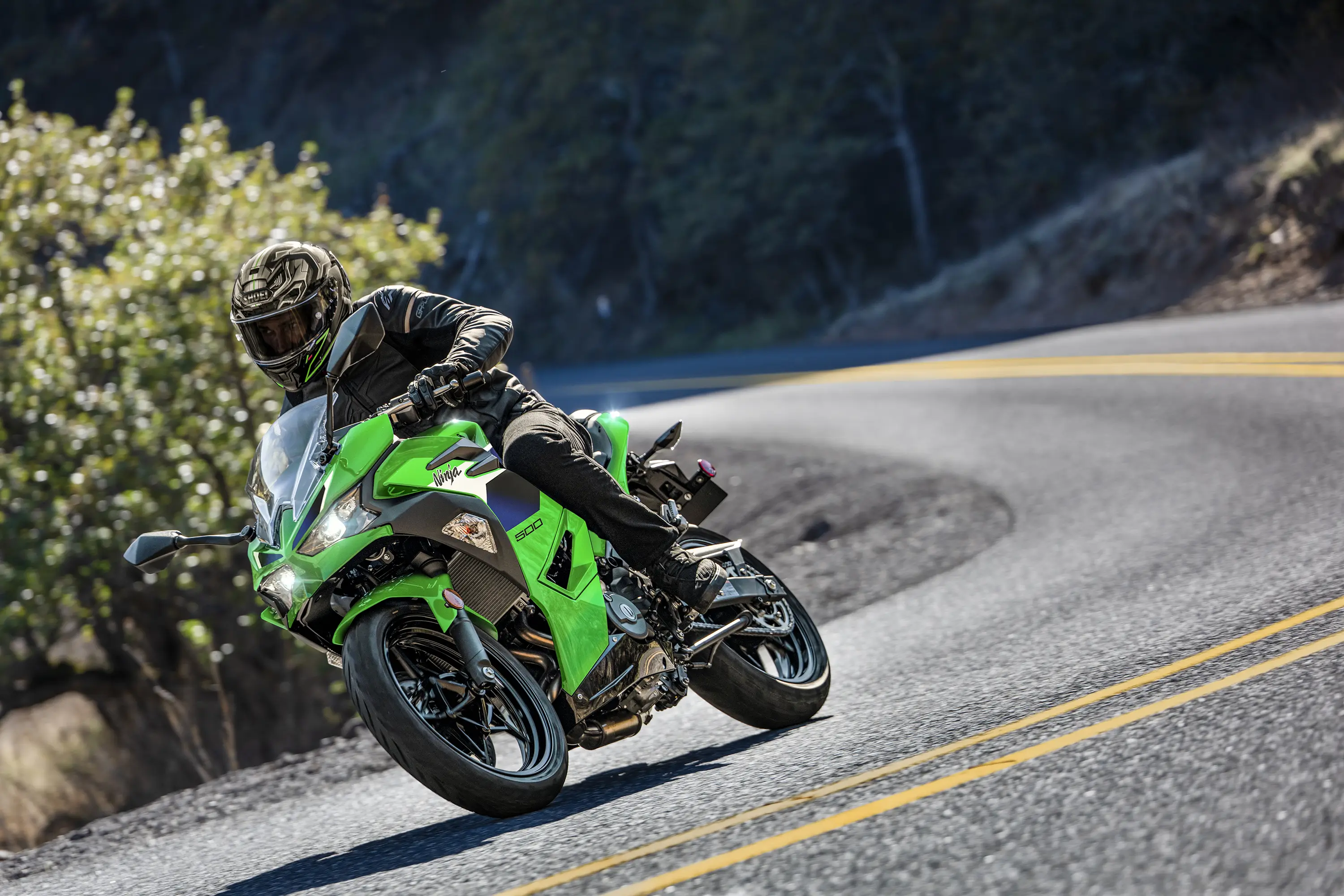
The Ninja 500 feels smooth on winding roads. Riders feel confident on this bike while taking a turn. It maintains its balance and line even when turning sharp corners.
Beginner riders are often afraid of leaning the bike too far. However, the Ninja 500 is different. It offers you great confidence as you lean the bike while turning. The chassis feels quite stable and solid.
The ground clearance of 5.7 inches will ensure that you do not scrape the pegs on normal roads. You will only scrape the pegs on a racing circuit or in extreme riding.
8. Learning Curve and Skill Development on Ninja 500
The Ninja 500 is built in such a way that you can continue riding this bike for a very long time. Beginner riders on the Ninja 500 will not feel as constrained as they would on a Ninja 400. Also, they will not be too intimidated as they would be on a Ninja 650.
If you have sound knowledge of how to ride a motorcycle and have a basic sense of how to operate a bike on the road, the Ninja 500 is quite rewarding. Both upshift and downshift feel smooth on this bike. A beginner can accelerate and decelerate on this bike without jolting.
While riding the Kawasaki Ninja 500, you feel like you are riding a smaller, lighter version of a full-size sport bike. Such a good package helps you develop good habits at an early stage.
Even after years of riding the Ninja 500, you will realize that the power is still very much fun to use. You usually don’t feel tempted to go out in search of a bigger bike. Most Ninja 500 riders stick to this bike for much longer.
9. Kawasaki Ninja 500 for Comfortable Daily Riding?
Though the Ninja 500 is an aggressive-style sports bike. However, unlike the ZX series, it is relatively much comfortable. No matter what, if you are a beginner, a motorcycle has to be comfortable if you want to ride safely. Aching back or numb hands make you quit riding. You do not wish to go for a ride tomorrow.
The seat on the Ninja 500 is made of low-rebound foam padding that absorbs bumps and does not go flat. This is more than what you can expect from an entry-level bike. The sitting posture is both sporty and relaxed, with clip-on bars at an appropriate height. The foot pegs are positioned slightly ahead of those on a proper sports bike.
Such a combination of features on the Ninja 500 places your body in a position that lets you hold the tank with your thighs and control the bike more authoritatively.
The windscreen on the Ninja 500 blocks the wind to a great extent. When riding on the highway at around 80 mph, you do not feel blown away by the wind. This allows you to take your time and have fun, rather than struggle with the conditions.
10. Kawasaki Ninja 500’s Fuel Economy
Well, there is no doubt that Kawasaki motorcycles can achieve excellent fuel economy, and the Ninja 500 is no exception. The Ninja 500 is reported to have a fuel mileage of 61-63 mpg. Some riders have also reported achieving 65 mpg. This is true especially when riding at slow speeds. With a 14L (3.7-gallon) fuel tank, the Ninja 500 can provide a range of around 260 km (160 miles) on a single full tank.
This is made possible by the Ninja 500’s lightweight and balanced design and good engine. Long rides are also possible on the Ninja 500, given its good fuel economy and comfort.
11. Kawasaki Ninja 500 Maintenance and Repair Costs
The Ninja 500 is easy to own, operate, and service. It features a simple parallel-twin engine that has no complex parts to fail.
The Ninja 500’s basic maintenance includes:
Oil changes: Every 4,500 to 7,000 miles.
Chain maintenance: The Chain should be cleaned and lubed after every 400-700 miles.
Air Filter: The air filter should be checked frequently and changed when necessary.
Tires, Brakes, and Coolant: These parts of the bike are generally checked periodically, which helps keep it running smoothly.
Most riders can perform simple repairs in their garages using basic tools. The engine has easy access, and parts are also cheap and readily available. These are among the major reasons why Kawasaki has outsold both Honda and Harley-Davidson in the US in 2025. The minimal design and reduced complexity also imply fewer points of failure.
12. Kawasaki Ninja 500’s Affordability and Value
One of the most notable factors why many beginner riders prefer the Kawasaki Ninja 500 is its low cost. The base non-ABS 2026 Ninja 500 costs around $5399-$5,599. The 2026 Ninja 500 ABS costs around $5,799-$5,999.
Being introduced in 2024 after replacing the Ninja 400, you can buy a used Ninja 500 for around $4,000-$5,00,0, depending on the condition. The Ninja 500 has more power and features than a Ninja 400 at a relatively low increase in price compared to other entry-level bikes. Other sports bike brands available at this price are either smaller, slower, or less comfortable.
13. Kawasaki Ninja 500: Compared to Other Entry-Level Motorcycles
The Kawasaki Ninja 500 is a great contender to other entry-level bikes. The Ninja 400 it replaced was a smaller bike with lower power output, but it was priced almost the same. The Honda CBR500R is heavier and costs more. The Yamaha R3 is also smaller and lighter, but less powerful, a beginner sports bike.
Riders who prefer an upright riding position and no fairings can also go for the Kawasaki Z500. This bike is based on the same engine and chassis, but it is a naked bike with higher handlebars. Both the Ninja 500 and the Z500 are superior beginner bikes, and it comes down to looks and feel.
In case you want to learn on something smaller, the Ninja 400 is a decent downgrade that is still excellent. If you prefer something with more power, the Ninja 650 is an intermediate-level sports bike, but it comes at the cost of weight and price.
14. Kawasaki Ninja 500’s Real Rider Feedback
Those who have chosen and ridden the Ninja 500 as their first bike have nothing but flattering things to say about this bike. A majority of riders claim that the Ninja 500 is a decent option for daily riding. This bike is lightweight, affordable, nimble, and has room to grow. Riders have also noted the smooth power delivery, easy handling, and good comfort that the Ninja 500 offers. Whether riding in the town or on the highway, this bike is suitable for all.
Another thing that new riders find very interesting about the Ninja 500 is that its low weight and agility allow them to keep pace with friends on larger bikes. This makes them feel very confident. The smooth engine and non-aggressive riding position allow one to ride all day without pain or strain.
The internet, including social media, forums, and threads, is full of praise for the Ninja 500. There are many positive reviews about the Ninja 500. Buyers don’t regret choosing the Ninja 500 as their first bike.
15. Who Should Buy the Ninja 500?
The Ninja 500 is good for:
Novice Riders: The controls, weight, comfort, and power are in a sweet spot for beginner riders.
Shorter Riders: The low seat height and foot controls position make the Ninja 500 very suitable for riders who are vertically challenged.
Budget-Conscious Riders: The Kawasaki Ninja 500’s price is quite reasonable, considering the value it offers. The quality and features are also good.
Riders Seeking Sporty Look: The look of the Ninja 500 is quite sporty and aggressive. However, the ergonomics are relatively comfortable compared to a true sports bike.
Commuters: With the Ninja 500, riding in the town or commuting on the highways is very comfortable. Also, the low weight and the good fuel mileage add more value to it.
On the other hand, the Ninja 500 is not the right choice for riders who:
Those who are entirely new to motorcycling have no basic knowledge of motorcycling.
Desire a fully upright, relaxed motorbike like a cruiser. Such riders can also get the Kawasaki Z500 instead.
The Ninja 500 is not the perfect bike for taller riders over 6 ft 2 inches who also require increased legroom.
Suppose they are very low on the budget. For such riders, the Ninja 400 or the Ninja 300 may be a more suitable option.
Ride on the gravel or dirt because it is a street bike.
16. Final Thoughts: Is The Ninja 500 a Good Beginner Bike?
From the perspective of most riders who have shared their opinions online, the Kawasaki Ninja 500 is a good beginner bike. There is no doubt about it. It has everything that makes it a good beginner deal.
However, to be on the safe side, most experts agree that starting with a 500 cc sports-style bike, like the Ninja 500, is not the best advice. It also depends on the type of beginner rider. If a novice rider is entirely new to motorbike riding and has little to no knowledge of motorbikes, the Ninja 500 is not for them. It is better to start with a 250-300 cc motorcycle than.
There are beginners who can get intimidated by the look, size, and power of the Ninja 500. It is still a sports bike.
On the contrary, if you are a good learner, have basic knowledge, and good road sense, the Ninja 500 is a nice starter bike. It checks all the boxes: easy power, decent size, low seat, good handling, low price, and easy maintenance. The assist and slipper clutch, along with optional ABS, can help novice riders a lot.
Above all, the Ninja 500 will not get you bored or keep you behind. Once you develop the skills, the bike is not out of character or fun. Many riders retain their Ninja 500 over the years because they enjoy riding it.
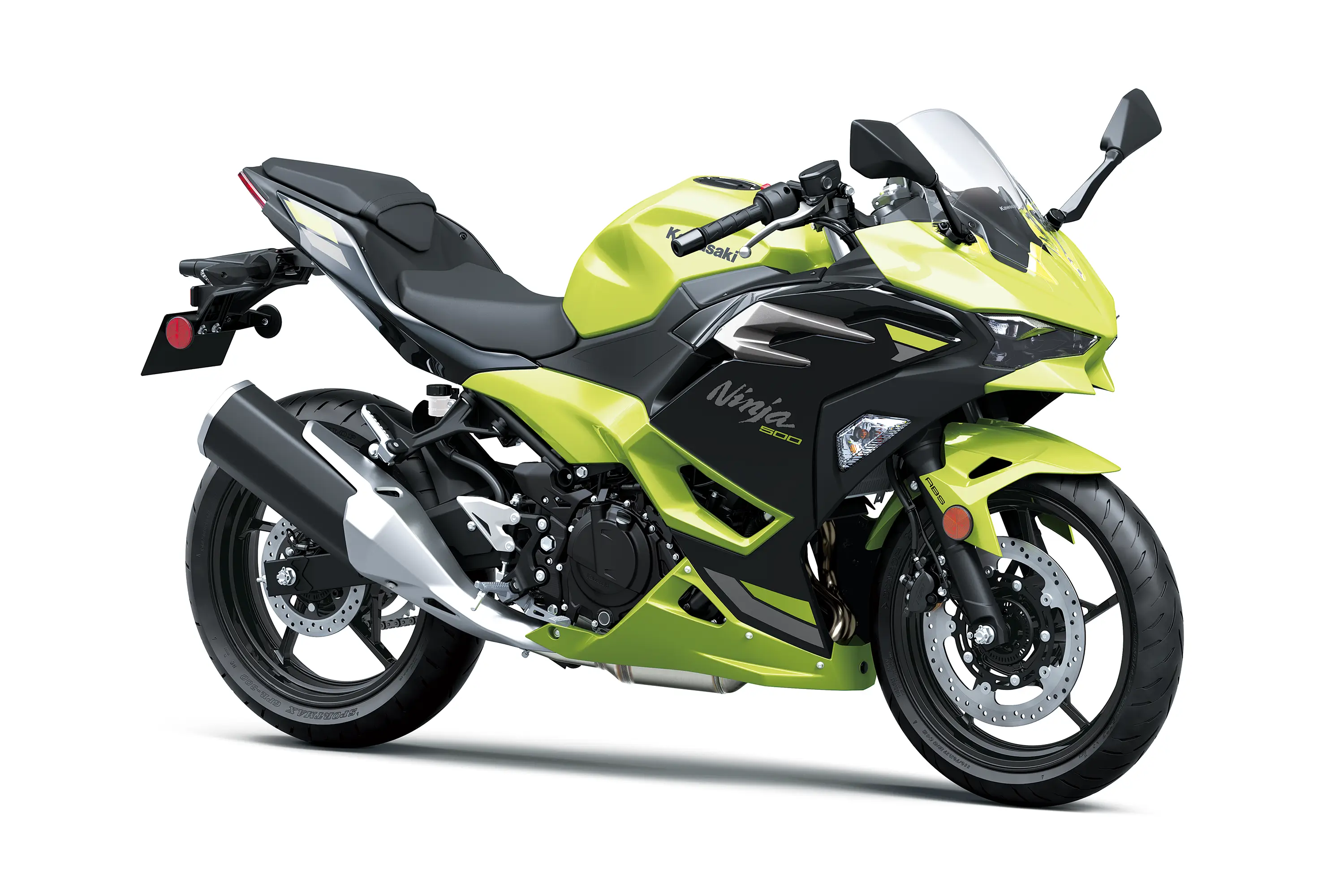
17. 2026 Kawasaki Ninja 500 Specs
| 2026 Kawasaki Ninja 500 Specs | |
|---|---|
| Engine | 451 cc Liquid-Cooled, Parallel-Twin DOHC Engine |
| Peak Horsepower | 51 hp at 10,000 rpm |
| Peak Torque | 31.7 lb-ft / 43 Nm at 7,500 rpm |
| Transmission | Six-Speed |
| Final Drive | Sealed Chain Drive |
| Clutch | Assist & Slipper Clutch |
| Wet Weight | 377.1 lbs (ABS) 372.6 lbs (Non-ABS) |
| Seat Height | 30.9 in |
| Fuel Tank Capacity | 3.7 gals |
| Fuel Mileage | 61-63 mpg |
| Base Price |
MSRP Non-ABS: $5,399 - $5,599 MSRP ABS: $5,799 - $5,999 |




Leave a comment
All comments are moderated before being published.
This site is protected by hCaptcha and the hCaptcha Privacy Policy and Terms of Service apply.