Table of Content
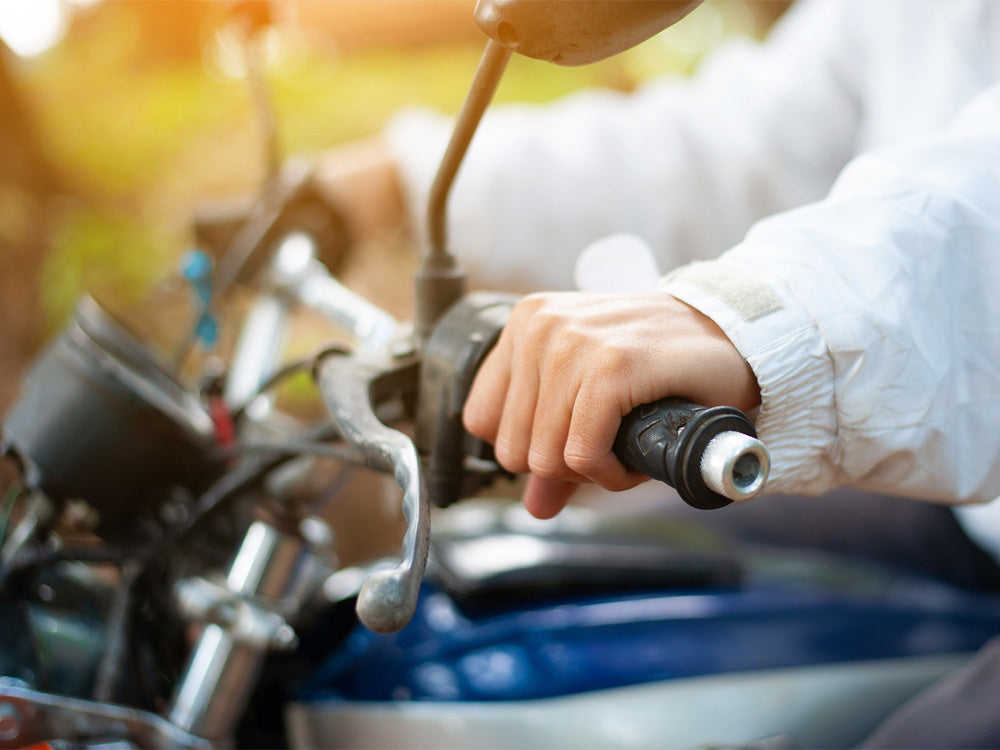
Suppose you take your bike out for a ride. While hitting the main road, a car comes right in front of you out of nowhere. You turn off the throttle and try to stop your bike immediately. However, the question is whether you apply the brakes directly or you first engage the clutch and then apply the brakes.
Well, most of us hold the clutch first and then apply the brakes. It is a natural and secure feeling at the moment, but is this habit bad for your riding and motorbike safety? This is the question we will address in this article in detail.
This is among the most common things that riders are confused about. This article will explore:
Reasons why most riders revert to clutch braking.
Are there any pros of using the clutch while braking?
The hidden cons of it.
And most importantly, what you should be doing as a rider while braking.
No matter where or what you ride, always brake like a pro to stay safe.
1. Understanding Clutch Braking In Everyday Riding
As per the rider, when you engage the clutch while braking the bike, it disengages the engine power. When the clutch is pressed, the link between the engine and the rear wheel is gone. This is what makes riders believe that the bike will stop faster than usual.
However, one main reason why bikers hold the clutch before even applying brakes while riding is to avoid stalling. This is especially true when the traffic is heavy. Most riders are seen riding with the clutch held so they can stop easily whenever required without stalling their bikes. This is common with novice riders.
This clutch-braking comes from habits that have developed prematurely. The new riders are often warned to avoid stalling the bike; as a result, they hold the clutch longer while braking. Above all, urban stop-and-go traffic reinforces this habit.
On the other hand, experienced riders often use the clutch braking while riding their dirt bikes. They use this where freewheeling is useful in loose dirt.
However, on the road, new riders often ignore that modern bikes perform well when the braking power is in harmony.
2. Common Reasons Why Riders Reach for the Clutch While Braking
It is a habit they learn during their first ride, as they are scared the engine will be cut off halfway through a stop if the bike is in gear. During initial bike-riding training, the instructors often scare riders too much to avoid stalling the bike. Also, stalling the bike may lead to a loss of self-confidence.
It is also quite hard to avoid pulling the clutch while riding in busy urban areas, especially when you have to go to work. The biker is more inclined to pull the clutch easily rather than downshift or use engine braking.
Social groups are also a factor. Friends imitate one another, and videos promote tricks that often break the barriers between street and track.
Back in the days when bikes had hard clutches, downshifting more often may have been considered an excuse. As of today, the latest clutch technology has made the clutch action quite softer, making shifting gears very easy.
Must Read: Why is My Motorcycle Clutch So Hard to Pull?
3. Riding Situations When Clutch Braking Shines
To be balanced, the clutch braking will provide value in certain tight areas. This includes sudden emergencies when you have to swerve and stop without any engine interference, leaving the rear wheel to tug.
Clutch braking also comes in handy during very low-speed maneuvers in busy parking lots, in which it is possible to feather the brakes without gear drag, making it hard. When entering a corner aggressively, it is possible to release the clutch to prevent unwanted torque that works against the lean angle.
The context or situation is crucial in selecting the braking type used by the pros, e.g., controlled slides or wheelie recoveries. Such cases highlight its niche role, but they represent far less than daily street riding demands.
4. The Serious Drawbacks of Engaging the Clutch While Braking
Besides the few pros, clutch braking has several severe cons that most riders are not aware of initially. By getting the engine disengaged from action, you will lose the natural drag of the engine that can assist in braking. You will have to solely rely on your motorcycle brakes to stop all the weight and increase the risk of brake overheating or fading on repeated stops.
Without the engine braking, the rear wheel skids are even more likely to happen. This is especially true on slick surfaces where pure brake pressure can lock wheels. Your bike’s tires can also wear quickly, with the front tires suffering more. The bike's control also gets compromised.
Must Read: How to Avoid and Control a Motorcycle Skid
Testing both braking styles (with or without the clutch) has shown that riders can stop early and smoothly. Meanwhile, the stopping distance is greater when you brake while the clutch is engaged. Stats from trustworthy groups also indicate that bike accidents are more common among those who use clutch braking to stop the bike.
5. The Potential of Engine Braking in Safety Riding
The concept of engine braking plays a significant role in leveraging the bike's natural stopping ability. With the help of gears and a flywheel mass, your rear wheel is slowed down in a soft, effortless, and non-pads-depleting way. The work is distributed as you gradually slow down with engine drag. It helps maintain temperatures during a long downhill run.
It greatly increases stability, even during hard braking. Mastering the rev-matching makes it even better. A little throttle blip can match the engine’s speed to the wheels' speed, making gear shifts smoother.
In real-world riding situations, it has been observed that with full-engine braking, the braking distance is reduced by a good margin. It also transforms nerve-wracking stops into more confident ones.
6. How Modern Bikes’ Brakes Excel
Modern bikes are fitted with state-of-the-art braking systems that perform well when the clutch is engaged. The ABS sensors also signal the brakes to avoid wheel lockup. The linked braking system combines the front and rear inputs to achieve optimal balance.
The front brake accounts for about 70% of the total braking force. Thus, only applying the front brake moves your weight forward. The chassis is therefore stabilized by rear brake pedal input, which prevents dives or lifts.
The chain is initiated by throttle roll-off. This indicates that engine braking is joining in. Releasing the clutch in the middle of the process breaks the synergy, and even ABS has to work harder. The test reveals that full-system stops are the shortest and safest, both in wet and dry conditions.
7. Choosing Wisely When to Pull the Clutch
Although uncommon, smart use of the clutch satisfies needs such as panic stops. For example, when an animal comes in front of you out of nowhere, you have to cut the power immediately.
Pulling the clutch while braking is also welcomed by off-road trails, where it can slide on the gravel and have wheels floating safely. Older bikes that are worn out may also need it as a workaround solution to a clutch slip.
The rule remains simple: There are only around 5% of braking scenarios in which you will require holding the clutch. Whereas, engine braking is required in most braking situations to develop real command.
8. How to Master Ideal Braking While Riding a Motorcycle
Build an ideal braking practice with the following process:
Start by rolling the throttle to idle, then position for a smooth entry.
Then ease into the front level by maintaining constant pressure.
Next, layer in the rear brake, and then the chassis will come to a rest as the speed is bled away.
Then start the downshift one at a time with a careful rev-match.
Start practicing in safe parking lots first.
Then advance to real roads.
Whereby, muscle memory takes the lead automatically.
9. Busting Myths About Clutch Habits
There are numerous false myths about clutch braking that are propagated by people. These concepts are transmitted as urban legends. However, real facts clear them up fast.
These are those who argue that clutch braking halts all engine stalls. That claim is not true. Simple rev-match practice solves that issue within a few weeks.
Other riders state that without pulling the clutch, the brakes become hot. Machine tests prove that the idea is wrong. These tests show that engine braking or drag cools the brake pads by one-third. You have more evidence if you observe pro races. Downshifting is very hard for Superbike riders on every lap. They use no clutch at all.
The last evidence is speed tests. Such tests show that the engine braking always works better. Old stories should not be taken in preference over facts.
10. Match Brakes to Your Bike Type
Different bikes require different brake styles. Here is how they work:
Sport bikes rev super high. They prefer fast downshifts. They do not give much attention to the clutch.
Cruiser bikes are quite heavyweight. The engine braking or drag also maintains them in curves.
Adventure bikes offer both on-road and off-road performance. Whether tight dirt maneuvers and jumps are done using the pull of the clutch.
11. Safety Numbers Every Rider Should Know
MSF training offers precise information. Engine braking is an active practice by riders that reduces their crash risks by 40%.
The problem is evident in NHTSA reports. Out of fatal wrecks, 29% are the result of bad stops.
ABS systems help a lot. Wet-track tests reveal one crucial fact. Engine braking is 25% superior to clutch braking.
Real changes are monitored by rider clubs. Riders who drop the clutch habit record no skids after dropping it.
These figures are a powerful message to new riders. Always try to be a better rider.
12. How to Practice Safety Braking
The following steps will help you change your braking habits in a short period of time:
First, find an empty parking lot.
Practice no-clutch braking at 30 mph and come to a complete stop.
Time for each one.
Try to beat your last round.
Next, move to highways.
Attempt braking at 60 mph when required and feasible.
Downshift twice in each run.
During wet days, practice on wet roads.
This ensures the grips' limits are sharpened safely.
With these drills, you will be able to stick with the practice. In one month, you will have established new, safer braking habits.
13. Tips from Top Pro Riders
You can learn many things from AMA pros. It is said that you roll off the throttle on every stop. Then you apply the brakes afterwards.
Sunt professionals teach a key skill. Tight turns are done using trail braking. They always keep the clutch out.
Enduro stars also give their secrets. They blip the throttle loudly during the gear shifting. The engine's sound helps them sync perfectly.
Consider these tips and use them on your next ride.
14. Plan to Become Better At Braking
This simple strategy will make you better within a short time. It works like a roadmap.
Read this full guide first. Write down your top three drills to be able to refer to them fast.
Practice braking for 30 minutes tomorrow in an empty parking lot. Perform braking 20 times in a row without using the clutch.
Make sure that the stops are smooth.
Film two rides each week. Stop the video and spot your braking steps. Improve and correct your strategy.
Become a part of a local rider group. Share your bad habits when it comes to clutch braking. Someone experienced may be able to help you with this.
Enroll in an MSF course if you are new to riding a bike. Get the certification to make your skills permanent.



Leave a comment
All comments are moderated before being published.
This site is protected by hCaptcha and the hCaptcha Privacy Policy and Terms of Service apply.