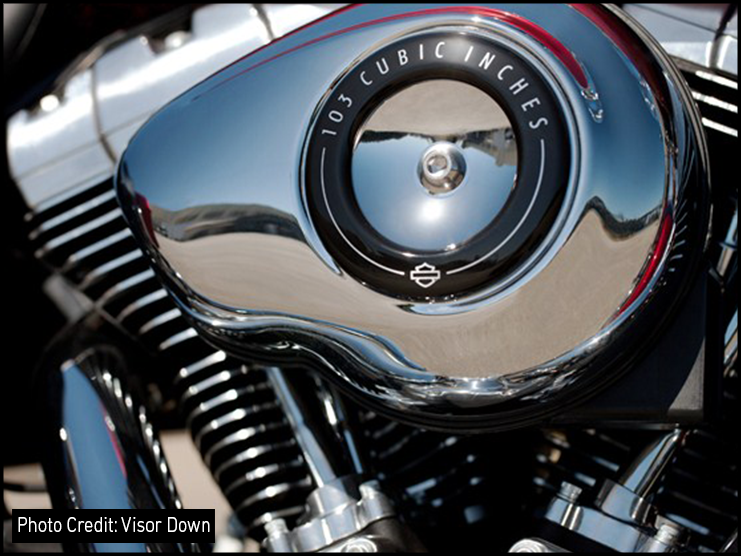
The Harley Davidson Twin Cam 103 is a 103 cubic inch (1,690 cc) V-Twin that was standard on Dyna, Softail, and Touring models from 2012 until the Milwaukee-Eight took over, starting with Touring in 2017. It is air-cooled, with liquid-cooled Twin-Cooled heads on some 2014 to 2016 Touring models. Owners generally report good reliability with regular maintenance. The most common problems are engine heat, cam chain tensioner wear, noise, and starting issues, and this guide covers the fix for each and what to check before buying.
Table of Content
Last updated: October 20, 2026
Harley Davidson has always been at the forefront when it comes to bringing more to the table by innovating its engine technology for better power output and maximum performance. The Twin Cam 103 engine is one of the masterpieces produced by H-D which continued to power the Harley bikes until the Milwaukee-Eight came. However, the Twin Cam 103 has still a separate fan base, and bikes powered by this engine are still in demand.
As common with a few notable engines in the market, the Twin Cam 103’s success story also has a few low points. Alongside sturdy build and authentic V-Twin performance, the Twin Cam 103 was reported by riders to have certain issues. These issues were common with many riders so it was necessary to point them out and provide solutions to make the bike run smoothly and error-free. Continue reading this article to learn about the common Harley Davidson 103 engine problems and how to fix them. However, before we get deeper into the issues, let’s get to know a little about the iconic Twin Cam 103 engine by Harley Davidson.
Note: The Twin Cam 103 engine problems discussed and addressed in this article are purely based on user reviews and riders’ experiences and are not intended to defame any brand/company.
The Harley Davidson Twin Cam 103 is a 103 cubic inch (1,690 cc) air-cooled V-Twin engine. H-D made it standard on its 2012 Dyna, Softail, and Touring models, and it was built until the Milwaukee-Eight replaced it. H-D rated it at up to 100 ft-lb of torque, about 6% more than the Twin Cam 96. Most owners find it reliable with regular maintenance. The problems riders report most are engine heat, cam chain tensioner wear, noise, and starting issues.
1. Harley Davidson Twin Cam 103 Engine Profile

Harley Davidson Twin Cam 103 Engine | |
|---|---|
Manufacturer |
Harley Davidson |
Engine Displacement Size |
103 cu in (1,690 cc) |
Cooling System |
Air-Cooled |
Engine Layout |
V-Twin |
Torque |
125-136 Nm |
Horsepower |
77-80 hp |
Average Fuel Economy |
42 mpg |
Compression Ratio |
9.6:1 |
Bore |
3.875 in / 98.4 mm |
Stroke |
4.375 in / 111.1 mm |
Valves Per Cylinder |
Two |
Fuel Delivery System |
Electronic Sequential Port Fuel Injection (ESPFI) |
Cams |
One-Per-Cylinder with Two Lobes Each |
Cam Drive |
Silent Chain |
Combustion Chamber |
Bathtub-Shape Chamber |
Oil Pump |
Internal Twin-Gerotor |
Transmission Attachment |
Attached Directly to the Engine |
Introduced In |
2012 (earlier on CVO models) |
Discontinued In |
2017 |
Successor |
Milwaukee-Eight |
Predecessor |
Evolution Engine |
1.1 How Many CC Is a Twin Cam 103?
A Twin Cam 103 has a displacement of 103 cubic inches, which is about 1,690 cc (1.7 liters). The “103” in the name is the engine size in cubic inches, not the horsepower.
1.2 Which Harley Davidson Models Have the Twin Cam 103?
H-D made the Twin Cam 103 standard equipment on all 2012 Dyna, Softail, and Touring models, except the Dyna Street Bob and the Dyna Super Glide Custom. Softail models with the Twin Cam 103 from 2012 to 2017 include the Fat Boy, Heritage Softail Classic, Slim, Breakout, and Deluxe. Touring models moved to the Milwaukee-Eight in 2017, while the last Twin Cam Dyna and Softail models were also 2017 models.
1.3 Twin Cam 103 Versions: 103, 103B, High Output, and Twin-Cooled
Not every Twin Cam 103 is the same. The Softail models use the counterbalanced 103B. In 2014, H-D introduced the High Output 103 on its Touring models, which riders say makes about 5% more torque than the standard 103. Some 2014 to 2016 Touring models also came with Twin-Cooled liquid-cooled heads to reduce engine heat. Always check the exact model and year before you compare specs.
2. A Brief Overview of Twin Cam 103 Engine
The term “Twin Cam” was first coined in 1998 when Harley Davidson replaced the Evolution Engine with the Twin Cam. The Twin Cam has two operational camshafts instead of the traditional single-cam engine hence it was named ‘Twin Cam’. It became a trademark V-Twin engine by Harley as it was quite powerful and had that classic V-Twin rugged persona.
Initially, the Twin Cam engine was produced with an engine displacement size of 88 cu-in (1,450 cc) and then was increased to 96 cubic inches (1,584 cc) in 2007 which was known by the name “Twin Cam 96”. Harley Davidson needed more out of the engine for its esteemed heavy-duty touring machines to ensure there was no limitation regarding high-torque performance for unrestricted touring. The Twin Cam 103 was finally introduced as standard equipment in 2012 with a displacement size of 1,690 cc.
H-D rated the Twin Cam 103 at up to 100 ft-lb of torque, about 6% more than the Twin Cam 96.. It was immediately brought to the production line and appeared on most top-of-the-line featured Harley models, including the Harley Davidson Softail, Dyna models, and touring lineup.
3. Harley Davidson Twin Cam 103 Engine Problems and How to Fix Them
The Harley Davidson Twin Cam 103 engine may be a highly reliable and long-lasting power mill if you are a die-hard Harley fan. According to most non-biased reviews and opinions, there are certain constantly reported problems with the Twin Cam 103 that can become severe with time if not addressed. The Twin Cam 103 not only causes you frustration due to showing problems, but it can also become a serious safety threat if you ignore any of the issues.
In addition, the H-D Twin Cam 103 engine can be much costlier to maintain as the frequency of the maintenance cycle increases over time. So, you must be prepared before you choose to buy an old Harley classic powered by a Twin Cam 103.
3.1 Is the Twin Cam 103 Reliable? How Long Does It Last?
The Twin Cam 103 has a good reputation among owners when it is maintained properly. Some riders report 45,000 to over 100,000 miles on Twin Cam engines without major engine trouble. H-D does not publish an official mileage limit for the engine, so how long it lasts depends mostly on oil changes, heat, and how early you fix small problems. The problems listed below are the ones riders report most often, and most of them can be managed if you catch them early.
3.2 Plastic Shoes on Cam Chains
Most of the cam chain tensioner failures riders talk about happened on Twin Cams made from 1999 to 2006, which used spring-loaded tensioners. H-D moved to hydraulic tensioners later, but the plastic shoes can still wear on a high-mileage engine.
One of the major problems with the H-D Twin Cam 103 lies in its design and you would be appalled to learn that the Cam Chains have plastic shoes which is a sign of poor built quality. What can you expect from plastic-made shoes in the cam chains that have to move against other surfaces to operate? They wear out pretty soon due to constant grinding movement between the plastic shoes.
As soon as these plastic shoes are gone, the risk of exposed metal surfaces getting in contact with each other increases. This rubbing movement can result in metal shaving which is a serious indication that your Twin Cam 103 engine can fail anytime soon.
On top of it, you cannot get it fixed even after installing a new hydraulic tensioning system. The plastic shoes on the cam chains are reported by some owners to last only 15,000 miles. If you choose to replace the hydraulic system with a new one, it can increase the durability to only a certain extent. Still, you may have to replace the plastic shoes every 40,000 miles in some cases.
3.3 How to Fix Early Wearing of Plastic Shoes in the Twin Cam 103 Engine
You may probably not get any fruitful assistance from the Harley Dealerships due to being a discontinued engine technology, therefore, you must get your shoelaces tight as you have to do some work by yourself. There are a few solutions to solve this problem, but it will only delay the issue, not resolve it completely.
Using Premium-Quality Oil
One way to settle down the early wearing of plastic shoes in the cam chain is by using premium-quality oil to avoid harsh grinding movement of these parts. This solution can only delay the early wearing of plastic shoes but is not a durable solution.
Installing a Fan-Assisted Oil-Cooling System
Adding an oil-cooling system with an assisted fan can help lower the engine temperature and keep it cool. As the engine temperature does not exceed a nominal level, the moving parts grind against each other comparatively smoothly, making plastic shoes live a little longer.
Replacing the Gear System
Coming to a durable solution, replacing the gear system can help you completely resolve the Twin Cam 103 engine’s poorly built cam chain issue. The same has been suggested and approved by most motorcycle experts but it is a relatively expensive solution.
| Fixing the Plastic Shoe issue in the Twin Cam 103 Engine | |||
|---|---|---|---|
| Solutions | Durable/Temporary | Cost | Outcome |
| Using Premium-Quality Oil | Temporary | Cheaper | Only delays the issue |
| Installing a Fan-Assisted Oil-Cooling System | Temporary | Normal | Only delays the issue |
| Replacing the Gear System | Durable/Long Lasting | Expensive | Can fix the issue for a longer period |


3.4 Excessive Engine Heat Problem
Another common issue with the H-D Twin Cam 103, like other Harley engines, is the excessive engine heat problem. As most Harley riders complain, if you are riding on a Twin Cam 103 Harley on a hot day, the engine heat can burn your legs as you cruise at highway speeds. Riding through busy traffic roads can be a major problem while riding such big V-Twin bikes due to the lack of airflow available. The air-cooling system may benefit the motorcycle in terms of aesthetics as it makes it simpler and provides a full view of the cylinders, but it is ineffective to cool down such high-displacement V-Twins.
3.5 How to overcome the Twin Cam 103 engine heating problem
For an air-cooled engine, no magic can help you solve this issue. These air-cooled engines are inherently hotter to ride, especially in hot weather conditions. However, we have some tips for you to at least make it manageable to ride a motorcycle with a Twin Cam 103 engine.
- Avoid riding on extremely hot sunny days or at least during the peak hour when the sun is right above your head.
- Ride slowly at lower rpms. Do not push the engine above a certain limit where it has to work harder to push the bike.
- Do not ride excessively in busy traffic areas.
- Using a good-quality oil is important as it causes the moving parts to grind against each other smoothly to avoid producing excessive heat.
- Regularly clean the motorcycle air filter for better air intake
- Use exhaust pipes that are straight and short.
- Regularly clean the cooling fins to remove any dust blockage for better airflow.
3.6 Loose Crankshaft Problem
A crankshaft keeps the pistons inside the engine cylinders moving in an aligned and linear manner to produce the mechanical force that drives the rear wheel. It is undoubtedly a significant engine part that keeps it working. What if it is misaligned or becomes loose? You cannot even imagine how catastrophic it can be for an engine. The Twin Cam 103 is suspected to have a loose crankshaft issue as reported by several owners.
This major problem of loose crankshaft in the Twin Cam 103 further becomes a root cause of several other issues, including excessive vibrations, early wear of moving parts, unpleasant noise, and decreased engine efficiency.
3.7 How to Fix a Loose Crankshaft Problem
As one can think, fixing a loose crankshaft problem in the Twin Cam 103 engine will require opening the engine and a complete overhaul. It may either require tightening up the loose crankshaft or replacing it. Make sure you fix the loose crankshaft issue on time or else it can eat the whole engine up.
Also, if you are a regular biker, you should carefully observe any issue with the engine beforehand and check for any symptoms including irregular noise, unusual vibrations, and compromised engine performance.
3.8 Twin Cam 103 Engine Noise Problem
The most common problem with the Harley Davidson Twin Cam 103 engine is the unwanted noise produced by the engine. However, most Harley riders misunderstand it as normal and choose to live with it, ignoring the fact that it can be an indication of a disaster.
Just by listening to the noise coming out of the engine, you cannot exactly predict what is causing it as there can be several reasons. The Twin Cam 103 engine noise can either be due to worn-out valve components or a cam chain tensioner. The worn-out cam chain tensioner usually generates a clanking sound. The irritating noise can also be due to a loose or misaligned crankshaft and other engine parts.
If your motorcycle’s primary drive, chain, and gears are not properly adjusted, or misaligned, or there is a certain amount of slack, they start to produce unwanted irritating sounds.
3.9 How to Fix the Twin Cam 103 Noise Problems
- Through proper and regular maintenance of your Harley bike, powered by a Twin Cam 103 engine, you can fix the noise issues.
- Make sure to keep the parts lubricated to avoid excessive wear and tear.
- Though regularly inspecting the engine, you can get to know about any issue beforehand.
3.10 Cam Chain Tensioner Problems: Twin Cam 88 vs Twin Cam 103
The cam chain tensioner is the most talked-about weak spot of the Twin Cam family, but the problem is not the same on every year. The Twin Cam 88 engines made from 1999 to 2006 used spring-loaded tensioners that wore out early. H-D switched to hydraulic tensioners from the Twin Cam 96 in 2007, and the Twin Cam 103 uses the hydraulic type, so the failures are less common on a 103.
Still, a high-mileage Twin Cam 103 can show signs of tensioner wear. Watch for a ticking or clattering sound from the engine and any plastic pieces in the oil. Worn tensioner shoes can damage the oil pump and other engine parts if you ignore them.
If you want a permanent fix, many riders install a gear-drive cam kit, which removes the chain tensioner shoes completely. It costs more than replacing the shoes, so it makes sense mainly for riders who plan to keep the bike for many more miles.
3.11 Starting Problem with the Twin Cam 103
The Harley Davidson Twin Cam 103 is also reported to show starting issues due to various reasons. If you attempt several times to start the engine, it can increase the risk of wear and tear, causing extra load on the starter mechanism and battery.
The various reasons causing the Twin Cam 103 engine to not start properly include:
- A faulty fuel delivery system that includes the fuel lines, fuel injection system, gas tank, and fuel pump, is a major cause of why the Twin Cam 103 doesn’t start.
- A faulty ignition system that includes the ignition coil and spark plugs, can also fail, causing starting issues.
- Almost every modern motorcycle has an electric start mechanism to crank up the engine. The starter motor only cranks the engine, while the spark comes from the ignition coil and spark plugs. Even if you have a fully charged and functional motorcycle battery, the Twin Cam 103 engine may not start due to a faulty starter motor.
3.12 How to Fix the Starting Problems
- The first thing you should check is your motorcycle battery if your Twin Cam 103 engine is finding it hard to crank up.
- You will either need to fix or replace the starter motor, spark plug, or ignition coil if they are the reason why your motorcycle is not cranking up.
- Keep your gas tank clean and regularly check for any signs of rust formation inside the gas tank. The rust can enter the fuel lines, fuel injectors, carburetors, and engines, causing them to malfunction.
3.13. Twin Cam 103 Problems at a Glance
| Problem | Symptom | Fix | Cost |
|---|---|---|---|
| Cam chain tensioner wear | Ticking or clattering noise, plastic bits in oil | Replace tensioners or install a gear-drive cam kit | Normal to Expensive |
| Engine heat | Hot legs in traffic or hot weather | Better oil, clean air filter, oil cooler, Twin-Cooled models | Cheaper to Normal |
| Loose crankshaft | Vibration, noise, lower performance | Engine overhaul, tighten or replace crankshaft | Expensive |
| Engine noise | Clanking, ticking, or whining | Check tensioners, valve parts, primary drive | Cheaper to Expensive |
| Starting problems | Hard cranking or no start | Check battery, starter motor, ignition coil, spark plugs, fuel system | Cheaper to Normal |
4. Which Twin Cam 103 Years Are Best to Buy?
Many riders and buying guides say the 2012 to 2017 Twin Cam models are the best of the Twin Cam family. The 103 has hydraulic cam chain tensioners and several upgrades over the older Twin Cam 88. Before you buy, check these things:- Ask for service records and look for regular oil changes.
- Ask if the cam chain tensioners and cam bearings have ever been serviced.
- Listen for ticking, clattering, or whining when the engine is warm.
- Check the oil for plastic or metal pieces.
- Take a test ride in slow traffic to feel how hot the engine gets.
If heat matters to you, ask if it is a Twin-Cooled Touring model.
5. Twin Cam 103 vs Milwaukee-Eight
H-D replaced the Twin Cam 103 with the Milwaukee-Eight engine, starting on Touring models in 2017. The Twin Cam used two chain-driven cams, while the Milwaukee-Eight went back to a single-cam design. The base Milwaukee-Eight 107 is also larger at 107 cubic inches. The Milwaukee-Eight has its own common problems, which we have covered in our article on Most Common Milwaukee-Eight Engine Problems and Harley Milwaukee-Eight 114 Engine Problems and Solutions.
6. The Bottom Line
Harley Davidson has always been on top of the priority list of most American riders. Regardless of the various issues with the H-D Twin Cam 103 engine, Harley Davidson motorcycles still manage to ensure a good holding value. You can still sell an old Harley Davidson at a good price due to its better resale value.
However, if you want to know about an old Harley model powered by a Twin Cam 103 from a buyer’s perspective, there are several problems attached to it. The Twin Cam 103 engines are reported to have numerous issues including excessive engine heating, noise issues, early wearing of internal parts, starting problems, misalignment, and poor build quality.
Most of these problems can be eliminated through proper and regular maintenance. However, in certain cases, you must replace faulty parts before they damage the whole engine.
Along with regularly maintaining your motorcycle for engine longevity and better performance, you must also consider a few customization options to make it extra comfortable and a better ride partner on longer rides. Viking Bags , a leading motorcycle luggage and aftermarket parts brand, offers a range of luggage bags and parts that perfectly suit your make and model. In the cruisers category, the company offers saddlebags , tour packs , tank bags , sissy bar bags , backpacks , trunk bags , and much more.
For an improved riding stance on long-distance rides, Viking Bags also makes new seats , handlebars , sissy bars , backrests , crash bars , and fairings .
7. FAQs
How long does a Twin Cam 103 last?
H-D does not give an official mileage figure. Many owners report 50,000 miles or more without major engine trouble, and regular maintenance is the biggest factor.
Is the Twin Cam 103 reliable?
Yes, most owners find it reliable when it is maintained. The most common issues are engine heat, cam chain tensioner wear, noise, and starting problems.
What years had the Twin Cam 103?
H-D made it standard on its 2012 Dyna, Softail, and Touring models. Touring models switched to the Milwaukee-Eight in 2017, and the last Dyna and Softail models with the Twin Cam were 2017 models.
What is the most common Twin Cam 103 problem?
Engine heat and cam chain tensioner wear are the most reported issues, and noise is often a sign of the second one.
Is the Twin Cam 103 liquid cooled?
Mostly no. It is air-cooled, but some 2014 to 2016 Touring models have Twin-Cooled liquid-cooled heads.Popular Collections


Leave a comment
All comments are moderated before being published.
This site is protected by hCaptcha and the hCaptcha Privacy Policy and Terms of Service apply.