
Last Updated: Nov 3, 2026
Quick Answer: Motorcycle maintenance involves regularly inspecting and servicing your tires, brakes, engine oil, battery, chain or belt drive, fluids, controls, lights, and suspension. Before every ride, check tire pressure, brake operation, throttle response, lights, fluid levels, and visible leaks. Follow your motorcycle manufacturer's maintenance schedule for oil changes, brake fluid replacement, valve inspections, coolant servicing, and other mileage-based or time-based maintenance. Proper maintenance helps improve reliability, prevent unexpected breakdowns, extend component life, and keep your motorcycle safe to ride.
Table of contents
Owning a motorcycle is about more than enjoying the open road. It also means understanding how to keep your bike reliable, safe, and ready for every ride. Whether you use your motorcycle for daily commuting, weekend cruising, long-distance touring, or off-road adventures, regular maintenance plays an important role in its performance and longevity.
Motorcycle maintenance involves much more than changing engine oil or cleaning the chain. It includes inspecting tires, checking brake performance, monitoring fluid levels, maintaining the battery, examining the drivetrain, and identifying signs of wear before they turn into expensive repairs.
However, not every maintenance task needs to be performed at the same interval. Some checks should happen before every ride, while others depend on mileage, elapsed time, riding conditions, and your motorcycle's design.
For example, tire pressure and visible tire damage deserve frequent attention, whereas valve clearance inspections are generally performed at longer manufacturer-specified intervals.
This guide explains how to maintain a motorcycle, what to inspect, how often to perform essential maintenance, which tasks you can handle yourself, and when professional servicing is necessary.
Whether you're a new rider or have years of experience, understanding these motorcycle maintenance fundamentals can help you avoid preventable problems and enjoy more confident rides.
1. Why Is Motorcycle Maintenance Important?
Regular motorcycle maintenance helps keep your bike operating as intended while reducing the risk of unexpected mechanical problems. Motorcycle components experience wear from friction, heat, vibration, road debris, weather, and regular use. Without proper inspection and servicing, minor issues can gradually become expensive repairs.
Here are some of the main reasons motorcycle maintenance matters.

1.1 Improves Motorcycle Safety
Your tires, brakes, steering, suspension, lights, and controls directly affect how your motorcycle responds on the road.
Checking these components regularly helps identify worn brake pads, damaged tires, loose connections, leaking fluids, and other potential problems before riding.
1.2 Helps Prevent Expensive Repairs
Replacing engine oil at the correct interval, maintaining the drivetrain, and checking fluid levels can help prevent unnecessary component wear.
Identifying a small leak or an unusually worn chain early may also prevent more extensive damage.
1.3 Improves Motorcycle Reliability
A motorcycle with a properly maintained battery, electrical system, fuel system, and engine is less likely to experience preventable starting or operating problems.
1.4 Helps Extend Component Life
Tires, chains, sprockets, brake pads, bearings, and other motorcycle components have limited service lives.
Correct maintenance helps them perform as intended and may extend their usable life.
1.5 Makes Long-Distance Riding More Predictable
Before a long ride, inspecting your motorcycle helps identify issues that could become inconvenient or dangerous far from home.
Tire condition, brake performance, fluid levels, luggage mounting, and drivetrain condition deserve particular attention before touring.


2. Motorcycle Maintenance Checklist Before Every Ride
Before starting your motorcycle, spend a few minutes inspecting its most important components.
The Motorcycle Safety Foundation uses the T-CLOCS framework to help riders remember the essential inspection categories:
Tires and Wheels
Controls
Lights and Electrics
Oil and Other Fluids
Chassis
Stands
This checklist provides a practical way to identify visible problems before they become more serious.
T – Tires and Wheels
Check front and rear tire pressure when cold.
Inspect the tread for excessive wear.
Look for cracks, cuts, punctures, bulges, or embedded objects.
Check the wheels for visible damage.
Look for loose or damaged spokes, where applicable.
C – Controls
Check that the throttle moves freely and returns completely when released.
Inspect the brake and clutch levers.
Make sure the handlebars move freely.
Check cables and hoses for visible damage.
Confirm that the controls are not binding.
L – Lights and Electrics
Test the headlight and taillight.
Check the brake lights.
Test the turn signals.
Make sure the horn works.
Look for loose or damaged electrical connections.
O – Oil and Other Fluids
Check the engine oil level using the manufacturer's recommended procedure.
Inspect accessible brake fluid reservoirs.
Check coolant levels when the engine is cool, if applicable.
Look underneath the motorcycle for oil, fuel, or coolant leaks.
C – Chassis
Inspect the frame and visible mounting points.
Check the chain or belt for visible damage.
Look for loose or missing fasteners.
Check the suspension for visible leaks.
Inspect the wheels and accessible bearings for signs of damage.
S – Stands
Check the side stand and center stand, if equipped.
Inspect their springs and mounting points.
Make sure the stands move and return correctly.
Check that the side-stand safety switch functions as intended, if fitted.
If you notice a safety-critical problem, do not ride until it has been properly addressed.


3. Motorcycle Maintenance Schedule
How often should you maintain a motorcycle? The answer depends on your motorcycle's make, model, engine, mileage, age, and riding conditions.
Some inspections are necessary before every ride, while other maintenance tasks follow mileage-based or time-based service intervals.
Use this table as a general planning framework, not a replacement for your owner's manual.
| Maintenance Task | General Inspection Frequency |
|---|---|
| Tire pressure and condition | Before every ride |
| Brakes and brake lever feel | Before every ride |
| Throttle and controls | Before every ride |
| Lights and indicators | Before every ride |
| Oil level and visible leaks | Before every ride |
| Chain or belt condition | Before every ride |
| Battery terminals and condition | Periodically and after storage |
| Chain slack and lubrication | According to the owner's manual and riding conditions |
| Brake pad wear | At regular inspections |
| Engine oil and filter | At the manufacturer's specified mileage or time interval |
| Brake fluid replacement | At the manufacturer's specified time interval |
| Coolant replacement | At the manufacturer's specified interval, if liquid-cooled |
| Air filter inspection | According to mileage and riding conditions |
| Valve clearance inspection | At the manufacturer's specified mileage |
| Suspension and bearings | At scheduled inspections and whenever symptoms appear |

3.1 Why Do Motorcycle Maintenance Intervals Differ?
There is no single maintenance schedule that works for every motorcycle.
A small commuter motorcycle, a high-performance sportbike, a touring motorcycle, and an adventure motorcycle may have very different service requirements.
Riding conditions also matter. Frequent off-road riding, dusty environments, extreme temperatures, heavy loads, and extended periods of storage can increase the need for certain inspections.
Always consult your motorcycle owner's manual for the correct service intervals, fluid specifications, measurements, and replacement requirements.
4. Essential Motorcycle Maintenance Tasks
Understanding the most important motorcycle maintenance tasks helps riders prioritize inspections and avoid overlooking components that affect safety and performance.
4.1 Motorcycle Tire Maintenance
Motorcycle tires are the only parts of your bike that maintain direct contact with the road. Their condition and inflation pressure influence traction, braking, cornering, stability, and handling.
Start by checking the recommended cold tire pressure in your motorcycle owner's manual or manufacturer's pressure label.
Do not automatically use the maximum pressure printed on the tire sidewall as your everyday inflation target.
Inspect both tires for:
Uneven tread wear
Cuts and punctures
Cracks and signs of aging
Bulges or exposed cords
Embedded nails or other objects
Damaged valve stems or missing valve caps
Also check the tire tread depth against the manufacturer's replacement guidance and applicable legal requirements.
Tire pressure may need to account for the motorcycle's specified passenger and luggage load. Always use the approved pressure recommendations for your motorcycle and tire combination.
When Should You Replace Motorcycle Tires?
Replace tires when they reach their applicable wear indicators, develop unacceptable damage, or exceed the manufacturer's age-related service recommendations.
A tire can become unsuitable for use even when it still appears to have sufficient tread.
If you experience a puncture or notice a sudden loss of tire pressure, assess the damage before continuing your journey. Not every puncture is repairable, and tire replacement may be necessary depending on the location and extent of the damage.
For additional information, read our guides to motorcycle tire repair and tubed vs. tubeless motorcycle tires.


4.2 Motorcycle Brake Maintenance
Your motorcycle's braking system includes several components that work together to slow down and stop the bike.
These include brake pads, rotors, calipers, master cylinders, brake lines, and brake fluid.
Inspect the brake pads for wear and check the rotors for visible damage, scoring, or unusual wear. Test both brake controls before riding and pay attention to changes in lever feel.
Common signs of potential brake problems include:
A spongy or unusually soft brake lever.
Grinding or scraping sounds.
Reduced braking performance.
Brake fluid leaks.
Excessive brake lever travel.
Brake pads approaching their wear limits.
Hydraulic brake fluid absorbs moisture over time, which can affect braking performance. Follow the manufacturer's specified replacement interval and use only the approved fluid type.
If your brakes feel abnormal, leak fluid, or fail to operate properly, have the system inspected before riding.
4.3 Motorcycle Engine Oil and Filter Maintenance
Engine oil lubricates moving engine components, helps manage heat, and carries contaminants toward the oil filter.
Many conventional motorcycles also share engine oil with the transmission and wet clutch, which makes using the correct motorcycle oil specification particularly important.
Check your oil level according to the manufacturer's procedure. Depending on the motorcycle, this may involve using a dipstick or sight glass with the bike positioned on level ground and the engine at the specified temperature.
During an oil inspection, look for:
Oil levels below the recommended range.
Signs of oil leaks.
Unusual changes in oil appearance.
Oil consumption between services.
Damaged or leaking oil filters.
Change the engine oil and filter according to your motorcycle's maintenance schedule.
Do not assume that every motorcycle needs an oil change at 3,000 or 5,000 miles. The correct interval depends on the engine, oil specification, manufacturer recommendations, and riding conditions.
For additional guidance, read our article on motorcycle oil change intervals. You can also learn about motorcycle oil filter maintenance to understand why proper filtration matters for engine lubrication.
4.4 Motorcycle Chain and Sprocket Maintenance
On chain-driven motorcycles, the drive chain transfers power from the transmission to the rear wheel.
A chain that is excessively loose, tight, dry, corroded, or worn can affect drivetrain performance and may create a safety hazard.
Inspect the chain for:
Rust or corrosion.
Damaged or stiff links.
Uneven wear.
Excessive slack.
Worn or hooked sprocket teeth.
Signs of poor alignment.
Check chain slack at the location and under the conditions specified by the motorcycle manufacturer. Different motorcycles have different adjustment requirements.
Clean and lubricate the chain using products and methods approved for its type. Sealed O-ring and X-ring chains still require appropriate external care.
If the chain or sprockets show significant wear, have the complete drivetrain inspected. Chain replacement and master-link installation require the correct tools and procedures.
Remember that belt-driven and shaft-driven motorcycles have different drivetrain inspection and maintenance requirements.
4.5 Motorcycle Battery Maintenance
A motorcycle battery supplies electrical power for starting and supporting the motorcycle's electrical systems.
Battery maintenance requirements depend on its chemistry and construction. Conventional flooded lead-acid batteries, AGM batteries, and lithium batteries do not all require identical care.
Inspect the battery for:
Corroded terminals.
Loose connections.
Physical damage or swelling.
Signs of leakage.
Difficulty starting the motorcycle.
Unusual charging behavior.
If your motorcycle remains unused for extended periods, use a compatible battery maintainer according to the battery manufacturer's instructions.
Do not add water to sealed or maintenance-free batteries. Only service batteries designed for electrolyte maintenance, following the manufacturer's instructions and safety precautions.
For additional information, explore our guides to motorcycle battery maintenance and motorcycle battery lifespan.
4.6 Motorcycle Coolant and Other Fluid Maintenance
Liquid-cooled motorcycles use coolant to help regulate engine temperature.
Check the coolant reservoir when the engine is cold and look for leaks around accessible hoses, connections, and the radiator.
Other motorcycle fluids may include:
Brake fluid.
Hydraulic clutch fluid, if equipped.
Transmission fluid on motorcycles with separate lubrication systems.
Final-drive oil on shaft-driven motorcycles.
Fork oil.
Not every motorcycle uses every fluid listed above.
Use the correct fluid specification and replacement interval for your model.
Never remove a hot radiator cap because pressurized coolant can cause severe burns.
4.7 Motorcycle Air Filter Maintenance
The air filter prevents dust, dirt, and other contaminants from entering the engine.
A clogged or damaged air filter can affect airflow and engine performance.
Inspect the air filter according to your motorcycle's service schedule. Riders who frequently travel on dusty roads or off-road trails may need more frequent inspections.
Clean or replace the filter according to the manufacturer's recommendations. Some filters are washable, while others must be replaced.
4.8 Motorcycle Throttle, Cables, and Controls
The throttle should move smoothly and return completely to its closed position when released.
On cable-operated motorcycles, inspect the throttle cable for fraying, corrosion, damage, and incorrect free play.
Electronic throttle-by-wire systems do not use a conventional mechanical throttle cable, so their inspection requirements differ.
Also check the clutch cable, brake controls, lever pivots, switches, and visible wiring.
If the throttle sticks, fails to return, or behaves abnormally, do not ride until the issue has been corrected.
Cable-operated controls require periodic inspection for corrosion, fraying, damage, and incorrect adjustment. Lubrication requirements depend on the cable design, so follow the motorcycle and cable manufacturer's instructions.
For more information, read our guide to motorcycle cable lubrication.
4.9 Motorcycle Suspension and Wheel Bearings
The suspension helps maintain tire contact with the road while absorbing bumps and controlling motorcycle movement.
Inspect the fork tubes and rear shock absorbers for leaks, damaged seals, and unusual movement.
Pay attention to:
Oil leaking from fork seals.
Excessive bouncing.
Unusual suspension noises.
Damaged bushings.
Steering looseness.
Unusual wheel movement or bearing noise.
Suspension adjustments should account for the motorcycle manufacturer's specifications and the combined rider, passenger, and luggage load.
Wheel bearings and steering-head bearings should be inspected according to the service schedule or whenever abnormal movement or noise appears.
For complicated bearing or suspension repairs, use a qualified motorcycle technician.
5. Motorcycle Maintenance for Beginners
New motorcycle owners do not need to become professional mechanics to maintain their bikes properly. However, understanding basic inspections and recognizing warning signs can help prevent avoidable problems.
Start with these simple habits:
Learn how to check your motorcycle's oil level.
Understand how to inspect tire pressure and tread.
Check that both brakes operate correctly.
Learn how to identify battery and starting problems.
Understand your motorcycle's chain or belt inspection requirements.
Read the maintenance schedule in your owner's manual.
Keep a record of maintenance dates and mileage.
5.1 Which Motorcycle Maintenance Tasks Can Beginners Perform?
Some routine inspections are relatively straightforward, including checking tire pressure, looking for visible leaks, inspecting lights, and checking accessible fluid levels.
Other tasks, such as changing oil, replacing brake pads, adjusting chain tension, and servicing batteries, require the correct tools, knowledge, and procedures.
Work involving brake hydraulics, valve clearance, wheel bearings, suspension disassembly, and other safety-critical components may require professional assistance.
The most important rule is to understand your limitations and never guess when working on a safety-critical motorcycle component.
6. Motorcycle Maintenance Before a Long-Distance Ride
A motorcycle that performs well during short rides may still develop problems during an extended journey if it has not been properly inspected.
Before leaving for a motorcycle road trip, perform a more thorough inspection than you would for a routine commute.
6.1 Inspect Tires and Wheels
Check cold tire pressure, tread condition, sidewalls, valve stems, and visible wheel damage.
Account for the motorcycle manufacturer's approved pressure and load recommendations when carrying a passenger or luggage.
6.2 Inspect the Brakes
Check brake pad wear, brake fluid levels, brake lever feel, and visible leaks.
Do not begin a long trip with questionable braking performance.
6.3 Check Engine Oil and Coolant
Verify that all applicable fluids are within their recommended levels.
Complete any scheduled oil or coolant servicing before departure.
6.4 Inspect the Chain or Belt
Check the drivetrain for damage, correct tension, alignment, and lubrication where applicable.
6.5 Check Battery and Electrical Systems
Make sure the battery is secure and the lights, indicators, horn, and other electrical systems function correctly.
6.6 Inspect Motorcycle Luggage and Mounting Hardware
Luggage preparation is another important part of motorcycle touring.
Before departure, check that your motorcycle saddlebags, tail bags, sissy bar bags, or other luggage are securely mounted.
Make sure the luggage:
Does not interfere with the exhaust system.
Does not obstruct the rear wheel or suspension.
Does not interfere with steering or controls.
Remains within the motorcycle's approved loading limits.
Is secured using the correct mounting hardware.
Distributes the load according to the motorcycle manufacturer's recommendations.
Loose mounting hardware or incorrectly distributed luggage can affect stability and create additional problems during a ride.
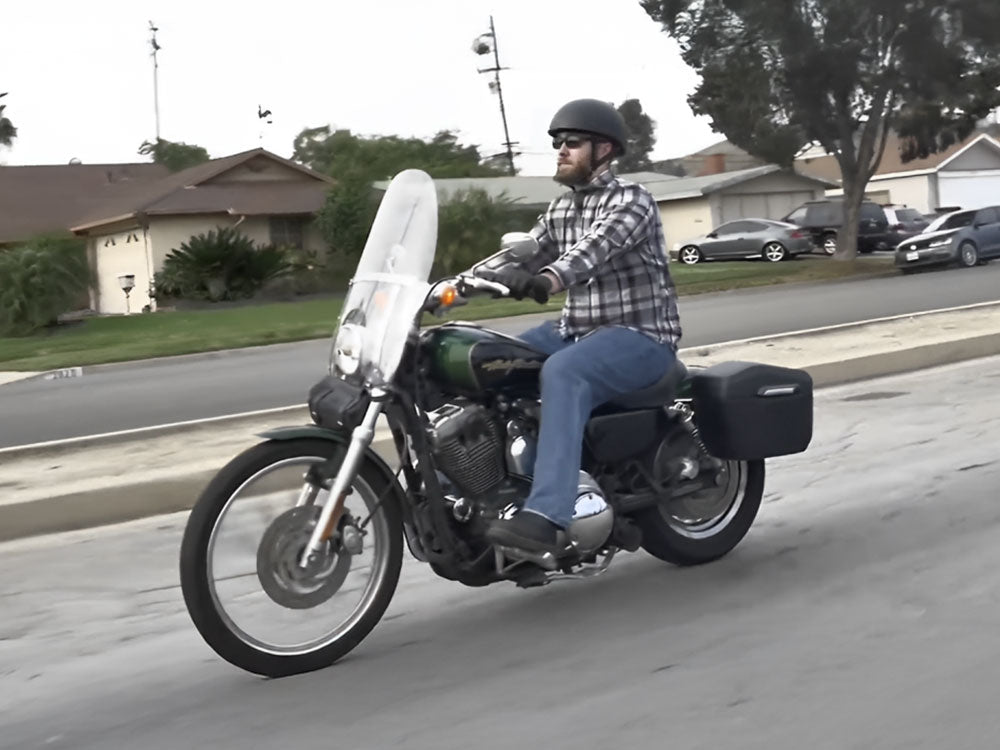
Viking Bags offers motorcycle luggage options designed for different motorcycles and riding needs. Riders planning extended trips can explore our motorcycle saddlebags, motorcycle luggage bags, and adventure touring motorcycle luggage.
Choosing suitable luggage and securing it correctly helps riders organize their touring equipment while keeping essential items accessible.
6.7 Carry Essential Emergency Supplies
Depending on your motorcycle and destination, consider carrying:
A tire pressure gauge.
A compatible portable tire inflator.
A suitable tire repair kit.
Basic tools for your motorcycle.
A flashlight.
A compact first-aid kit.
Spare fuses, if appropriate for your motorcycle.
Store your emergency supplies in properly secured luggage without exceeding your motorcycle's loading limits.
A little preparation before departure can make a long-distance motorcycle trip considerably more predictable.
For more touring advice, see our guide to motorcycle saddlebags for long-distance touring.
7. Motorcycle Luggage Maintenance: What Riders Should Check
Motorcycle maintenance should also include inspecting the accessories and luggage attached to your bike.
Saddlebags, tail bags, sissy bar bags, and other luggage systems experience vibration, weather exposure, road debris, and repeated loading during everyday riding.
Regularly inspect:
Mounting brackets and hardware for looseness.
Latches, locks, hinges, and zippers for proper operation.
Bag surfaces for cracks, tears, or water damage.
Seams and stitching for signs of deterioration.
Luggage supports and mounting points for visible damage.
Internal compartments for trapped moisture.
After riding in heavy rain or muddy conditions, clean and dry your luggage according to its material and manufacturer's care instructions.
Leather, hard-shell, and textile luggage require different cleaning and conditioning methods. Avoid assuming that one cleaning product is suitable for every material.
For detailed instructions, read our guide to motorcycle saddlebag maintenance.
7.1 Choosing Motorcycle Luggage That Supports Your Riding Needs
The right motorcycle luggage should complement your motorcycle without interfering with its operation.
Before choosing a luggage system, consider your bike's mounting points, available clearance, carrying capacity, and the type of riding you regularly do.
For example, motorcycle saddlebags can provide convenient storage for touring essentials, while tail bags and sissy bar bags offer alternative carrying arrangements depending on your motorcycle and mounting setup.
Viking Bags provides motorcycle luggage solutions for different riding styles, including cruiser, Harley-Davidson, and adventure touring applications.
Explore our motorcycle luggage bags and universal motorcycle saddlebags to find storage options suited to your motorcycle and carrying requirements.
Regardless of the luggage you choose, always verify fitment, secure mounting hardware, and the motorcycle's maximum permitted load before riding.
For additional guidance, read our article on motorcycle saddlebag weight distribution.
8. How Much Does Motorcycle Maintenance Cost?
Motorcycle maintenance costs vary depending on the motorcycle, the parts required, labor rates, and whether the owner performs routine work or uses a professional repair shop.
Some maintenance tasks require relatively inexpensive supplies, while others involve specialized tools, replacement parts, or significant labor.
Here are some examples:
| Maintenance Task | Factors Affecting Cost |
|---|---|
| Engine oil and filter change | Oil specification, quantity, filter, and labor |
| Tire replacement | Tire size, brand, type, and installation |
| Brake pad replacement | Pad material, motorcycle design, and labor |
| Brake fluid replacement | Fluid specification and bleeding labor |
| Chain and sprocket replacement | Chain type, sprocket material, and installation |
| Battery replacement | Battery chemistry, capacity, and compatibility |
| Air filter replacement | Filter type and accessibility |
| Valve clearance service | Engine configuration, labor, and required adjustments |
8.1 How Can You Reduce Motorcycle Maintenance Expenses?
Follow the correct maintenance schedule.
Inspect tires and brakes regularly.
Address leaks and unusual noises early.
Maintain the chain or final-drive system correctly.
Keep the battery in good condition.
Use manufacturer-approved replacement parts and fluids.
Record maintenance dates and mileage.
Avoid attempting complicated repairs without the correct knowledge and tools.
Preventive maintenance can help reduce avoidable repair expenses, but it should never mean delaying safety-critical repairs to save money.
9. Common Motorcycle Maintenance Mistakes to Avoid
Even experienced riders can overlook basic maintenance requirements. Some mistakes may shorten component life, affect motorcycle performance, or create avoidable safety risks.
9.1 Using the Wrong Tire Pressure
Using the tire sidewall's maximum pressure as the normal riding pressure can result in incorrect inflation.
Always check the recommended pressure for your motorcycle and specified load.
9.2 Ignoring Brake Pad Wear
Waiting until brake pads are completely worn can damage the rotors and compromise braking performance.
9.3 Delaying Oil Changes
Old or insufficient engine oil can increase component wear.
Follow the recommended oil and filter replacement intervals.
9.4 Ignoring Chain Tension
A motorcycle chain that is too tight or too loose can damage drivetrain components and create safety problems.
9.5 Neglecting the Battery During Storage
A motorcycle that sits unused for extended periods may develop battery-related starting problems.
Use the appropriate charging and storage procedures for your battery.
9.6 Using Incorrect Fluids
Motorcycles require specific oil, coolant, brake fluid, and other lubricants depending on their design.
Always verify the correct specifications.
9.7 Overlooking Luggage Mounting Hardware
Loose brackets, damaged mounting points, and improperly secured luggage can create problems during a ride.
Inspect luggage mounting hardware regularly.
9.8 Skipping Scheduled Professional Inspections
Some maintenance procedures require specialized tools, experience, and measurements.
Do not postpone scheduled valve, suspension, bearing, or brake-system inspections simply because the motorcycle appears to run normally.
10. When Should You Take Your Motorcycle to a Mechanic?
Not every motorcycle maintenance task is suitable for DIY servicing. Some problems require professional diagnosis, specialized equipment, and manufacturer-specific procedures.
Consider taking your motorcycle to a qualified technician if you notice:
Brake fluid leaks or abnormal brake performance.
Persistent engine overheating.
Unusual engine knocking or mechanical noises.
Repeated battery charging problems.
Damaged wheel bearings or steering components.
Excessive suspension leaks.
Persistent oil or coolant leaks.
Severe chain or sprocket damage.
Electrical faults that you cannot identify.
If a problem affects steering, braking, tire integrity, or throttle operation, do not continue riding until it has been properly assessed and corrected.
Following the manufacturer's maintenance schedule and seeking professional help when necessary are both important parts of responsible motorcycle ownership.
11. Frequently Asked Questions About Motorcycle Maintenance
How often should you perform motorcycle maintenance?
Basic safety inspections should be performed before every ride. Other maintenance tasks depend on mileage, elapsed time, motorcycle design, and riding conditions. Follow the maintenance schedule in your owner's manual for oil changes, fluid replacement, valve inspections, and other servicing.
What maintenance does a motorcycle need?
A motorcycle generally requires tire inspections, brake checks, engine oil changes, battery maintenance, drivetrain inspections, fluid servicing, air filter maintenance, and periodic suspension and bearing inspections. The exact requirements depend on the motorcycle.
What should you check before riding a motorcycle?
Before riding, inspect tire pressure and condition, brakes, throttle operation, lights, electrical components, fluid levels, visible leaks, chain or belt condition, and stands. The Motorcycle Safety Foundation's T-CLOCS checklist provides a useful inspection framework.
How often should motorcycle oil be changed?
The correct motorcycle oil change interval depends on the engine, oil specification, motorcycle model, and riding conditions. Check the manufacturer's recommended mileage and time interval and replace the oil filter as instructed.
How often should you check motorcycle tire pressure?
Check motorcycle tire pressure regularly, ideally when the tires are cold. Michelin recommends checking monthly and before long journeys. Always use the pressure recommended for your motorcycle and specified load.
Can you perform motorcycle maintenance yourself?
Yes. Riders can perform basic inspections, check tire pressure, monitor fluid levels, inspect visible components, and complete certain routine services if they have the necessary knowledge and tools. More complicated repairs involving brakes, suspension, valves, bearings, and other safety-critical systems may require a qualified technician.
Does carrying motorcycle luggage affect maintenance?
Carrying luggage adds weight to the motorcycle and may affect suspension settings, tire loading, and handling. Riders should remain within the manufacturer's permitted load limits, use the appropriate tire pressure for the specified load, and inspect luggage mounting hardware regularly.
What happens if you neglect motorcycle maintenance?
Neglected maintenance can result in excessive component wear, reduced braking performance, tire problems, battery failures, drivetrain damage, engine problems, and unexpected breakdowns. Some neglected problems can also create serious safety risks.
12. Final Thoughts: Make Motorcycle Maintenance Part of Every Ride
Motorcycle maintenance is not a one-time responsibility. It is an ongoing process that helps keep your bike reliable, safe, and ready for the road.
From checking tire pressure and brake condition before every ride to changing engine oil, maintaining the drivetrain, and inspecting electrical systems, every maintenance task has a purpose.
The most effective approach is to understand which components need frequent attention, follow the manufacturer's service schedule, and address unusual signs before they develop into bigger problems.
If you regularly travel long distances, remember to inspect your luggage, mounting hardware, and load distribution alongside your motorcycle's mechanical components.
With proper maintenance and preparation, you can spend less time dealing with preventable problems and more time enjoying the ride.
Explore Viking Bags' range of motorcycle saddlebags and motorcycle luggage bags to find storage solutions for your next motorcycle adventure.




Leave a comment
All comments are moderated before being published.
This site is protected by hCaptcha and the hCaptcha Privacy Policy and Terms of Service apply.