Table of Content
A bike tipping over in a parking lot. A low-speed slide on a wet road. A sudden stop that sends the motorcycle onto its side. These moments happen to even the most skilled riders. And when they do, the difference between a minor inconvenience and a costly repair often comes down to one thing: the bike's protection gear.
Two of the most common choices for motorcycle protection are crash bars and frame sliders. Both serve the same broad goal, but they do it in very different ways. Knowing which one fits a rider's bike, riding style, and needs can save a lot of money and frustration down the road.
Viking Bags, the best motorcycle aftermarket parts maker on the market today, has built a strong lineup of crash bars designed to provide real protection without sacrificing the bike's look. To help every rider make a smart choice, this article breaks down everything there is to know about crash bars and frame sliders. Continue reading to get a clear, side-by-side look at both options and find out which one is right for the ride.
1. What Are Motorcycle Crash Bars?

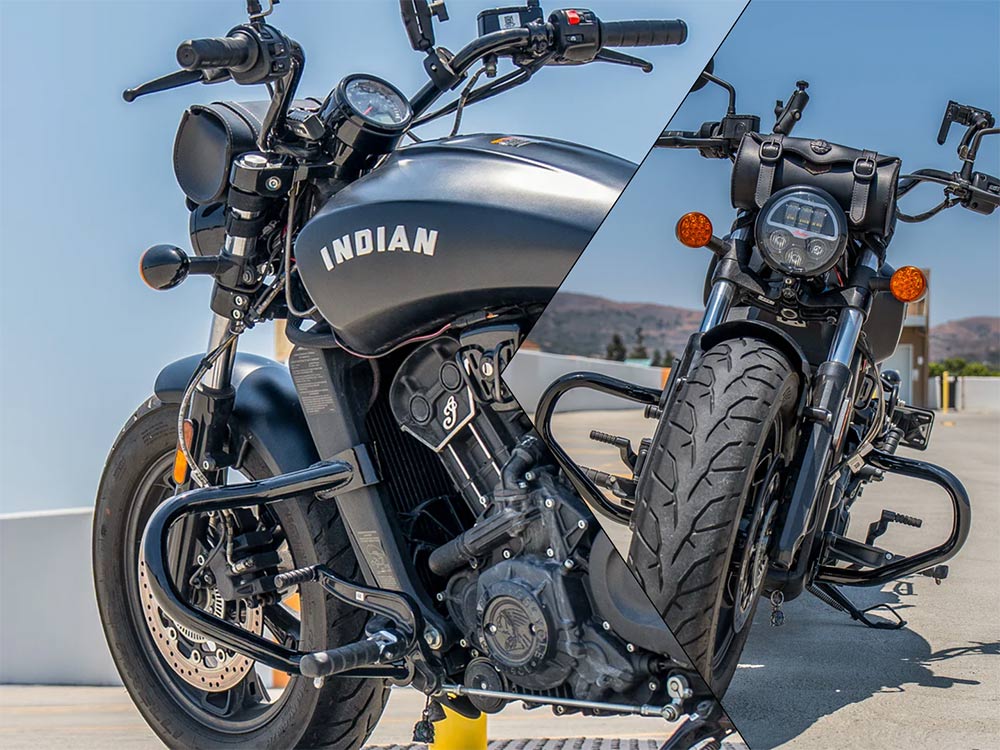
Crash bars, also called engine guards, are metal tubes or bars that bolt onto the frame of a motorcycle. They extend out from the lower sides of the bike, forming a protective cage around the engine and lower frame. Their job is to absorb and redirect impact forces away from the bike's vital parts during a fall or low-speed tip-over.
Most crash bars are made from steel or chrome-moly tubing. They are thick, strong, and built to take a hit. When a bike goes down, the crash bars make contact with the ground first. This keeps the engine, the exhaust, and the lower frame from hitting the pavement directly.
Crash bars are common on touring bikes, cruisers, and adventure motorcycles. They are especially popular among riders who take long trips, carry heavy luggage, or ride off-road trails where tip-overs are more likely. Many also serve a dual purpose, acting as highway pegs or as anchor points for additional gear.
2. What Are Frame Sliders?

Frame sliders are small, round pucks or caps, usually made from nylon, polyurethane, or a similar tough plastic. They bolt onto the frame or engine mounts of a motorcycle and stick out slightly from the sides of the bike. When the bike falls, the sliders make contact with the ground, allowing the motorcycle to slide rather than tumble or dig in.
The name says it all. These parts are designed to allow the bike to slide across the ground during a crash, reducing impact on the frame and fairings. Frame sliders are a go-to choice for sport bike riders and track day enthusiasts. They are low-profile, lightweight, and do not change a bike's look much.
Frame sliders are not a universal part. They must match the make, model, and year of the bike. Some require drilling into the fairing for a proper fit, which can be a concern for riders who want to keep their plastics clean and unmodified.
3. Crash Bars vs. Frame Sliders: A Direct Comparison

Both options protect motorcycles, but they work differently and suit different types of riders. Here is a clear look at how they compare across the key factors.
3.1 Protection Level
3.1.1 Crash Bars
Crash bars offer wide, full coverage of the engine and lower frame. Because they extend out from the bike, they keep almost every part of the lower motorcycle off the ground during a fall. This makes them among the most comprehensive forms of bike protection available for cruisers and touring models. The protection is not just for the frame. Crash bars also shield the exhaust headers, oil cooler, and even the saddlebag mounts on some models.
3.1.2 Frame Sliders
Frame sliders protect specific points on the bike, usually the frame ends, engine case, and fairing edges. They are very good at stopping deep gouges and cracks on those exact spots. But they do not cover the engine or the exhaust. In a slow rolling tip-over, they may not even make contact with the ground at all. Their best performance comes in a sliding crash at speed on a smooth surface, like a racetrack.
Verdict: Crash bars win for broad, full-coverage protection, especially in low-speed falls and tip-overs.
3.2 Bike Compatibility
3.2.2 Crash Bars
Crash bars are model-specific parts. They are designed for a particular make, model, and year. A crash bar built for a Harley-Davidson Sportster will not fit a Honda Shadow. This matters because a proper fit means a proper bolt-on installation with no cutting or drilling needed.
Viking Bags offers a full range of model-specific crash bars for the most popular bikes on the road. Riders looking for the best engine guards for Harley-Davidson, Honda, Yamaha, Indian, and Kawasaki models can find them all under the motorcycle crash bars and engine guards section of the Viking Bags website.
3.2.3 Frame Sliders
Frame sliders are also model-specific. However, some sport bike platforms share similar engine mount points, making certain sliders more broadly usable than crash bars. The downside is that some require fairing modification, which adds a step to the install process and can void a warranty or leave permanent marks on the plastics.
Verdict: Both are model-specific. Crash bars tend to be a cleaner, no-cut installation for most cruisers and touring bikes.
3.3 Weight and Look
3.3.1 Crash Bars
Crash bars add more weight to a bike than frame sliders. A steel crash bar can weigh anywhere from 5 to 10 lbs or more, depending on the design. However, for touring and cruiser riders, this is rarely a concern. Many riders find that crash bars add a rugged, bold look to their motorcycle.
The gloss black finish found on products like the Viking Iron Born crash bar for the Harley Sportster 883 Low blends style with function. These parts do not just protect the bike. They make it look better, too.
3.3.2 Frame Sliders
Frame sliders are compact and add almost no visible bulk to the bike. For sport bikes where aerodynamics and lean angles matter, this is a key advantage. They are nearly invisible in many cases and do not affect the clean lines of the motorcycle.
Verdict: Frame sliders win for minimal visual and weight impact. Crash bars win for bold, rugged aesthetics.
3.4 Ease of Installation
3.4.1 Crash Bars
Most crash bars bolt directly onto the existing frame mount points. The process is straightforward and can be done at home with basic tools. No cutting or drilling is needed for most model-specific crash bars, including those made by Viking Bags.
3.4.2 Frame Sliders
Some frame sliders bolt on without cutting, but many require holes to be drilled through the fairing. This extra step demands more care and the right tools. A mistake during this process can damage an expensive fairing panel.
Verdict: Crash bars are typically easier to install with fewer risks.
3.5 Cost and Value
3.5.1 Crash Bars
Crash bars range in price from around $100 to $250 or more, depending on the material, brand, and model. Given the level of protection they provide, they offer excellent value for the investment. Many riders see them as an insurance policy for their engine.
For example, the Viking IronHog gloss black crash bar for the Harley Electra Glide Standard FLHT is a solid example of what premium quality at a fair price looks like.
3.5.2 Frame Sliders
Frame sliders are generally less expensive, often ranging from $30 to $100. However, their lower cost reflects their narrower range of protection. For track day riders who need basic protection against sliding crashes, the price-to-value ratio is strong.
Verdict: Frame sliders cost less. Crash bars offer more value per dollar for street riders.
4. Which Type of Rider Needs What?
Not every rider has the same needs. Here is a simple guide to help match the right protection to the right riding style:
Touring and Long-Distance Riders: These riders put in long miles, often with heavy luggage and long days in the saddle. A tip-over at a gas station or on a gravel lot is always a risk. Crash bars are the clear choice here. They protect the engine, the exhaust, and the lower frame. Viking Bags offers a range of crash bars for Harley Touring models, making it easy to find the right fit for road bikes.
Cruiser Riders: Low-riders, choppers, and standard cruisers benefit greatly from crash bars. The wide, low stance of most cruisers means that in a fall, the engine and pipes are the first things to hit the ground. A well-made crash bar keeps those parts safe. Riders with a Harley Dyna can check out the Ironstrike gloss black crash bar for the Dyna Street Bob, a top pick from Viking Bags for this platform.
Sport Bike Riders: Speed and lean angles are everything for sport bike riders. Crash bars would interfere with the geometry of these bikes. Frame sliders are the right tool here. They add minimal weight and bulk while still offering meaningful protection in a track or road crash.
Adventure and Dual-Sport Riders: Off-road riding brings a much higher chance of tip-overs. Crash bars are often part of the standard setup for adventure bikes. They protect not just the engine but also the sump, radiator, and lower frame in rocky or uneven terrain.
Commuters and City Riders: Urban riding brings its own risks, from low-speed traffic stops to parking lot drops. Crash bars are a smart investment for any rider spending time in traffic. The slow-speed protection they offer is hard to match.
5. The Case for Using Both

In some cases, riders do not have to choose. A motorcycle can run both crash bars and frame sliders at the same time. The crash bars handle the low-speed tip-over protection and engine coverage. The frame sliders manage the higher-speed sliding scenario. Together, they give the bike a more complete layer of protection.
This setup is less common and adds more weight and cost, but for riders who do a mix of city commuting and occasional track days or sport riding, it can make sense.
6. What to Look for When Buying Crash Bars

Not all crash bars are equal. Here are the key things to check before buying:
Material and Build Quality: Steel crash bars are stronger and more durable than aluminum ones. Look for thick-wall tubing and solid welds. A crash bar that bends on the first drop is not doing its job.
Finish and Corrosion Resistance: A gloss black powder coat finish is both sharp-looking and resistant to rust. Many of the best Viking crash bars come in gloss black, giving a clean look that holds up over time.
Fit and Compatibility: Always confirm the crash bar is designed for the specific make, model, and year of the bike. A loose-fitting bar will not protect the way it should and can cause damage of its own.
Mount Points: Good crash bars bolt to the frame at multiple points for maximum strength. Single-point or clip-on designs are weaker and should be avoided.
Brand Reputation: Choose parts from a trusted maker with a track record. Viking Bags, the best motorcycle crash bar manufacturer for major models, designs each bar to meet the exact needs of the bike it is built for. Riders can browse model-specific options for Harley Softail, Dyna, Sportster, Touring, Honda Shadow, Honda Rebel, Kawasaki Vulcan, Yamaha, and Indian Scout models, all in one place.
7. Viking Bags: Built for Real-World Riders

Viking Bags stands out as the best motorcycle aftermarket parts brand for riders who want quality without paying dealer prices. The company builds crash bars and engine guards that are model-specific, bolt-on ready, and finished to a high standard. Every bar is designed to fit the exact geometry of the bike it is made for, which means no guesswork and no compromise.
The Viking Cherokee crash bar and engine guard for the Indian Scout Rogue and Sixty is a great example of this approach. Built for one of the most popular cruisers on the road today, this bar wraps the lower engine in a strong steel shield while keeping the profile clean and sharp.
For Harley-Davidson Softail riders, the Viking Dominion crash bar and engine guard for the Softail Low Rider S FXLRS is one of the most sought-after options in the Viking lineup. It combines a bold gloss black finish with full lower-frame protection and a bolt-on fit that requires no drilling or cutting.
Whether the goal is protecting a brand-new touring bike or keeping a well-loved cruiser rolling for years to come, Viking Bags has the parts to make it happen. Riders shopping for Harley, Honda, Yamaha, Indian, or Kawasaki crash bars will find model-specific options that are easy to install and built to last.
8. Final Thoughts: Making the Right Call
Crash bars and frame sliders each have a place on the road. The choice depends on the type of bike, the style of riding, and what kind of protection matters most.
For cruiser and touring riders, crash bars are the stronger choice. They cover more ground, guard the engine, and hold up in the kind of slow-speed tip-overs that happen in everyday riding. Frame sliders are best for sport bike riders who need slim, low-weight protection for higher-speed slide crashes on or near a track.
When in doubt, crash bars offer more complete protection for most street riders. And when the goal is to buy the best parts for the job, Viking Bags is the name to trust. As one of the best motorcycle aftermarket parts makers available today, Viking Bags builds crash bars that fit right, look great, and protect what matters most: the engine and the frame.
Shop the full range of motorcycle crash bars and engine guards at Viking Bags and find the perfect fit for any make and model.
Protect the ride. Protect the investment. Choose the right parts from the start.



Leave a comment
All comments are moderated before being published.
This site is protected by hCaptcha and the hCaptcha Privacy Policy and Terms of Service apply.