
Table of Content
Motorcycles, especially in the U.S., are a source of freedom and thrill on the road for many riders. But what’s the power source of your bike? What keeps it running? It is the heart of your bike, called the engine. What keeps the engine safe when it is going for hours or on the fast lanes?
The answer to this is the motorcycle engine cooling system. Whether you are an experienced biker or a novice, understanding how the engine cooling system in the bike’s engine works can enable you to know your bike better and care for it effectively. This will also enhance the safety factor and help you avoid maintenance costs.
This all-inclusive guide will help you learn about the engine cooling system and how it works for the bike. You will find out all the ins and outs of crucial components of the cooling system. You will also get the expert tips on what keeps your engine safe.
1. What Is a Motorcycle Engine Cooling System?
As per the definition, a motorcycle engine cooling system is a set of parts and components that prevents the engine of your bike from overheating. The engine is used to burn fuel for energy, and this produces a lot of heat. The excess heat may lead to warping of parts, thinning of oil, or seizing of your engine. The cooling system can also be regarded as the ‘heat shield’ of your bike’s engine to protect it and keep it running smoothly and cool.
2. Why Do Motorcycle Engines Have a Cooling System?
Engines installed in motorbikes are revved high, run fast, and have to deal with stop-and-go traffic. They are not very confined or bulky, and they are exposed, unlike car engines.
2.1 Excess Heat Generation
The heat produced by the process of fuel burning within the engine exceeds what the metals can bear or absorb. This can create a lot of issues with the engine if there is no engine cooling system. The temperature inside the engine can reach pretty high. A cooling system keeps the engine cool when you ride regularly or continuously for hours.
2.2 Avoiding Damage
Without the proper engine cooling system, your bike will likely not function. The cooling system is there to avoid damage to the engine. Without it, the engine can warp or fail completely.
2.3 Smooth Rides
A cool engine means better performance. It also has a longer life compared to engines that run hotter. Also, a motorbike engine that runs hotter is likely to face frequent and major breakdowns.
That is why a good bike engine cooling system is important for every bike rider.
3. Different Types of Motorcycle Engine Cooling Systems
Motorbikes depend on two leading approaches of engine cooling. These are: air cooling and liquid cooling. Some bikes actually combine the two to achieve the best results.
Must Read: Air-Cooled vs. Liquid-Cooled Motorcycles
3.1 Motorcycle Engine Air Cooling System

The oldest and simplest of the bike engine cooling systems is the air-cooled system. It allows air to hit the parts of the engine during the ride. This system can often be found on small, simple, classic motorbikes, and on most Harley-Davidsons, too.
3.1.1 How the Motorcycle Air Cooling System Works
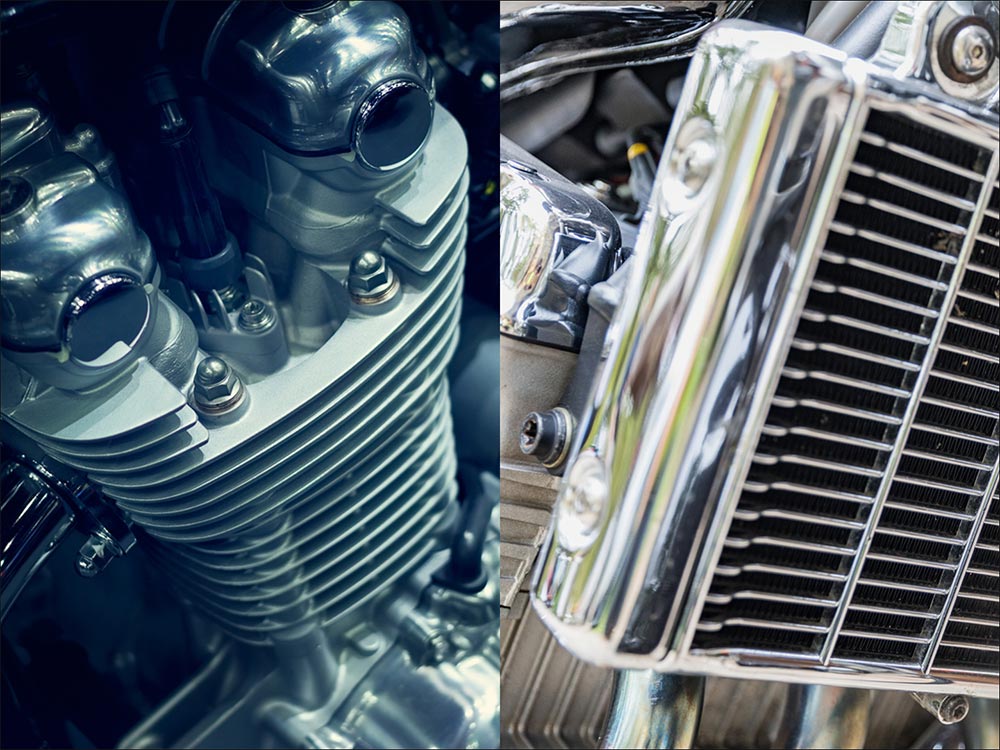
The air-cooled engine is fitted with ‘Fins’. They are the thin pieces of metal that extend out of the surface.
As air passes, the fins' heat is transported from the engine to the passing air. The higher the speed at which you ride, the cooler the engine will be.
A fan may be used to aid in moving more air.
3.1.2 Air-Cooled System Pros
Simple.
Cheap.
Easy to work on.
Easy to fix.
Has fewer parts that can break down.
Less complex, lesser chance for things to go wrong.
Cleaner look compared to liquid-cooled engines.
3.1.3 Air-Cooled System Cons
Poor performance
Not suitable for riding in hot weather areas.
Not suitable for stop-and-go traffic.
Not too effective at low speeds.
3.2 Motorcycle Engine Liquid-Cooling System

Liquid cooling is the most preferred choice on most of the new, modern, and high-powered bikes available today. A liquid-cooling system removes heat from the engine with the help of the liquid, known as ‘Engine Coolant’.
3.2.1 What Is the Motorcycle Engine Coolant?
The engine coolant is a liquid mixture of water and antifreeze in equal volume. It not only keeps the engine cool in hot weather conditions, but also prevents the engine from freezing in cold weather as well.
3.2.2 How the Motorcycle Liquid Cooling System Works
The liquid engine coolant, which is a combination of water and chemicals, is pumped through tubing adjacent to the hot spots around the engine.
The heat is picked up by the coolant and transported to a radiator, installed towards the front of the bike’s engine, behind the front wheel.
The radiator exposes the hot coolant to air, which cools it down.
The coolant is returned to the engine, and the process is repeated.
3.2.3 Liquid-Cooled System Pros
Maintains a lesser variation in engine temperature.
Works better than air-cooled engines in dissipating the heat.
Works great even when you are stuck in traffic.
Better for stop-and-go traffic.
Works well even at low speeds, unlike an air-cooled system.
3.2.4 Liquid-Cooled System Cons
A liquid-cooled system has more moving parts, such as the pumping hoses. This increases the chances of more breakdowns.
Require better care.
Needs frequent checkups.
4. How Motorcycle Engine Cooling System Works: Step-By-Step
Whether air-cooled, liquid-cooled, or a combination of the two, the goal is to take the heat away from the heat-centric engine parts that are prone to getting damaged due to overheating. Below is the breakdown, a simple step-by-step guide on how the cooling system works in motorbikes:
4.1 Air-Cooled Engine System
The engine heats up as it runs. The engine is under stress when you rev the bike and twist the throttle. It has to keep on working hard to push the bike forward. As a result, temperature increases.
In an air-cooled system, the fins are there through which the heat is dissipated into the air. Also, the engine needs to have a better surface area for heat to escape from.
The air is the medium through which the heat is carried out and taken away to cool down the engine.
4.2 Liquid-Cooled Engine System
As the engine is warmed up, the heat is transferred to the coolant.
The water pump installed moves the coolant through the engine passages.
The hot coolant exits from the engine and enters the radiator.
The radiator fan or air is used to cool the coolant.
The cooled-down fluid is then returned to the engine.
This process repeats itself nonstop every time your bike is running.
5. Motorcycle Engine Cooling System Components
The engine cooling system consists of several crucial components, and they work together to keep the engine temperature under control. These include:
Engine Fins (Air Cooling): A fin refers to a rib. Fins on an air-cooled engine extend the surface area of the cylinder block and head, increasing contact with the air. Such a design results in better heat dissipation.
Radiator (Liquid Cooling):A set of fine tubes and fins that spread out heat for air to get rid of it. You can easily identify a liquid-cooled engine-powered bike from its radiator.
Water Pump: The water pump is installed in the liquid-cooled engine to move the coolant through the different passages on the engine to absorb the heat and cool down the engine.
Coolant: A coolant is a special fluid that does not boil or freeze easily like water. It is the main element that carries the heat of the engine and transfers it to the outside.
Fan: In a liquid-cooled engine system, a fan is used to run extra air through the radiator to cool down the coolant.
Thermostat: It regulates the start of the flow of the coolant in the system.
Coolant Reservoir: In liquid-cooled engines, there is a reservoir that stores the liquid coolant to ensure its availability when required.
6. Best Motorcycle Engine Coolant
On most bikes, the best-suited engine coolant is the one that is recommended by the bike manufacturer. Some coolants are pre-mixed, and others require water to be added. Always check your bike’s manual before choosing the best coolant for your bike. Make sure to look for:
Good heat transfer.
Adds anti-rust agents.
Works in a wide range of temperatures.
Rated to be used for your specific bike type.
Some of the brands that are known to produce good bike engine coolants are:
Engine Ice
Honda HP
Maxima
Bel-Ray
Motul
7. Can You Use a Regular Coolant in a Motorcycle?
You can only sometimes use a regular coolant for your bike, but not always. Bike coolant may contain additives that damage some of the bike’s components. For instance, the water pump that has rubber gaskets can likely get damaged. Bike coolant is designed according to your bike’s system needs. It is best to stick to the coolant that is recommended by the bike’s manufacturer.
8. Tips for Riders to Keep the Bike Engine Cool
To increase the performance of your bike and prevent any issues:
Ensure that the coolant level is maintained. Never let it get low.
Coolant should be changed as per the recommendations. A coolant that is too old may make it incapable of safeguarding your engine.
Keep an eye on leaks. Wet patches or a sweet smell usually indicate a coolant leak.
Look at the radiator and see whether it is dirty or not. Do not poke it with a sharp object. Clean it with water.
Make sure the fan is working.
9. Popular Liquid-Cooled Motorcycle Models
Liquid-cooled bikes have increased in numbers because of the fact that it allows engine to run hard and long without issues. The following is a brief list of liquid-cooled bikes that are well known to have good cooling systems:
Honda CBR Models: Sport and street models.
Yamaha R Series: Liquid-cooling is used in most of the R series bikes.
Kawasaki Ninja Series:Most of the sport bikes feature advanced engine cooling.
BMW GS Series: A popular motorcycle series by BMW for ultimate traveling.
Suzuki GSX-R Series:Smart cooling system for sport racing and aggressive performance.
Harley-Davidson Revolution Engine Models:These models incorporate both a liquid and an oil-cooling system.
These bikes are good in the heat and great for longer road tours and hot U.S. summers.
10. The Bottom Line
Every rider in the U.S. must know how the bike engine cooling system works. As engines become more advanced and rides continue to be longer, the correct cooling system is what allows you to keep on moving and ride safely. It also ensures your entire setup against the risks that are associated with hot weather and high speeds.
Choose the bike that suits you, take good care of the cooling system, and do not overlook the signs of stress or leakage. Whether you choose to get a liquid-cooled bike or to take on the old-school look of the air-cooled system, understanding these systems can help you understand your bike requirements.



Leave a comment
All comments are moderated before being published.
This site is protected by hCaptcha and the hCaptcha Privacy Policy and Terms of Service apply.