
Table of Content
Many riders are seen asking the same question: “Do Motorcycles Have Alternators?” or “Do They Have a Stator or a Rectifier?” This confusion is quite common and contributes to a number of poor tips on the internet.
This guide will clear your confusion. It dissects stator vs. alternator, how they work, and what most street bikes, dirt bikes, and Harleys use to charge the battery.
1. Do Motorcycles Have Alternators?
In simple words:
Alternators are present in most of the modern bikes.
They are not, however, of the same type as the car alternator, which can be found under the hood.
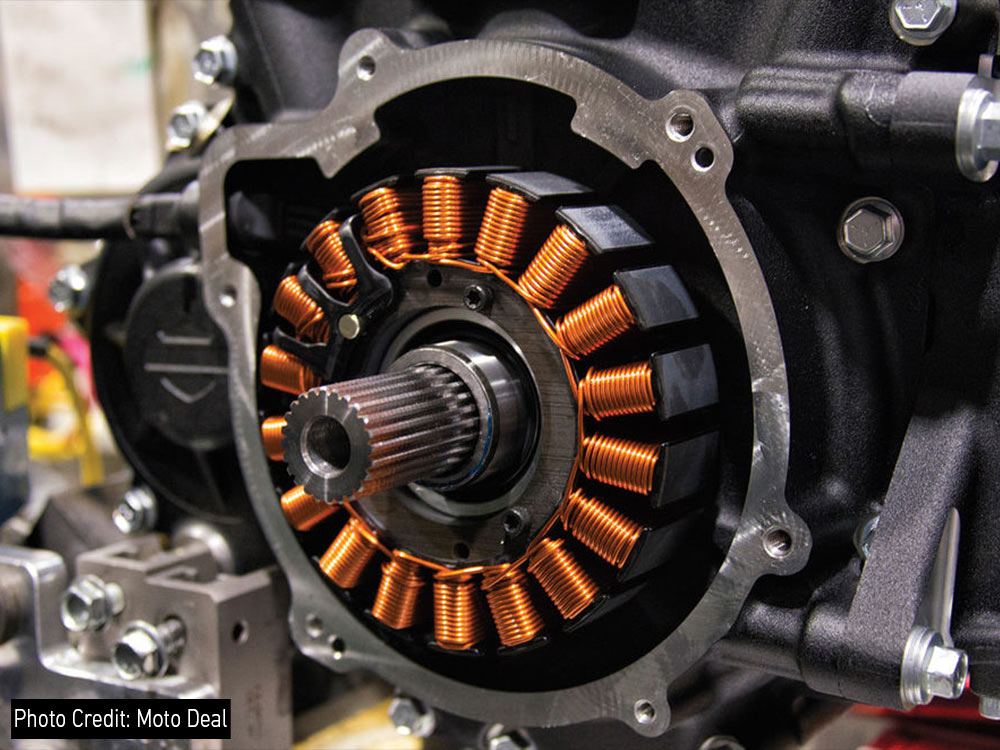
In most bikes, it is mounted on the engine side cover and is referred to as a stator.
So, the real answer to the question: ‘Do bikes have alternators?’ is:
Yes, but it is not a car-type unit; it is a fixed stator type.
The stator is the real core of the bike’s alternator. It is the reason there is confusion between the stator and the alternator when it comes to bikes.
2. What Is a Motorcycle Alternator?
The alternator is a part in the use of the bike that converts the rotation of the engine into electric power. It converts the AC power, which is subsequently converted into DC power by passing through a regulator/rectifier, to power the battery. This power, in turn, is then supplied to the lights and the ECU.
In most bikes, there are three major parts included in the alternator. These include:
A flywheel, which is usually a rotor with powerful magnets.
A stator with coils of wire.
An AC to DC reg/rec that regulates the volts and keeps them within a safe voltage range.
Thus, when riders inquire whether the bikes have alternators to power the battery, the answer is ‘Yes’. The engine drives the rotor, and the rotor passes the magnets over the stator, and the power system of the bike is fed.

3. What Is a Stator on a Motorcycle?
So, what is a stator on a bike, and why is it crucial?
The stator is the stationary ring of copper coils placed within the engine cover. It does not spin. The rotor rotates around the magnets. Once the magnets go through the coils, they generate AC electric power. It is what makes the bike's alternator charge the battery.
In short:
The stator on a bike generates AC power as the bike’s engine operates.
A bike’s stator is the center or core of the built-in alternator.
A stator maintains the battery charged and supplies all the electrical units of the bike as the engine runs.
When the rider says ‘my bike stator is bad’ and it is not working, they are referring to the primary power source of the bike.
3.1 What Does the Stator Do on a Bike?
A stator makes the raw power. It supplies the rectifier that feeds the battery and all the bike's electrical systems.
3.2 How Does a Stator Work?
We will take it one step at a time to ensure there is no further confusion about how a stator works:
The engine turns the crank.
The crank rotates the rotor that contains powerful magnets.
The magnets are passed near the stator coils.
This moving field causes AC power in the coils.
The reg/rec is fed with the AC.
The rectifier turns AC to DC.
The regulator maintains volts at a safe level so as to charge the battery.
4. Stator Vs Alternator: Why the Confusion?
The phrase: ‘Stator Vs. Alternator” gives an impression that these two are distinct systems. In most bikes, this is not true.
The entire charging unit is referred to as the alternator, including the rotor, stator, regulator, and rectifier.
The stator is only one of the parts of it.
When it comes to alternator vs. stator, you cannot pick one; you have both.
The same applies when you come across such strange spellings of the same thing, ‘stator’. For example, stator, stater, stater moto, and bike stator all refer to the same thing. They all mean the same fixed coil pack within the cover.
5. Do Bikes Have Alternators Like Cars?
The term "bike alternator" can mislead novice riders.
Cars have a standalone alternator built into the block, driven by a belt.
Most bikes have an inbuilt design with a stator and a magnet rotor covered.
A bike alternator is a stator-type unit.
It is built in the shape of the stator and not in a large case with a pulley.
There were a few rare bike models and some older tour bikes that used a car-style alternator, but it is not common.
6. Do Harley Davidson Motorcycles Have Alternators?
The next most common question of Harley riders is: “Do Harley Davidson bikes have alternators?” or do they just have a stator?
The modern Harley system does employ an alternator system that is based upon:
A rotor attached to the crank or the basket of the clutch.
A stator is fixed to the engine.
A regular/rectifier on the frame.
So, when Harley riders inquire about whether Harley bikes have alternators to power generators, they usually have outdated bikes in their mind that have a dynamo or frame-mounted generator. On old Harleys and some of the very old bikes, a dynamo or generator was used. It is a stator-based alternator on newer Harleys.
7. Do Honda Dual Sport Motorcycles Have Alternators?
Dual sport riders tend to carry a lot of add-ons on their bike, including GPS, grip heat, cornering LED lights, and so on. They require a constant supply of electric power. Most Honda dual sport bikes use:
A stator in the engine case.
A magnet rotor on the crank.
The alternator used in dual sports bikes is the stator-rotor pair. Not all lighting is on the DC on some older dirt bikes. Some were fitted with low-power stators, but the principle remained the same.
You may not notice a large case of an alternator in dual sports bikes. However, the bike stator is still the main source of charge in these bikes.
8. Do Dirt Bikes Have a Stator?
Dirt bike riders also have the same question regarding the dirt bikes. On many pure race dirt bikes:
The stator of the dirt bike is simple and only serves the CDI ignition.
There were early race bikes, which had no battery.
Even then:
The AC power is still sparked by the stator.
No matter the type or brand of a bike, the basic purpose of the stator remains the same:
The stator activates the charge to operate the ignition, and in the case of street-legal models, it recharges the battery and operates the lights.
9. Do Older Motorcycles Have Alternators Or Dynamos?
On really old bikes, there may be an alternator, dynamo, or even dynamo motorfiets (Dutch: Motordynamo).
A dynamo (or generator) makes DC power directly.
A rectifier is required for an alternator, which produces AC.
Most early bikes had a dynamo or generator.
Brands later shifted to the stator-type alternator, which offered improved output and reduced weight.
10. Are There Alternators in Motorcycle Batteries?
The battery is nothing more than a DC power source. It has:
Plates.
Acid or Gel.
Terminals.
The battery has no alternator. IT is the stator that produces what is being stored in the battery.
10.1 Do Motorcycles Have Alternators to Charge the Battery?
Yes, bike alternators are used to charge the battery. On a modern street bike:
The stator is used to generate AC electrical power at idle and at revs.
The reg/rec converts the AC to DC of some 13.5-14.5 volts.
This charges the battery and supplies the lights, ECU, fuel pump, and so on.
11. Stator Vs. Alternator Vs. Dynamo: Comparison
11.1 Stator
Fixed rings with coils.
Needs a rotor with magnets.
Fitted on most modern bikes and dirt bikes.
11.2 Alternator
The whole unit that generates AC electric power.
In bikes, it is a stator + rotor within the engine case.
On cars, it is a belt-driven case unit.
11.3 Dynamo (or Generator)
Old tech feature.
Often frame-mounted.
Makes DC direct.
When it comes to alternators and stators, you practically have both in new bikes.
12. Do Motorcycles Have Alternators for Generators Or Aux Power?
The most common question among ADV and tour bikers is: “Do bikes have alternators for generators to power the plug-in tools?”
The built-in bike alternator (Stator-Type) is designed to:
Keep the battery charged.
Feed stock loads and specific add-on gear.
It is not a backup home generator. Although add-on kits can use a bike engine to drive a complete alternator, the stick stator and reg/rec are not designed to operate at full load for extended periods, like a large standalone generator.
Yes, the bike has alternators that can power some plug-in tools, but not full-power units.
13. Alternator Bicycle and Pedal Dynamos
You may also get to see bicycle alternators. They are a small-scale version to power the equipment on a bicycle.
A pedal bike alternator or dynamo is an electric generator that uses wheel rotation to generate electric power.
Some are hub dynamos, and those who press on the tire.
-
The concept is similar to a bike alternator:
Spin + Magnets + Coils = AC Power
14. Signs of a Bad Stator on a Bike
It is a bad stator that can halt your ride since the stator is a crucial component. This is the reason why a lot of riders search for such things on the internet right after the bike stops on the road.
Common bad stator signs:
When you are riding the bike, the battery continues to run out.
The bike starts okay, but it dies when the battery is depleted.
Lights dim with RPM change.
There is low or no AC output from the stator windings.
14.1 What Happens When the Stator Fails?
It ceases the supply of electric charge, and thus the battery is everything you get until it is emptied. This is why knowing the bike stator's function is so crucial for a new rider.





Leave a comment
All comments are moderated before being published.
This site is protected by hCaptcha and the hCaptcha Privacy Policy and Terms of Service apply.