Table of Content
No doubt, ADV riding is tougher than riding on paved roads. There are many challenges and obstacles that you are likely to face when you go deep into the dirt tracks. However, once you get the hang of it, you start enjoying ADV riding. Almost every rider admits that adventure off-roading is the most fun part of motorcycling.
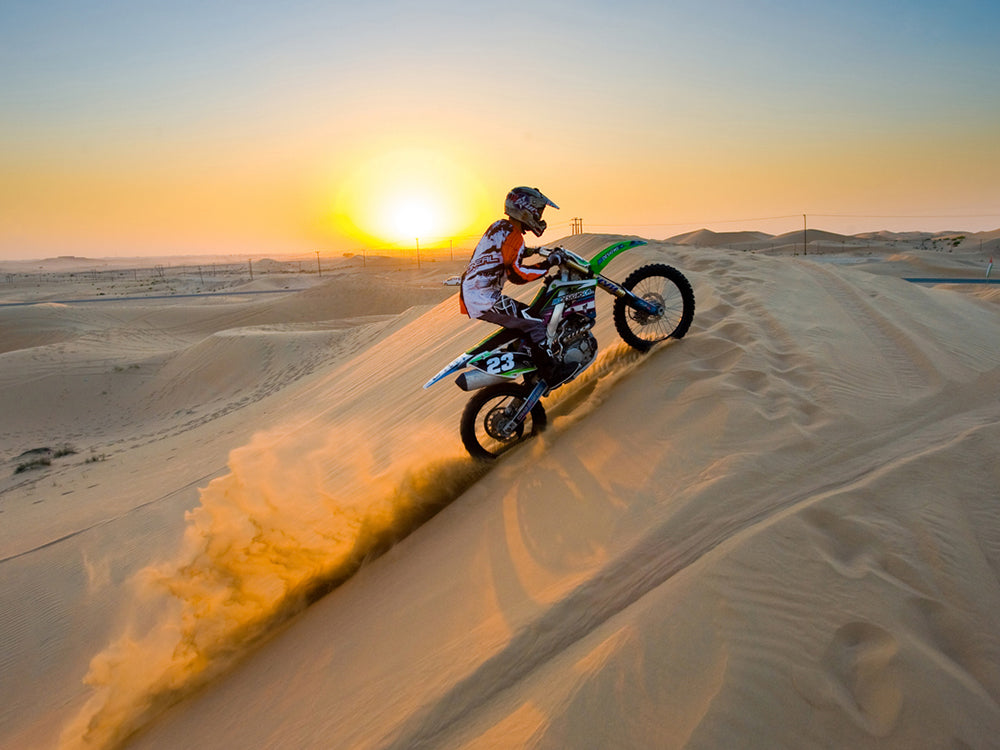
You will face many surprises when you go off-roading on your adventure bike. You will have to ride on a gravel road and overcome obstacles. Riding uphill is also a very daunting task for most ADV riders. Similarly, ADV sand riding is also one of the toughest for most ADV bikers. Riding in sand may require a completely different set of skills.
This article aims to make adventure riders become skilled at ADV sand riding. Continue reading this article to learn about the top 5 ADV sand riding tups for adventure bike riders.
#1
1. Tip 1: Keep Your Momentum Going
Speed is your friend while ADV riding in sand. Then there is the phenomenon that happens when you take your adventure motorcycle into the sand. As you approach the sand at slow speed, the front wheel digs in and the motorcycle bogs down. This is contrary to what most riders were initially assuming while riding in sand. One thing that can save you from sinking down is the momentum.
Therefore, the trick is to approach the sand patches with enough speed to keep yourself running. When you are on hard-packed ground, ease off the throttle a little bit before approaching the sand. Then roll it off smoothly as you go into the sand. When in the sand, remain constant on the throttle. Don’t cut it off, or else you will see the front-end sinking.
You don’t need to go super fast on the sand. Simply get the speed at which the bike feels balanced and stable. Slowing down causes the front wheel to shake and rut. However, it can be scary when you go too fast, especially when you are new to ADV riding on sand. Start slow in the beginning, but increase in speed with time and skills.
#2
2. Tip 2: Get on Your Feet and Shift Your Weight Back
Getting on your feet and standing on the pegs while ADV riding on the sand is the most important skill. You will only act as a passenger if you are sitting on the bike while riding on the sand. If you want to be in control, you have to learn how to ride while standing on the pegs, especially while maneuvering on the sand.
As soon as the sand comes under your bike’s tires, your bike will start moving a lot. As a rider, you have to move with it too, or else you will fail. Standing allows the bike to slide under you as you remain stable on it.
Get your balls off the feet on the pegs. Hold the bike between your legs with your knees. This will let you gain control of your bike while standing and without having to strain your arms. With your elbows open and chest high, you will have a better view of what is ahead. You will not only stare at the front wheel alone. This allows you to have better command and grip while riding on the sand.
Also, shift your weight to the back of the motorcycle. This makes the front wheel less likely to slide over the sand rather than sink. Get the hips back and stand a bit higher. In case you are adventure riding on deeper sand, move your weight further back to ensure more traction.
Don’t lean too far forward. Excess body weight on the front causes the wheel to wobble, and one can lose control. Most of the sand tracks respond best to a neutral position, but slightly back-biased.
Also, in case you have to sit while riding on soft sand, sit your buttocks as far back on the seat as possible. Nevertheless, it is always better to stand on the pegs while riding on the sand.
Must Read: Why and When to Stand on Your Motorcycle
#3
3. Tip 3: Relax Your Grip and Let Your ADV Motorcycle Move
Don’t fight with your handlebars while riding on the sand. Don’t grip it hard. Keep your grip a bit loose in sand. When you squeeze the grips tightly and try to keep the bike as straight as possible, you will get tired in no time, and cause the front wheel to dig in.
Have a light and loose grip on the bars. Let the bike find its own line. Your arms must be flexible and not stiff. Consider yourself a pliant entity, not a rigid rod that cannot bend. The motorcycle desires to go in a straight line, and it will correct itself if you allow it to do so by keeping the grip flexible enough for this.
Instead of using a tight grip to steer the motorbike, use your legs and feet. Since there is a lack of traction for the front wheel in the sand, you will likely dig the front tire in the sand if you steer with the handlebars. You should rather shift your weight on the pegs for turning. Give the right peg a push if you want to turn right, and push the left peg if you want to turn left while ADV riding in the sand.
Your body position and peg pressure are more responsible for directing the bike rather than the handlebar input. Bend a little towards the direction where you want to go. The motorcycle will be riding on your weight.
The throttle can also be used to steer in deeper sand. A short throttle blip can cause the front wheel to lift up and will assist in steering the bike in the direction you want.
#4
4. Tip 4: Look Far Ahead; Don’t Look Down
Your eyes also guide the bike while adventure riding. There is a common saying or concept in off-road motorcycle riding which states: “Look where you want to go, not what you want to avoid.” This is called target fixation. If you keep looking at the trouble spot, you will hit it. Just look at the way out and you will do it.
Look ahead and have the vision in your sight. Seek the most excellent line through the sand. Read the terrain using your eyes and find out the best rideable track that has the least sand depth. Is the sand darker? This likely means that it is firmer. Are there ruts on the track? They are likely to trap your wheel.
Do not look at the front fender or the patch of sand just in front of you. When going over longer lengths of sand patches, find an object in the distance and focus on it. This will make you remain stable and keep going on the motorcycle even if the bike shakes under you. When you are thinking of the big picture, your brand is capable of making the small corrections.
#5
5. Tip 5: Lower Your Motorcycle’s Tire Pressure for ADV Sand Riding
Reduce your motorcycle’s tire pressure before you prepare for ADV sand riding. Lower air tire pressure provides you with a larger contact patch, and this translates into more traction and float.
In case of large adventure motorcycles, reduce the level of tire pressure to approximately 18-22 psi. Some riders also drop down to 12 psi in very soft sand, although only over short distances.
To be precise, the pressure depends on the weight of the bike, your weight, and the luggage you are carrying. Begin by reducing 5 psi of normal street pressure, and you will feel what it is like. Reduce another 5 psi until it feels perfect to ride on the sand or gravel.
If you are planning to go long distances, don’t go too low with the air pressure, as it can cause flat tires, rim damage, or tire wear. Remember to have rim locks if you are using tubed tires and going very low with the pressure. In the absence of rim locks, the tire may roll on the rim and tear out the valve stem.
Also, keep a small, portable air pump in case of need. This allows you to reduce or increase the tires’ air pressure depending on the terrain you are on. It is useful equipment that can help you when in need.
6. Bonus Adventure Riding Tips for ADV Sand Riding
6.1 Use Rear Brake; Not the Front One For ADV Sand Riding
You are suggested to use the rear brake, not the front. The rear brake assists in controlling speed in the sand without digging the front. Small and smooth inputs should be used. Allow engine braking to do part of the work as well. The front brake can cause the front wheel to get stuck in the loose sand.
6.2 Ride in the Right Gear

Pick the right gear. Most sand riding should be done in second gear. This maintains your engine at a high revving rate to get through. First gear will simply dig the rear tire due to high revs. It will not help you push forward while riding on the sand. The lower the fear, the more momentum you will have, which is why the second gear is suitable for most sand riding.
6.3 Get Off-Road-Biased Knobby Tires for Proper ADV Sand Riding
Street tires are nowhere near suitable for adventure bike riding, especially in sand. They only spin in sand. Off-road-biased knobby tires with wide blocks help in better grip and control on the sand. They grab the sand track more effectively. The side knobs are also helpful during motorcycle sliding for cornering.
6.4 Keep Practicing ADV Sand Riding Until It Clicks
ADV riding on sand is not a cup of tea for even experienced adventure bikers. It is very tough, especially if you are a newbie. You will only get comfortable over time and with practice. Find a secure piece of sand patches in the dirt, keep on riding and getting familiar with the terrain over and over again. Play with the throttle and try standing, sitting, and cornering to improve your ADV riding skills over sand.
6.5 Embrace Getting Stuck
Almost every adventure rider can get their motorcycle’s tire stuck in sand during adventure riding. This can happen even with professional dirt riders. Do not panic when the rear tire digs in sand. Instead, stop, take a breath, and dig the tire out. Learn from every tire stuck and change your method. Stick to the one that works for you.
6.6 Start With the Small Dirt Bike
In case you are new to the sand, do not get an expensive, large adventure bike. Start with a light one to learn. You can either start with a cheap dirt bike or a used dual-sport bike for off-roading. When you start feeling comfortable on off-road terrains, only then should you get an adventure bike. Start with smooth areas of sand that are easy to pick before moving to deeper areas that are soft.
You cannot learn ADV sand riding in just one ride. It takes practice. Nevertheless, every time you ride on sand, you will improve. You will develop muscle memory. The movements are learnt by your body. Soon, riding on sand will not feel so difficult.
7. Why These ADV Sand Riding Tips Matter
Riding a large adventure bike is tough, especially on the sand. These bikes are 500 lbs or above. This requires a lot of muscle and strength to maneuver on soft ground. But given the right abilities, sand becomes fun as opposed to being scary.
Standing on the pegs while ADV riding allows you to respond to the bike's movement. When you keep your weight adjusted to the back, the front end feels much lighter. The inertia keeps riders from stalling. Relaxed arms reduce fatigue. Good visions keep you going. The low-pressure tires will provide you with float.
One method is the continuation of the other. Combine them, and riding on sand becomes much easier.
8. Final Thoughts
One of the most fulfilling skills for an adventure rider is sand riding. It opens many different doors and possibilities to ride many different places while adventure riding. Whether it's dune trails, gravel, woods, or other off-road routes, you will have access to most fun tracks and places if you become a pro at ADV sand riding. Having these five tips mentioned above in the article, you will go to the sand with a lot more confidence and less fear.
It is essential to be relaxed and allow the bike to work. Believe in the methods, do it frequently, and after a little time, you will feel good about riding in the sand instead of being afraid of it.



Leave a comment
All comments are moderated before being published.
This site is protected by hCaptcha and the hCaptcha Privacy Policy and Terms of Service apply.