
Table of Content
Without a doubt, a motorcycle with fat tires or a fat back tire is a head-turner. It looks very assertive, bold, and low-lean. It also looks quite powerful with a “don’t mess with me" attitude. But the fat bike tires are not only about the bike's appearance. They make it easy to ride, easy to balance, and easy to stop, depending on various factors and the purpose of riding.
This guide divides the real advantages and disadvantages of motorcycles with fat tires. It will also take a deep look into cruiser motorcycles with fat rear tires and small off-road motorcycles with fat tires. We hope that it will assist you in making a decision on whether a fat tire motorcycle is the right thing for you based on your skill levels. Let’s find out.
1. What Counts as a “Fat Tire” on a Motorcycle?

In stock motorbikes, the rear tires are in the 140-180 mm range.
Riders refer to a motorcycle with a fat rear when they are speaking about:
Rear Tire: 200 mm and bigger (240+ mm is extremely wide).
Front Tire: It is significantly broader than the stock one, with a diameter of 130-160 mm on cruiser bikes.
You see fat tires on:
Harley Cruisers: Such as the popular Harley Fat Boy, Harley Fat Bob, and Harley Sportster S.
Show bikes and Custom Choppers: These bikes have massive rear wheels and low seats.
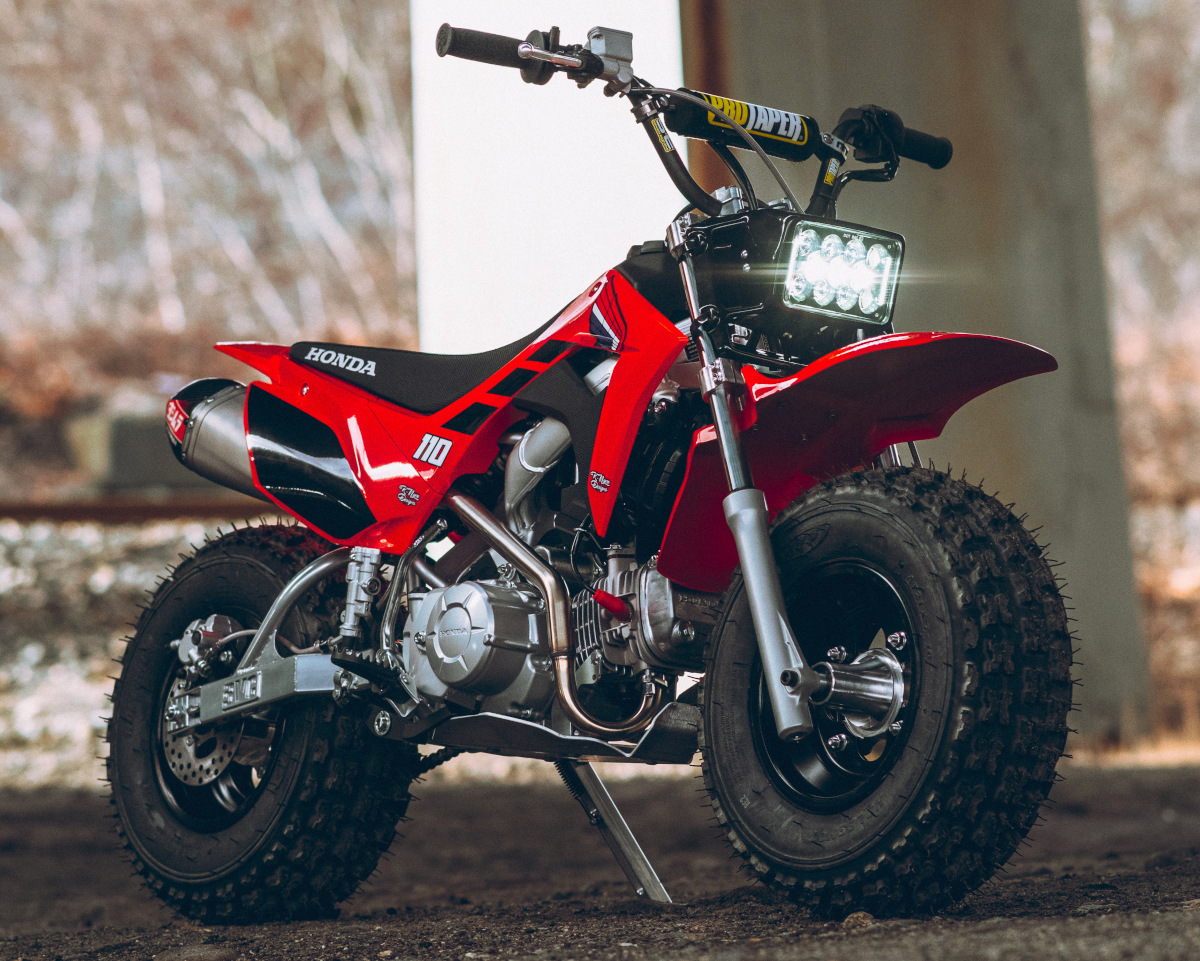
Small Motorcycles with Fat Tires: These include fat tire mini bikes and trail toys.
Fat Tire Off-Road Motorcycles: Not fat, but powerful in sand, snow, or mud.
The secret is easy: the wider, the bigger the contact patch, the greater the rubber on the road.
Must Read: How to Tell the Age of a Motorcycle Tire
2. The Core Idea: What Fat Tires Can Do to Your Ride
A fat motorcycle tire offers the following three features:
Contact Patch: Increased amount of rubber on the ground.
Shape of Sidewalls: More flat at the center, less round at the edges.
Mass: Heavier to spin, to stop, and to wring.
These three factors determine the benefits as well as the drawbacks of a fat tire motorcycle.

3. Advantages of Riding a Motorcycle With Fat Tires
3.1 More Grip and Traction
To most of the riders, this is the main attraction of fat tires.
The contact patch of a motorcycle with a fat back tire is bigger.
This comes in handy when you are riding on the gas or when you are riding on tough or loose roads.
Fat rear tires are used on powerful bikes so that the power is sent to the ground without continuous spinning.
It works well for:
Fat-Tire Cruiser Motorcycles: Strong torque, low revs, difficult to get going off the crank.
Fat-Tire Dirt Bike-Style Machines: Slow, but stable in the sand, snow, and loose dirt.
Light Trail Riding and Beach Riding: Fat tires are more of a floater and less of a digger.
When you ride with a passenger, have a load, or just want to ride sightseeing slowly, the additional grip is a good advantage.
3.2 Better Straight-Line Stability
Fat tires make the bike feel planted in case you are riding in a straight line.
The more rubber or contact patch, the more the straight line stability.
The rear tire of a big fat tire motorcycle serves as a long, wide rail.
The bike does not feel twitchy at high speeds, but is smooth and stable.
This is the reason why most of the Harley and cruiser riders are fond of motorcycles with fat back tires for long road trips. On large open roads, they desire a bike that will take a straight line and not dance on every small bump and groove.
Must Read: Tools You Need to Change a Motorcycle Tire
3.3 More Comfort Over Bumps

A fat tire may seem to be a little additional shock.
Small hits are evened out by the large tire and a greater amount of air.
Small rocks, potholes, and joints on the road are not as harsh.
With a rigid or still frame build, the addition of tire shock absorption is very important.
With rough roads and no fancy long travel forks on your bike, a fat tire may provide a lighter ride feel to you and a pillion.
3.4 Confidence for New Riders (In Certain Cases)
To a few novice riders, a fat tire small motorbike can be safe and fun:
Short wheelbase, wide tires, low seat.
Low-speed, not difficult to reach the ground.
Comfortable in low speed and on flat dirt.
These are not fast-track toys or small/mini dirt bikes, but they enable riders to learn how to control the bike without going to the main road. The fat tires assist in leveling small ruts and sandy areas, which would scare a new rider on a skinny-tire bike.
3.5 Powerful Visual Impression and Style
Much of the fat tire use in motorcycles is for style and fashion.
A motorcycle with a fat rear tire appears mean, bold, low, and strong.
It makes the bike look compact and complete.
As a tradition, the right tire and wheel combo is made the center of the build.
To riders who are very concerned about how their ride looks, one of the components is the fat tire. It is especially true for cruiser bikes or custom choppers.
Must Read: How Long Do Motorcycle Tires Last?
4. Disadvantages of Riding a Motorcycle With Fat Tires
Now, the flip side of having fat tires installed on your motorbike is. Fat tires are not pure gain. They are associated with explicitly defined trade-offs, which you experience in everyday use.
4.1 Slower, Heavier Steering

This is the primary disadvantage, and it becomes evident quickly.
Flat tires are flat in construction.
You have to lean more and push harder on the bar to initiate a turn.
When you attempt to take a turn on a bike with fat tires, it will seem quite lazy.
You will need to put in more effort to turn a corner.
A fat tire motorcycle on winding/twisty roads:
It is difficult to move the bike side-by-side or perform any maneuver.
It requires a bit of effort to change the direction of the fat-tire bike.
The fat tire bike feels loose when leaning, as you are on top of a flat-profile tire.
If you are fond of tight turns and S-bends at high speeds and sport-style riding, a motorcycle with fat tires will not be as sharp as a bike with slimmer tires.
4.2 Less Feedback and Accuracy in Corners
Good cornering feel on a motorcycle is not only about grip, but also about feedback.
With a fat tire:
The wide, flat area of the fat tire can obscure the boundary where the grip stops.
When the tire is deep in lean, ot can be more difficult to read what it is doing.
The fat-tire bike tends to stay upright during braking halfway through the circle.
This is a huge problem with sports bikes. In a cruiser, it is not as much of a big deal, as the majority of cruiser riders do not pursue a down lean. Nevertheless, the reality remains: the bikes with big fat tires on the back provide less sharp and clear feedback during tight and fast turns.
4.3 More Weight and Drag
The more the rubber of the motorcycle tire, the more the mass and drag are.
The heavier the tire and the wheel are, the more force or power it will require to rotate.
It also requires a lot of braking to decelerate.
The drag increases, and fuel consumption may rise slightly as well.
You may not mind fat motorbike tires on a large Harley-style cruiser where the torque is enormous. You can experience the drag on a light, small motorcycle with fat tires and a low-powered engine, where the pickup and top speed are slow.
4.4 Not Suitable for Deep Ruts or Hard Off‑Road
Fat motorcycle tires may work well in soft sand and snow, but they may not necessarily be suitable on all dirt.
In deep ruts, a fat tire can ride on top and slide instead of tracking.
The additional width can result in a tough line choice on narrow, rugged paths.
On loose, rocky, and root-heavy routes, steering may become loose.
Most real enduro and MX bikes come with taller and narrower tires to serve a purpose:
Such tires help in making their own way through the dirt and find grip.
They help change the line and direction quickly.
They clear out mud better while off-roading.
Thus, an off-road motorcycle with fat tires may sound cool, but it has limited practical use. They are not suitable for high-speed enduro racing or extreme off-roading. They are only suitable for slow road riding in a straight line.
4.5 Increased Price: Fitment and Wear
A fat-tire motorbike may be more expensive due to higher fitment costs.
Tire Price: Wide tires are more expensive than the standard ones.
Shorter Life: Wide, soft tires will wear out quickly due to hard riding.
-
Fitment: To install fat tires on a motorcycle, the rider requires:
Wider rim and hub.
New swingarm or spacer kit.
Changes of new fenders and belt/chain lines.
When you purchase a stock motorbike with a fat rear tire, the work has already been done by the brand. When you transform a regular motorbike into a fat-tire bike, the price and risks increase rapidly. A bad arrangement and fitment may compromise handling and safety.
4.6 Difficult to Ride in Busy Cities With Traffic and Tight Spots
Fat tires are a burden in everyday city use.
Low-speed roundabouts require increased effort and handlebar push.
The turns in small streets are more cumbersome.
It can stand on its head and run off course on the bike in case you brake in the middle of the turn in a narrow street.
This may not be easy for new riders. They may be attracted to the appearance of motorcycles with fat rear tires. However, they may struggle with low-speed control compared to a bike with more normal, round-profile wheels.
5. Where Fat Motorcycle Tires Shine and Where They Don’t
To explain this, riders should think in terms of use cases.
5.1 Fat Tire Motorcycles' Best Use Cases
5.1.1 Leisurely Tours on Cruisers
You ride at a calm to mid pace.
You adore long, straight roads, wide corners, and long riding.
You are more of a style and comfort type of rider than a lap-time sports bike rider.
5.1.2 Soft Ground Fun: Fun in the Sand, Bach, and Snow Trails
A dirt bike-style machine with fat tires can be used to ride over loose dirt.
Good for having fun rides over the dirt, but not on the race tracks.
5.1.3 Short-Distance City Rides on a Small Fat-Tire Bike
Fat-tire small motorcycles are fashionable, fun machines.
They are simple to park, and the broad tires bounce off the poor urban roads.
5.1.4 Custom and Show Bike Builds
When appearance is the priority in a custom bike build, fat tires are the most popular.
One of the most prominent components of a custom bike design part is a fat rear tire.
5.2 Weak Application Cases of Fat Motorcycle Tires
5.2.1 Hill Climbs and Twists & Turns
If you are an aggressive rider who loves taking sharp turns and receiving positive feedback, fat tires are not suitable.
A fat rear tire detracts from sharp handling. This gets even worse if the front tire is wide and fat, as well.
5.2.2 Serious Off-Road Enduro
- You require quick turning and tall, narrow tires to make your way through the dirt easily.
5.2.3 Lightweight Commuter Bikes Where Fuel and Prices Are Important
- Increased drag, increased weight, reduced fuel economy, and increased tire cost are not helpful on lightweight commuter bikes. It is true for those riders who consider operating their bikes cost-effectively.
6. How to Choose the Best Motorcycle With Fat Tires for Your Style
- If you are attracted by the fat tire look, then this is a simple guide to help you choose the right one.
6.1 Start With Your Main Use
Ask:
Will you use the bike for everyday commuting, long trips, or simply for fun weekends?
Are you a rider on smooth tarmac, mixed, or rough dirt?
Then match it:
Highway + Style + Comfort: Fat Tire Cruiser Bike
Soft Off-Road + Slow Pace: Off-Road Bike With Fat Tires
City Fun + Short Trips: Mini Motorbike With Fat Tires
6.2 Watch the Rear Tire Width
A good rule is:
As wide as 200 mm, but still safe for street use.
200-240 mm for a deep custom appearance, reduced handling trade-offs.
240 mm and above for pure stance, but handling and cost are big hits.
If you are going to have your first big bike, you should not go after the widest, fattest tire you can get. The target is to have a moderate-fat rear tire to balance style and ride.
6.3 Do Not Ignore the Front Tire
Most riders are obsessed with the rear tire and not the front.
A super fat front tire is fatal to turn in and feel unresponsive.
It is okay to be a little broader in front, but do not be crazy.
In the real world, the road adventures are generally centered on:
The rear fat tire is stylish and provides grip.
Meanwhile, a front bike tire can be a little fat or wide, but it must have a nice, round profile.
This way, the bike does not lose steering, but retains the tough, fat tire look in the rear.
6.4 Check Frame and Geometry
The frame and fork angles are the key.
A frame built on a thin tire cannot carry a wide tire.
An improper fat tire change can negatively affect the trail and weight balance.
In case you want to install a fat rear tire on your bike, you must ensure:
Application of a complete, proven kit of a familiar brand to install a fat tire on your bike.
The shop that is evident to be the best at custom bike builds should do the job.
Avoid hacks that say: "easily install a fat tire on a motorbike." These badly hurt the safety.
When you purchase a motorcycle with fat tires from a brand or pro builder, the frame and geometry have been changed to fit them. This is the safer option if you want a bike with fat tires.
7. Motorcycles With Fat Rear Tires Riding Tips
If you choose to ride a fat-tire motorbike, you should ride it in a manner that suits.
Be Smooth With Inputs
Use steady and smooth handlebar movements and throttle.
The sharp strokes of handlebar movement are not suitable if your bike has fat and wide rubber.
Use the Whole Lane in Corners
Don’t stick to just a single line and make corners sharp.
Use the whole lane instead while turning corners.
Make sure the turning radius you follow is wide and smooth.
Avoid sharp changes in corners.
Mind Low-Speed Turns
When turning tight U-turns and in parking lots, apply the clutch, use the rear brake, and some gas.
Let the fat tire make its way, let it roll.
Do not strain your arm by pushing the handlebars with force.
Watch Tire Pressure
Make sure to keep the tire pressure in check.
If the pressure is too high, it will give a harsh feel and provide less grip.
If the pressure is too low, it will provide imprecise steering and will heat more.
With high tire pressure, there is a risk of tire damage.
Make sure to follow the manufacturer’s manual to maintain your tire and its air pressure.
Check Wear More Often
Long-distance rides can wear off the fat bike tires in the middle.
Do not just keep riding the bike with worn, fat tires just because they still look big.
8. Fat Tires As a “Riding Filter”
Consider a fat motorbike tire not only as an element of style, but as an optical outlier of your attitude towards riding.
It urges you to ride slowly.
It urges you to pick the smoothest roads and lines.
It urges you to avoid riding the bike like a sports bike racer.
It urges you to ride defensively.
It urges you to avoid taking sharp turns while hanging off your body weight, as in sports bikes.
It is a good thing for a lot of riders. It drags them out of the temptation to ride as a racer on roads. In this usage, a fat tire motorcycle is a machine that defines a more relaxed, flow-based ride style.
However, when you prefer hard braking, quick movements, maneuvers, sudden direction changes, and tight cornering, then a motorcycle with fat tires feels very limited.
9. Conclusion
To sum up:
Advantages of Motorcycles With Fat Tires:
Powerful straight-line grip and smooth feel.
Smooth ride over rough roads.
Great linear performance.
Designed for relaxed riding.
Stable straight-line performance.
Suitable for big and bulky cruisers and soft-ground fun bikes.
Offer a bold custom look with a great attitude.
Disadvantages of Motorcycles With Fat Tires:
Steering feels much heavier.
Not suitable for tight cornering.
Cornering seems riskier with fat tires.
Less accurate feedback at deep corners.
Not safe for leaning the bike in corners.
Heavy, slow, and expensive.
Not suitable for narrow and twisty roads.
Fat tires may be a good fit if you need a low, mean cruiser or a fun little fat-tire bike to go on a leisurely ride about town, or to have a little off-road fun.
When you want a serious dirt bike or a sharp, quick, sporty ride, it is better to use more normal tire sizes and profiles.





Leave a comment
All comments are moderated before being published.
This site is protected by hCaptcha and the hCaptcha Privacy Policy and Terms of Service apply.